


The in vivo T helper type 17 and regulatory T cell immune responses to Aggregatibacter actinomycetemcomitans
- PMID: 28544588
- PMCID: PMC5842142
- DOI: 10.1111/omi.12187
The in vivo T helper type 17 and regulatory T cell immune responses to Aggregatibacter actinomycetemcomitans
Abstract
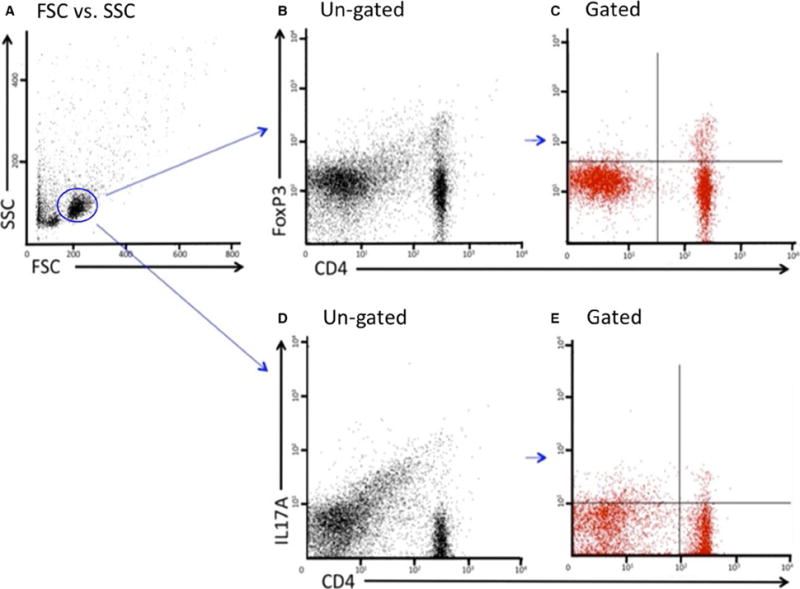
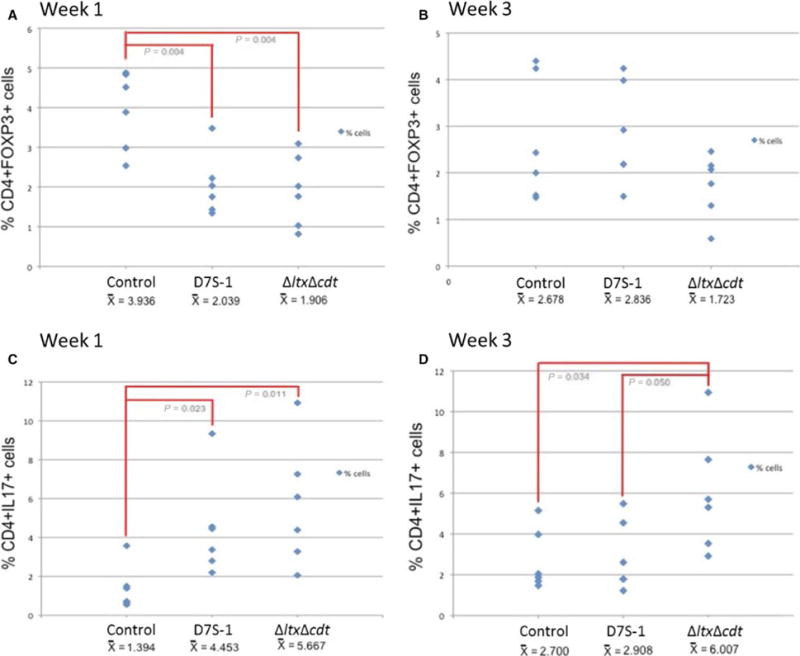
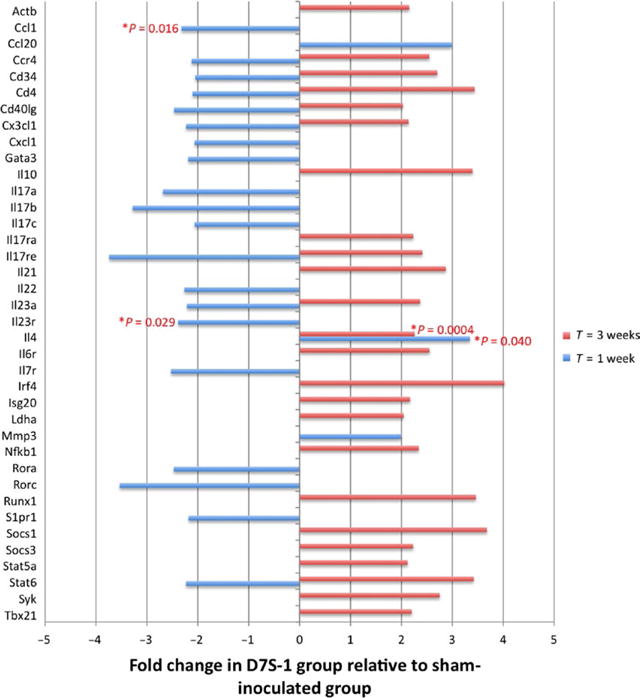
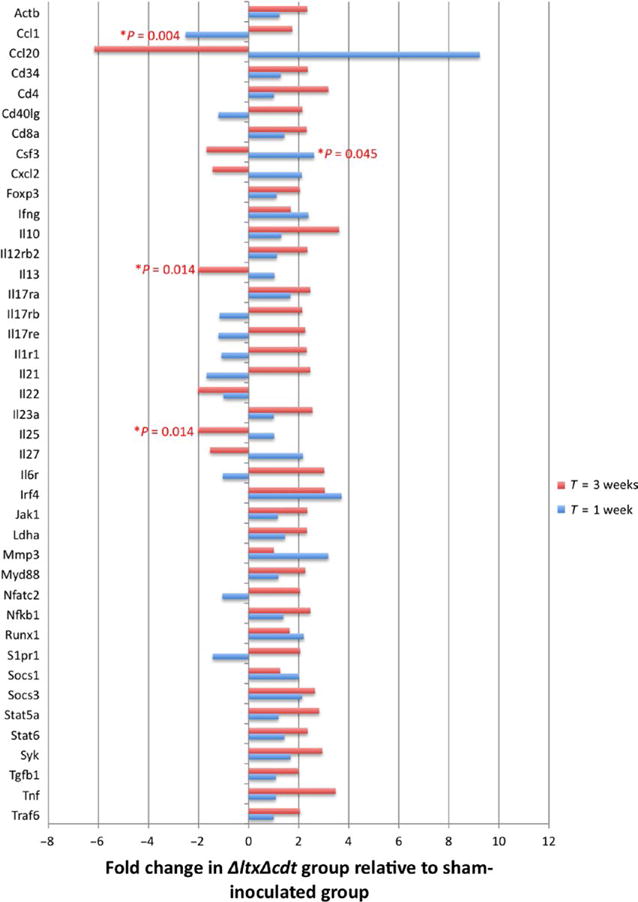
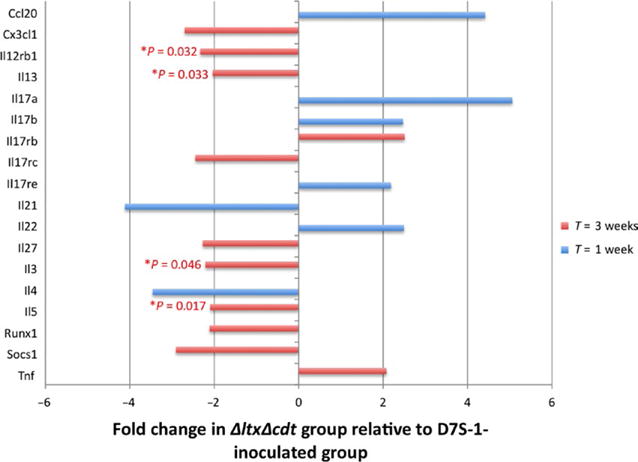
The periodontal pathogen Aggregatibacter actinomycetemcomitans is known to elicit a systemic immune response in the infected host, and occasionally causes non-oral infections. Detailed information on its immunopathological responses and the involvement of bacterial virulence factors remains to be elucidated. The aim of this study was to assess the systemic immune response to A. actinomycetemcomitans oral infection. We used an animal model that simulates systemic dissemination of the bacteria by injecting live wild-type (WT) D7S-1 and a double knockout mutant of leukotoxin and cytolethal distending toxin (ΔltxΔcdt) A. actinomycetemcomitans strains in rat oral mucosa. Draining lymph nodes were examined for regulatory T (Treg) and T helper type 17 (Th17) cell subsets and their associated mediators. An increase in the proportion of Th17 cells and a decrease in Treg cells over the experimental period of 3 weeks were similarly observed for rats challenged with WT and ΔltxΔcdt. Significant upregulation and downregulation of proinflammatory cytokines in the Th17 gene pathway was noted, as well as several qualitative differences between WT and ΔltxΔcdt. Furthermore, we observed differential fold regulation in key genes associated with a proinflammatory response in ΔltxΔcdt-inoculated rats relative to D7S-1 group. This suggests that although the knockout of these two virulence factors (ΔltxΔcdt) may suppress certain proinflammatory genes, it causes similar over-expression of other genes compared with D7S-1, indicating a common factor that still remains in the pathogenicity of A. actinomycetemcomitans.
Keywords: T lymphocytes; biofilm; immunity; pathogenesis; periodontal disease.
© 2017 John Wiley & Sons A/S. Published by John Wiley & Sons Ltd.
Conflict of interest statement
The authors disclose that they have no conflicts of interest related to this work.
Figures
Similar articles
-
Proinflammatory effect in whole blood by free soluble bacterial components released from planktonic and biofilm cells.BMC Microbiol. 2008 Nov 27;8:206. doi: 10.1186/1471-2180-8-206. BMC Microbiol. 2008. PMID: 19038023 Free PMC article.
-
Differential human Th22-lymphocyte response triggered by Aggregatibacter actinomycetemcomitans serotypes.Arch Oral Biol. 2017 Jun;78:26-33. doi: 10.1016/j.archoralbio.2017.02.008. Epub 2017 Feb 6. Arch Oral Biol. 2017. PMID: 28189882
-
O-Polysaccharide Plays a Major Role on the Virulence and Immunostimulatory Potential of Aggregatibacter actinomycetemcomitans During Periodontal Infection.Front Immunol. 2020 Oct 30;11:591240. doi: 10.3389/fimmu.2020.591240. eCollection 2020. Front Immunol. 2020. PMID: 33193431 Free PMC article.
-
Oral pathogenesis of Aggregatibacter actinomycetemcomitans.Microb Pathog. 2017 Dec;113:303-311. doi: 10.1016/j.micpath.2017.11.001. Epub 2017 Nov 5. Microb Pathog. 2017. PMID: 29117508 Review.
-
Aggregatibacter actinomycetemcomitans, a potent immunoregulator of the periodontal host defense system and alveolar bone homeostasis.Mol Oral Microbiol. 2016 Jun;31(3):207-27. doi: 10.1111/omi.12119. Epub 2015 Sep 22. Mol Oral Microbiol. 2016. PMID: 26197893 Free PMC article. Review.
Cited by
-
Aggregatibacter actinomycetemcomitans Cytolethal Distending Toxin-Induces Cell Cycle Arrest in a Glycogen Synthase Kinase (GSK)-3-Dependent Manner in Oral Keratinocytes.Int J Mol Sci. 2022 Oct 5;23(19):11831. doi: 10.3390/ijms231911831. Int J Mol Sci. 2022. PMID: 36233133 Free PMC article.
-
Induction of Periodontitis Using Bacterial Strains Isolated from the Human Oral Microbiome in an Experimental Rat Model.Biomedicines. 2023 Jul 25;11(8):2098. doi: 10.3390/biomedicines11082098. Biomedicines. 2023. PMID: 37626595 Free PMC article.
References
-
- Craig RG, Yip JK, So MK, Boylan RJ, Socransky SS, Haffajee AD. Relationship of destructive periodontal disease to the acute-phase response. J Periodontol. 2003;74:1007–1016. - PubMed
-
- Figuero E, Sanchez-Beltran M, Cuesta-Frechoso S, et al. Detection of periodontal bacteria in atheromatous plaque by nested polymerase chain reaction. J Periodontol. 2011;82:1469–1477. - PubMed
Publication types
MeSH terms
Substances
Grants and funding
LinkOut - more resources
Full Text Sources
Other Literature Sources
