


Neoadjuvant therapy in pancreatic cancer: a systematic review and meta-analysis of prospective studies
- PMID: 28544758
- PMCID: PMC5463082
- DOI: 10.1002/cam4.1071
Neoadjuvant therapy in pancreatic cancer: a systematic review and meta-analysis of prospective studies
Abstract
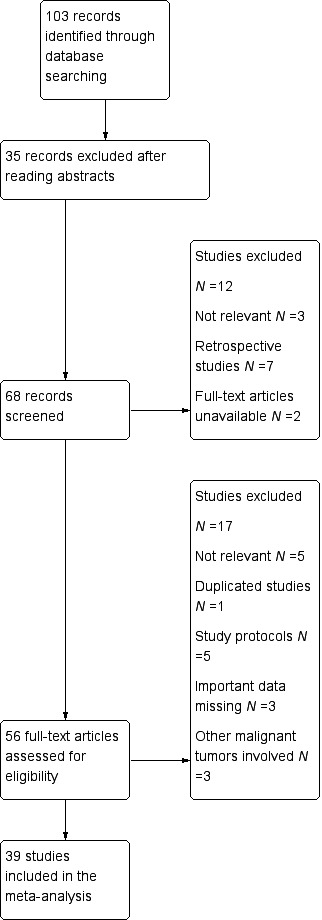
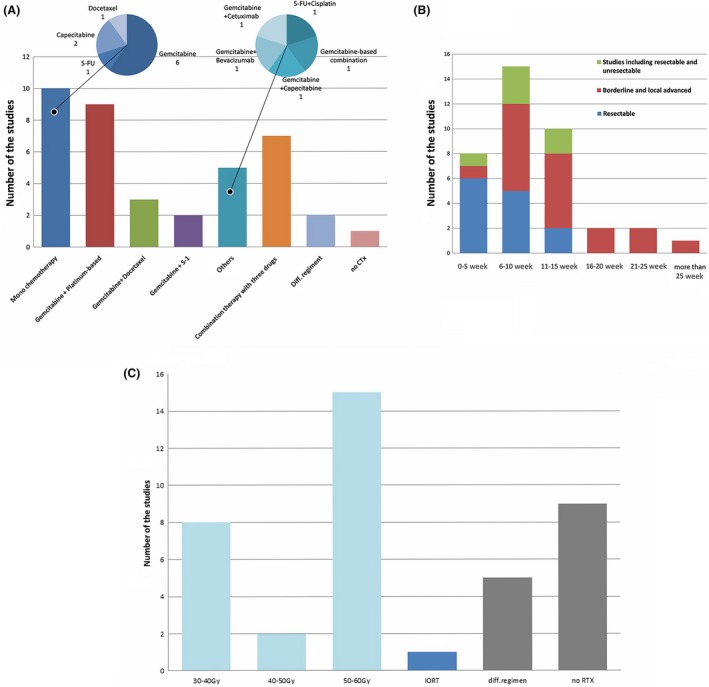
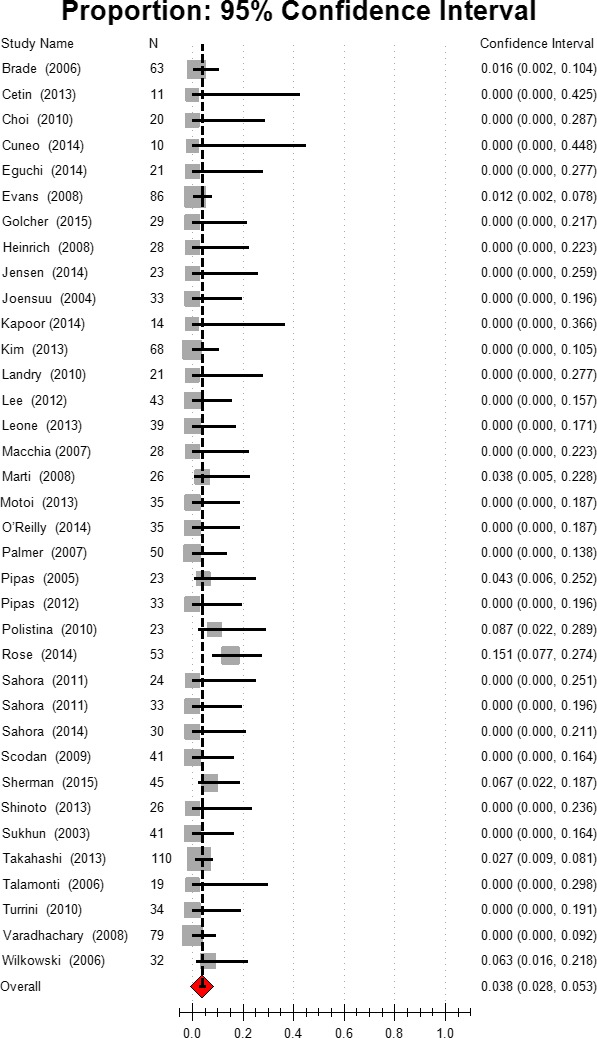
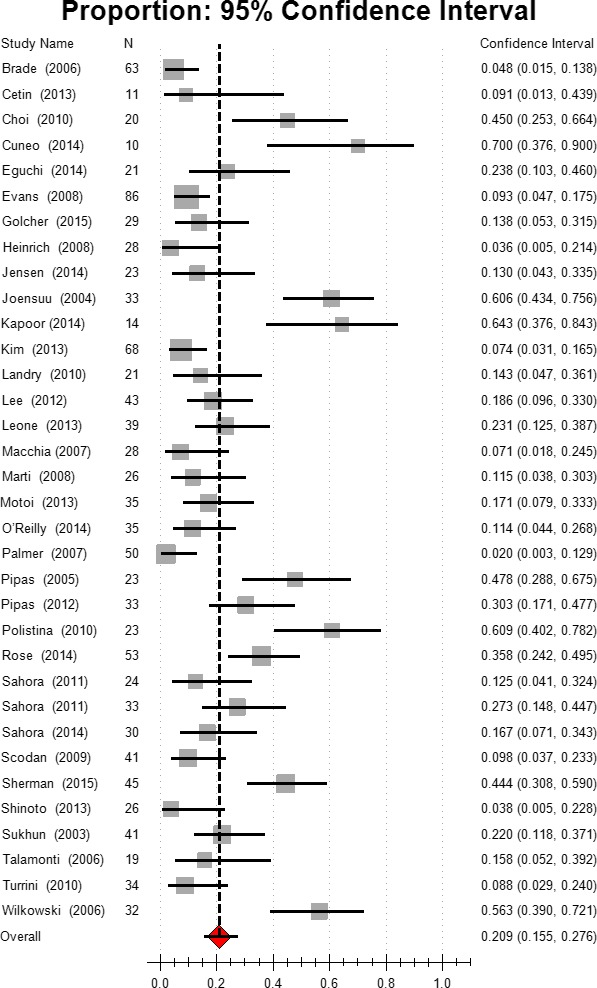
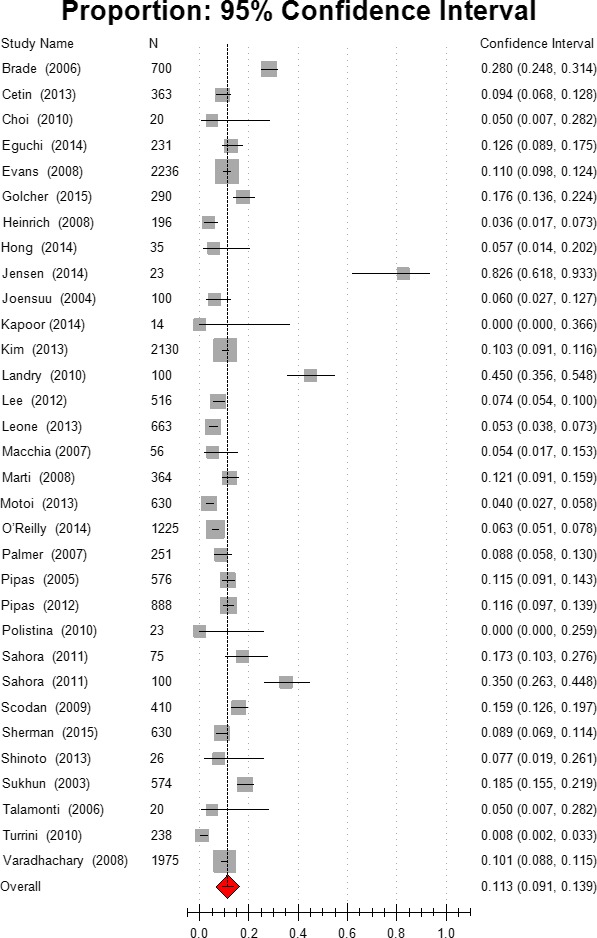
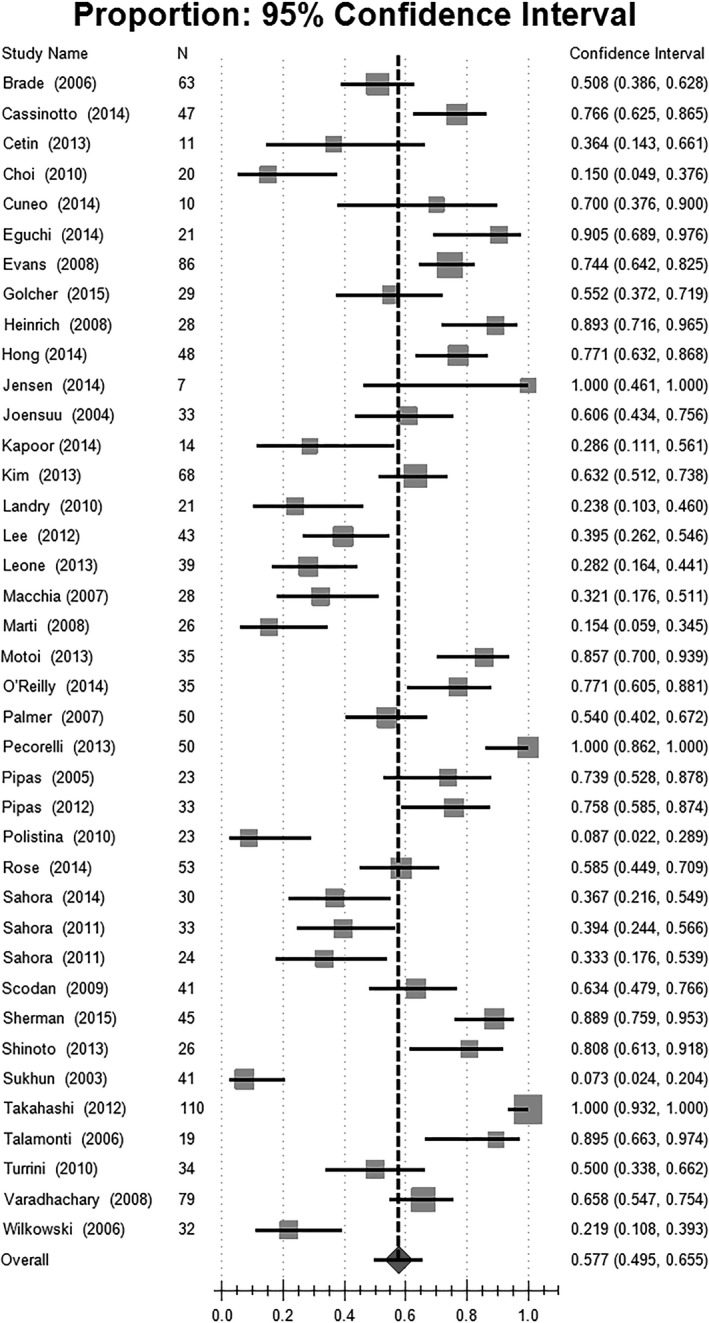
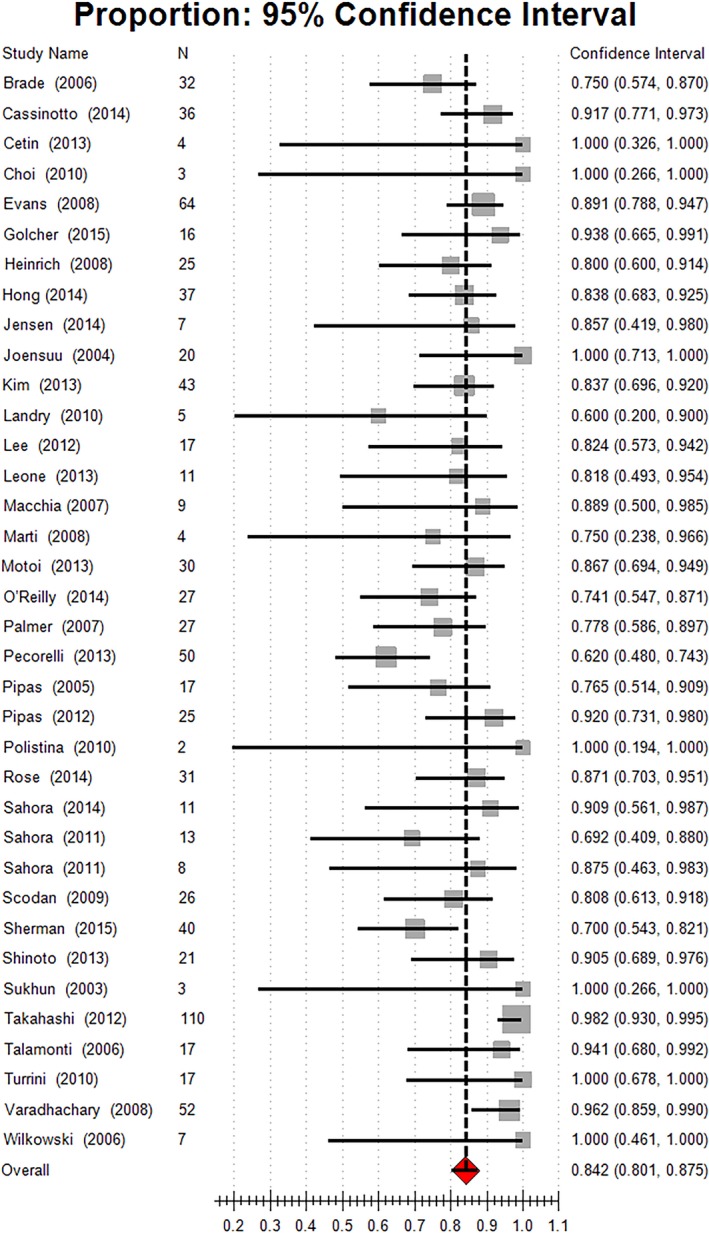
There is a strong rationale and many theoretical advantages for neoadjuvant therapy in pancreatic cancer (PC). However, study results have varied significantly. In this study, a systematic review and meta-analysis of prospective studies were performed in order to evaluate safety and effectiveness of neoadjuvant therapy in PC. Thirty-nine studies were selected (n = 1458 patients), with 14 studies focusing on patients with resectable disease (group 1), and 19 studies focusing on patients with borderline resectable and locally advanced disease (group 2). Neoadjuvant chemotherapy was administered in 97.4% of the studies, in which 76.9% was given radiotherapy and 74.4% administered with chemoradiation. The complete and partial response rate was 3.8% and 20.9%. The incidence of grade 3/4 toxicity was 11.3%. The overall resection rate after neoadjuvant therapy was 57.7% (group 1: 73.0%, group 2: 40.2%). The R0 resection rate was 84.2% (group 1: 88.2%, group 2: 79.4%). The overall survival for all patients was 16.79 months (resected 24.24, unresected 9.81; group 1: 17.76, group 2: 16.20). Our results demonstrate that neoadjuvant therapy has not been proven to be beneficial and should be considered with caution in patients with resectable PC. Patients with borderline resectable or locally advanced disease may benefit from neoadjuvant therapy, but further research is needed.
Keywords: Neoadjuvant therapy; R0 resection; pancreatic cancer; survival; tumor response.
© 2017 The Authors. Cancer Medicine published by John Wiley & Sons Ltd.
Figures
References
-
- Siegel, R. , Ma J., Zou Z., and Jemal A.. 2014. Cancer statistics, 2014. CA Cancer J. Clin. 64:9–29. - PubMed
-
- Ryan, D. P. , Hong T. S., and Bardeesy N.. 2014. Pancreatic adenocarcinoma. N. Engl. J. Med. 371:1039–1049. - PubMed
-
- Kwon, D. , McFarland K., Velanovich V., and R. C Martin, 2nd . 2014. Borderline and locally advanced pancreatic adenocarcinoma margin accentuation with intraoperative irreversible electroporation. Surgery 156:910–920. - PubMed
Publication types
MeSH terms
Substances
LinkOut - more resources
Full Text Sources
Other Literature Sources
Medical
