


Hepatocellular Carcinoma: a Comprehensive Review of Biomarkers, Clinical Aspects, and Therapy
- PMID: 28545181
- PMCID: PMC5494234
- DOI: 10.22034/APJCP.2017.18.4.863
Hepatocellular Carcinoma: a Comprehensive Review of Biomarkers, Clinical Aspects, and Therapy
Abstract
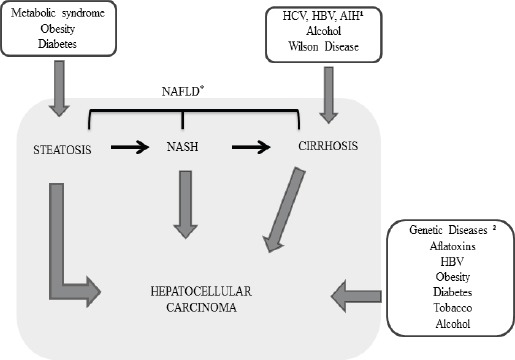
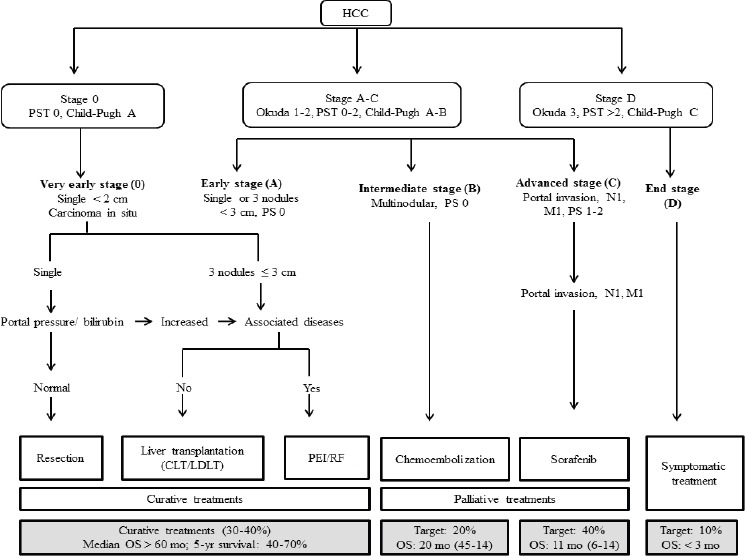
Hepatocellular carcinoma (HCC) is a cause of several deaths related to cancer worldwidely. In early stage, curative treatments such as surgical resection, liver transplant and local ablation can improve the patient ´s survival. However, the disease is detected in advanced stage; moreover some available therapies are restricted to palliative care and local treatment. Early detections of HCC and adequate therapy are crucial to increase survival as well as to improve the patient´s quality of life. Therefore, researchers have been investigating molecular biomarkers with high sensibility and reliability as Golgi 73 protein (GP73), Glypican-3 (GPC3), Osteopontin (OPN), microRNAs and others. MicroRNAs can regulate important pathways on carcinogenesis, as tumor angiogenesis and progression. So, they can be considered as possible markers of prognosis in HCC, and therapeutic target for this tumor type. In this review, we discuss the recent advances related to the cause (highlighting the main risk factors), treatment, biomarkers, clinic aspects, and outcome in hepatocellular carcinoma.
Keywords: Hepatocellular carcinoma; causes; biomarkers; treatment; prognosis.
Creative Commons Attribution License
Figures
References
-
- Abreu RM, Ferreira CS, Nasser PD, et al. Hepatocellular Carcinoma:The final moments of life. J Cancer Ther. 2013;4:377–83.
-
- Adam R, Karam V, Delvart V, et al. Evolution of indications and results of liver transplantation in Europe. A report from the European liver transplant registry (ELTR) J Hepatol. 2012;57:675–88. - PubMed
LinkOut - more resources
Full Text Sources
Research Materials
