


Toll-Like Receptor 9 Agonists for Cancer Therapy
- PMID: 28548068
- PMCID: PMC5344222
- DOI: 10.3390/biomedicines2030211
Toll-Like Receptor 9 Agonists for Cancer Therapy
Abstract
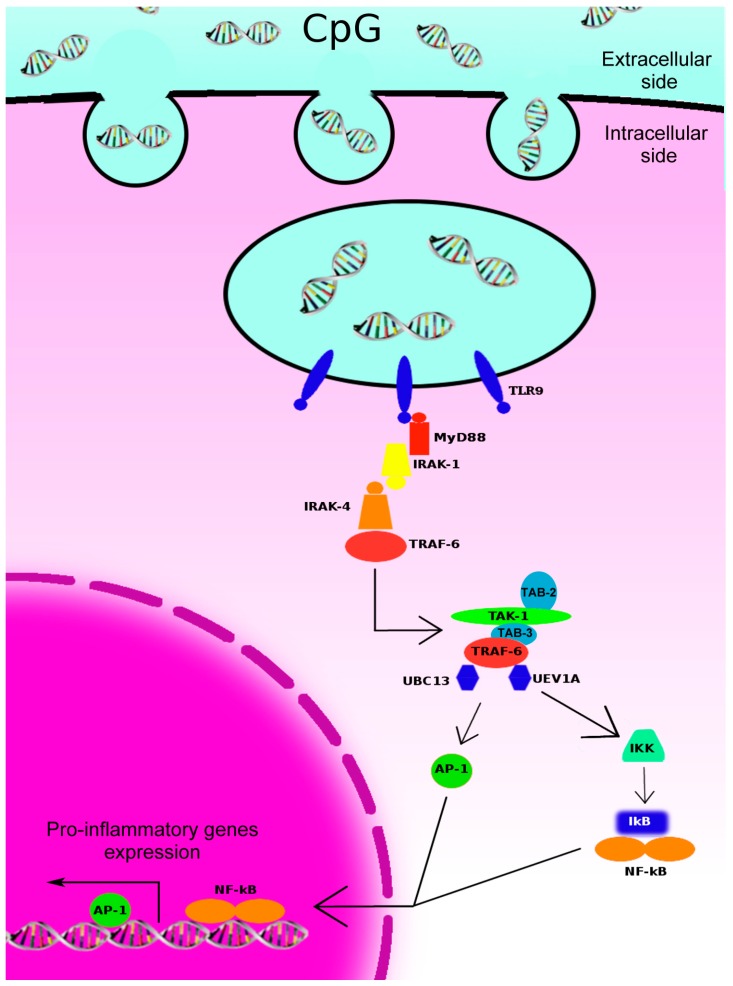
The immune system has acquired increasing importance as a key player in cancer maintenance and growth. Thus, modulating anti-tumor immune mediators has become an attractive strategy for cancer treatment. Toll-like receptors (TLRs) have gradually emerged as potential targets of newer immunotherapies. TLR-9 is preferentially expressed on endosome membranes of B-cells and plasmacytoid dendritic cells (pDC) and is known for its ability to stimulate specific immune reactions through the activation of inflammation-like innate responses. Several synthetic CpG oligonucleotides (ODNs) have been developed as TLR-9 agonists with the aim of enhancing cancer immune surveillance. In many preclinical models, CpG ODNs were found to suppress tumor growth and proliferation both in monotherapy and in addition to chemotherapies or target therapies. TLR-9 agonists have been also tested in several clinical trials in patients with solid tumors. These agents showed good tolerability and usually met activity endpoints in early phase trials. However, they have not yet been demonstrated to significantly impact survival, neither as single agent treatments, nor in combination with chemotherapies or cancer vaccines. Further investigations in larger prospective studies are required.
Keywords: CpG ODN; PF-3512676; TLR-9; immune modulatory oligonucleotides.
Conflict of interest statement
The authors declare no conflict of interest.
Figures
References
-
- Lotze M.T., Zeh H.J., Rubartelli A., Sparvero L.J., Amoscato A.A., Washburn N.R., Devera M.E., Liang X., Tor M., Billiar T. The grateful dead: damage-associated molecular pattern molecules and reduction/oxidation regulate immunity. Immunol. Rev. 2007;220:60–81. - PubMed
Publication types
LinkOut - more resources
Full Text Sources
Other Literature Sources
Molecular Biology Databases
Miscellaneous
