


Typical and atypical presenting symptoms of breast cancer and their associations with diagnostic intervals: Evidence from a national audit of cancer diagnosis
- PMID: 28549339
- PMCID: PMC5482318
- DOI: 10.1016/j.canep.2017.04.010
Typical and atypical presenting symptoms of breast cancer and their associations with diagnostic intervals: Evidence from a national audit of cancer diagnosis
Abstract
Introduction: Most symptomatic women with breast cancer have relatively short diagnostic intervals but a substantial minority experience prolonged journeys to diagnosis. Atypical presentations (with symptoms other than breast lump) may be responsible.
Methods: We examined the presenting symptoms of breast cancer in women using data from a national audit initiative (n=2316). Symptoms were categorised topographically. We investigated variation in the length of the patient interval (time from symptom onset to presentation) and the primary care interval (time from presentation to specialist referral) across symptom groups using descriptive analyses and quantile regression.
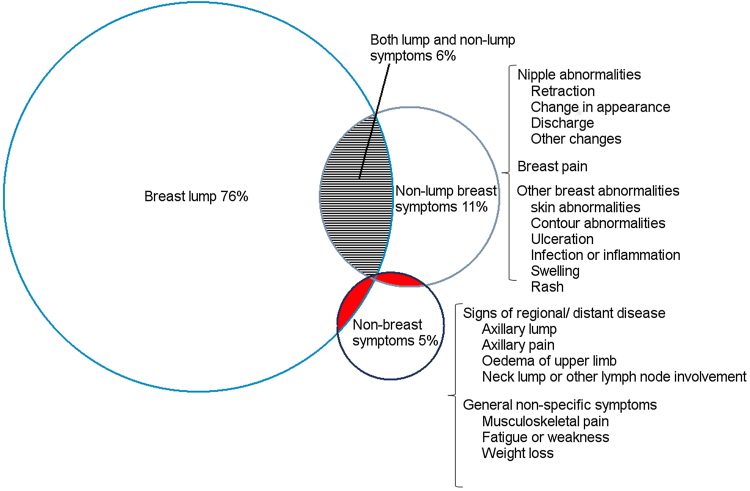
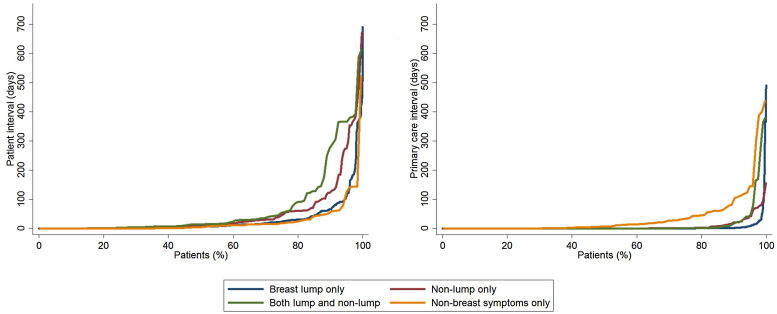
Results: A total of 56 presenting symptoms were described: breast lump was the most frequent (83%) followed by non-lump breast symptoms, (e.g. nipple abnormalities (7%) and breast pain (6%)); and non-breast symptoms (e.g. back pain (1%) and weight loss (0.3%)). Greater proportions of women with 'non-lump only' and 'both lump and non-lump' symptoms waited 90days or longer before seeking help compared to those with 'breast lump only' (15% and 20% vs. 7% respectively). Quantile regression indicated that the differences in the patient interval persisted after adjusting for age and ethnicity, but there was little variation in primary care interval for the majority of women.
Conclusions: About 1 in 6 women with breast cancer present with a large spectrum of symptoms other than breast lump. Women who present with non-lump breast symptoms tend to delay seeking help. Further emphasis of breast symptoms other than breast lump in symptom awareness campaigns is warranted.
Keywords: Breast neoplasms; Delayed diagnosis; Early detection of cancer; Early diagnosis; Female; Primary health care; Signs and symptoms.
Copyright © 2017 The Author(s). Published by Elsevier Ltd.. All rights reserved.
Figures
References
-
- Janz N.K., Becker M.H., Anderson L.A., Marcoux B.C. Interventions to enhance breast self-examination practice: a review. Publ. Health Rev. 1989;17:89–163. - PubMed
-
- Roberts M.M., French K., Duffy J. Breast cancer and breast self-examination: what do Scottish women know? Soc. Sci. Med. 1984;18:791–797. - PubMed
MeSH terms
Grants and funding
LinkOut - more resources
Full Text Sources
Other Literature Sources
Medical
