


A prospective observational cohort study to assess the incidence of acute otitis media among children 0-5 years of age in Southern Brazil
- PMID: 28549858
- PMCID: PMC9427960
- DOI: 10.1016/j.bjid.2017.04.003
A prospective observational cohort study to assess the incidence of acute otitis media among children 0-5 years of age in Southern Brazil
Abstract
Objectives: To estimate acute otitis media incidence among young children and impact on quality of life of parents/caregivers in a southern Brazilian city.
Methods: Prospective cohort study including children 0-5 years of age registered at a private pediatric practice. Acute otitis media episodes diagnosed by a pediatrician and impact on quality of life of parents/caregivers were assessed during a 12-month follow-up.
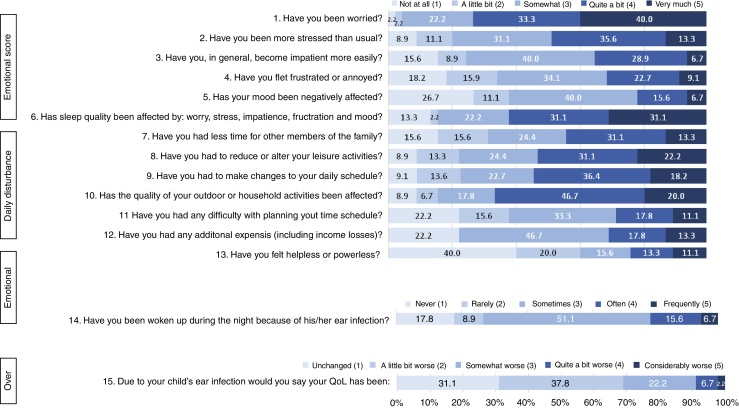
Results: During September 2008-March 2010, of 1,136 children enrolled in the study, 1074 (95%) were followed: 55.0% were ≤2 years of age, 52.3% males, 94.7% white, and 69.2% had previously received pneumococcal vaccine in private clinics. Acute otitis media incidence per 1000 person-years was 95.7 (95% confidence interval: 77.2-117.4) overall, 105.5 (95% confidence interval: 78.3-139.0) in children ≤2 years of age and 63.6 (95% confidence interval: 43.2-90.3) in children 3-5 years of age. Acute otitis media incidence per 1000 person-years was 86.3 (95% confidence interval: 65.5-111.5) and 117.1 (95% confidence interval: 80.1-165.3) among vaccinated and unvaccinated children, respectively. Nearly 68.9% of parents reported worsening of their overall quality of life.
Conclusion: Acute otitis media incidence among unvaccinated children in our study may be useful as baseline data to assess impact of pneumococcal vaccine introduction in the Brazilian National Immunization Program in April 2010.
Keywords: Acute otitis media; Children; Incidence; Quality of life.
Copyright © 2017 Sociedade Brasileira de Infectologia. Published by Elsevier Editora Ltda. All rights reserved.
Figures
References
-
- Cripps A.W., Otczyk D.C., Kyd J.M. Bacterial otitis media: a vaccine preventable disease? Vaccine. 2005;23:2304–2310. - PubMed
-
- Paradise J.L., Rockette H.E., Colborn D.K., et al. Otitis media in 2253 Pittsburgh-area infants: prevalence and risk factors during the first two years of life. Pediatrics. 1997;99:318–333. - PubMed
-
- Bardach A., Ciapponi A., Garcia-Marti S., et al. Epidemiology of acute otitis media in children of Latin America and the Caribbean: a systematic review and meta-analysis. Int J Pediatr Otorhinolaryngol. 2011;75:1062–1070. - PubMed
-
- Scotta M.C., Veras T.N., Klein P.C., et al. Impact of 10-valent pneumococcal non-typeable Haemophilus influenzae protein D conjugate vaccine (PHiD-CV) on childhood pneumonia hospitalizations in Brazil two years after introduction. Vaccine. 2014;32:4495–4499. - PubMed
Publication types
MeSH terms
LinkOut - more resources
Full Text Sources
Other Literature Sources
Medical
Miscellaneous
