


Virtual Visits and Patient-Centered Care: Results of a Patient Survey and Observational Study
- PMID: 28550006
- PMCID: PMC5479398
- DOI: 10.2196/jmir.7374
Virtual Visits and Patient-Centered Care: Results of a Patient Survey and Observational Study
Abstract
Background: Virtual visits are clinical interactions in health care that do not involve the patient and provider being in the same room at the same time. The use of virtual visits is growing rapidly in health care. Some health systems are integrating virtual visits into primary care as a complement to existing modes of care, in part reflecting a growing focus on patient-centered care. There is, however, limited empirical evidence about how patients view this new form of care and how it affects overall health system use.
Objective: Descriptive objectives were to assess users and providers of virtual visits, including the reasons patients give for use. The analytic objective was to assess empirically the influence of virtual visits on overall primary care use and costs, including whether virtual care is with a known or a new primary care physician.
Methods: The study took place in British Columbia, Canada, where virtual visits have been publicly funded since October 2012. A survey of patients who used virtual visits and an observational study of users and nonusers of virtual visits were conducted. Comparison groups included two groups: (1) all other BC residents, and (2) a group matched (3:1) to the cohort. The first virtual visit was used as the intervention and the main outcome measures were total primary care visits and costs.
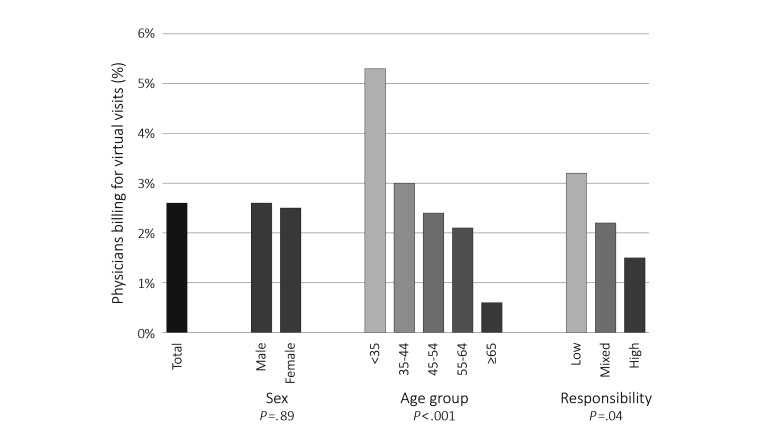
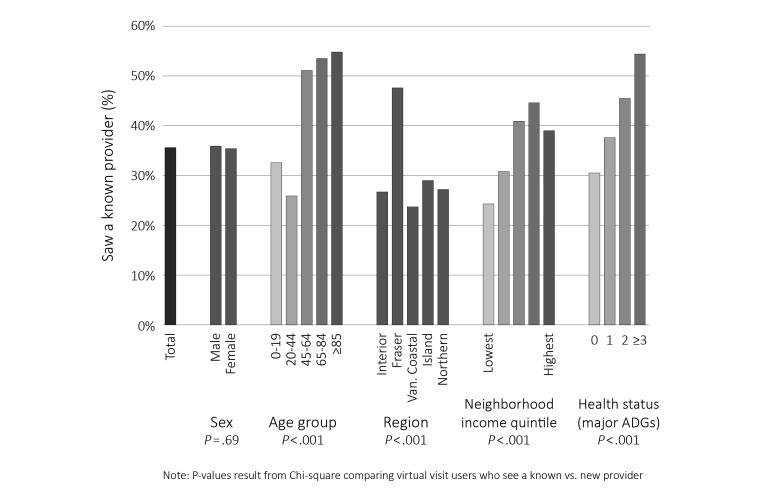
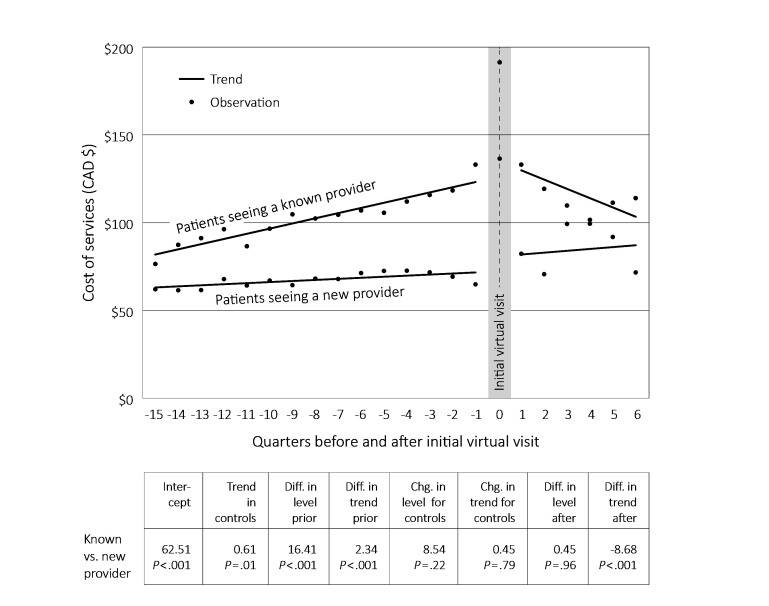
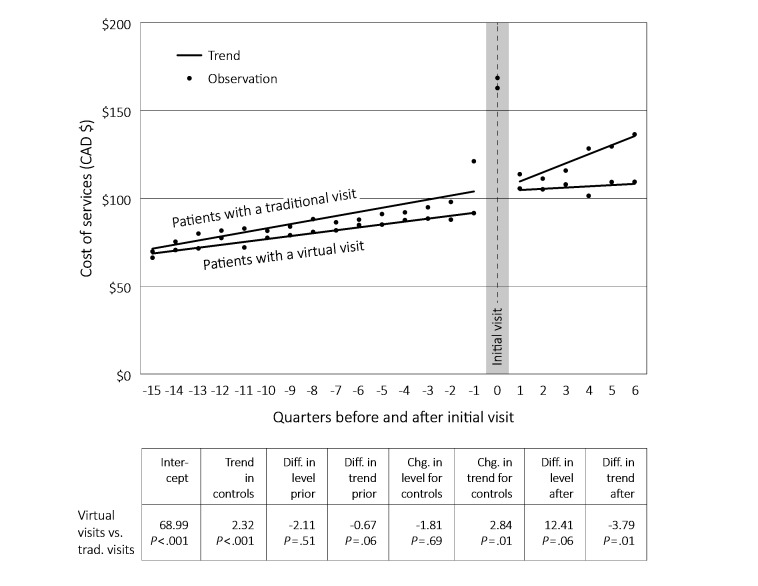
Results: During 2013-2014, there were 7286 virtual visit encounters, involving 5441 patients and 144 physicians. Younger patients and physicians were more likely to use and provide virtual visits (P<.001), with no differences by sex. Older and sicker patients were more likely to see a known provider, whereas the lowest socioeconomic groups were the least likely (P<.001). The survey of 399 virtual visit patients indicated that virtual visits were liked by patients, with 372 (93.2%) of respondents saying their virtual visit was of high quality and 364 (91.2%) reporting their virtual visit was "very" or "somewhat" helpful to resolve their health issue. Segmented regression analysis and the corresponding regression parameter estimates suggested virtual visits appear to have the potential to decrease primary care costs by approximately Can $4 per quarter (Can -$3.79, P=.12), but that benefit is most associated with seeing a known provider (Can -$8.68, P<.001).
Conclusions: Virtual visits may be one means of making the health system more patient-centered, but careful attention needs to be paid to how these services are integrated into existing health care delivery systems.
Keywords: patient-centered care; primary care delivery; telehealth; virtual visits.
©Kimberlyn Marie McGrail, Megan Alyssa Ahuja, Chad Andrew Leaver. Originally published in the Journal of Medical Internet Research (http://www.jmir.org), 26.05.2017.
Conflict of interest statement
Conflicts of Interest: None declared.
Figures
References
-
- Jamieson T, Wallace R, Armstrong K, Agarwal P, Griffin B, Wong I, Bahtia S. Virtual Care: A Framework for a Patient-Centric System. Toronto, ON: Women’s College Hospital Institute for Health Systems Solutions and Virtual Care; 2015. [2017-01-16]. http://www.womenscollegehospital.ca/assets/pdf/wihv/WIHV_VirtualHealthSy... 6natfkSzo.
-
- Al-Mahdi I, Gray K, Lederman R. Online medical consultation: a review of literature and practice. Proceedings of the 8th Australasian Workshop on Health Informatics and Knowledge Management; 8th Australasian Workshop on Health Informatics and Knowledge Management; Jan 27-30, 2015; Sydney, Australia. 2015. pp. 97–100. http://crpit.com/confpapers/CRPITV164Al-Mahdi.pdf
-
- Mehrotra A, Paone S, Martich GD, Albert SM, Shevchik GJ. Characteristics of patients who seek care via eVisits instead of office visits. Telemed J E Health. 2013 Jul;19(7):515–519. doi: 10.1089/tmj.2012.0221. http://europepmc.org/abstract/MED/23682589 - DOI - PMC - PubMed
-
- Verhoeven F, Tanja-Dijkstra K, Nijland N, Eysenbach G, van Gemert-Pijnen L. Asynchronous and synchronous teleconsultation for diabetes care: a systematic literature review. J Diabetes Sci Technol. 2010 May;4(3):666–684. http://europepmc.org/abstract/MED/20513335 - PMC - PubMed
Publication types
MeSH terms
LinkOut - more resources
Full Text Sources
Other Literature Sources
Medical
