


Risk of Severe Hypoglycemia in Type 1 Diabetes Over 30 Years of Follow-up in the DCCT/EDIC Study
- PMID: 28550194
- PMCID: PMC5521975
- DOI: 10.2337/dc16-2723
Risk of Severe Hypoglycemia in Type 1 Diabetes Over 30 Years of Follow-up in the DCCT/EDIC Study
Erratum in
-
Erratum. Risk of Severe Hypoglycemia in Type 1 Diabetes Over 30 Years of Follow-up in the DCCT/EDIC Study. Diabetes Care 2017;40:1010-1016.Diabetes Care. 2021 Jan;44(1):298. doi: 10.2337/dc21-er01a. Epub 2020 Nov 6. Diabetes Care. 2021. PMID: 33158952 Free PMC article. No abstract available.
Abstract
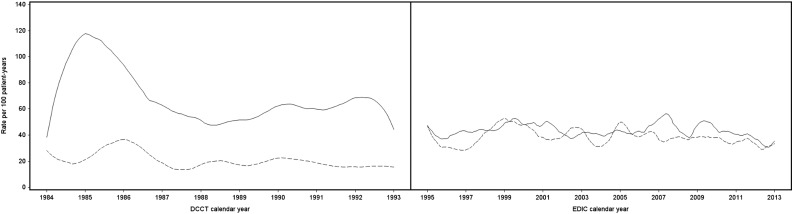
Objective: During the Diabetes Control and Complications Trial (DCCT), intensive diabetes therapy achieving a mean HbA1c of ∼7% was associated with a threefold increase in the rate of severe hypoglycemia (defined as requiring assistance) compared with conventional diabetes therapy with a mean HbA1c of 9% (61.2 vs. 18.7 per 100 patient-years). After ∼30 years of follow-up, we investigated the rates of severe hypoglycemia in the DCCT/Epidemiology of Diabetes Inverventions and Complications (EDIC) cohort.
Research design and methods: Rates of severe hypoglycemia were reported quarterly during DCCT and annually during EDIC (i.e., patient recall of episodes in the preceding 3 months). Risk factors influencing the rate of severe hypoglycemia over time were investigated.
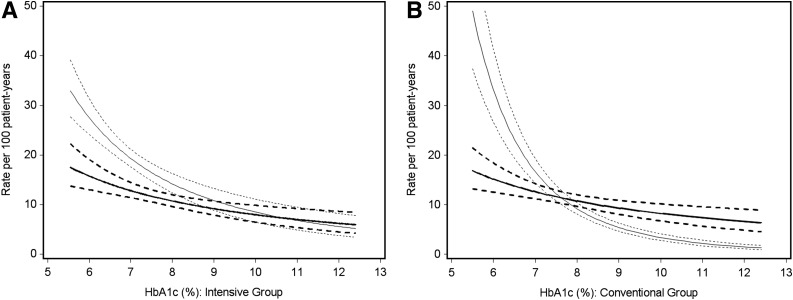
Results: One-half of the DCCT/EDIC cohort reported episodes of severe hypoglycemia. During EDIC, rates of severe hypoglycemia fell in the former DCCT intensive treatment group but rose in the former conventional treatment group, resulting in similar rates (36.6 vs. 40.8 episodes per 100 patient-years, respectively) with a relative risk of 1.12 (95% CI 0.91-1.37). A preceding episode of severe hypoglycemia was the most powerful predictor of subsequent episodes. Entry into the DCCT study as an adolescent was associated with an increased risk of severe hypoglycemia, whereas insulin pump use was associated with a lower risk. Severe hypoglycemia rates increased with lower HbA1c similarly among participants in both treatment groups.
Conclusions: Rates of severe hypoglycemia have equilibrated over time between the two DCCT/EDIC treatment groups in association with advancing duration of diabetes and similar HbA1c levels. Severe hypoglycemia persists and remains a challenge for patients with type 1 diabetes across their life span.
Trial registration: ClinicalTrials.gov NCT00360815 NCT00360893.
© 2017 by the American Diabetes Association.
Figures
References
-
- Nathan DM, Genuth S, Lachin J, et al.; Diabetes Control and Complications Trial Research Group . The effect of intensive treatment of diabetes on the development and progression of long-term complications in insulin-dependent diabetes mellitus. N Engl J Med 1993;329:977–986 - PubMed
-
- Writing Team for the Diabetes Control and Complications Trial/Epidemiology of Diabetes Interventions and Complications Research Group Sustained effect of intensive treatment of type 1 diabetes mellitus on development and progression of diabetic nephropathy: the Epidemiology of Diabetes Interventions and Complications (EDIC) study. JAMA 2003;290:2159–2167 - PMC - PubMed
Publication types
MeSH terms
Substances
Associated data
Grants and funding
LinkOut - more resources
Full Text Sources
Other Literature Sources
Medical
Miscellaneous
