


A comparative effectiveness study of eSource used for data capture for a clinical research registry
- PMID: 28551007
- PMCID: PMC5942198
- DOI: 10.1016/j.ijmedinf.2017.04.015
A comparative effectiveness study of eSource used for data capture for a clinical research registry
Abstract
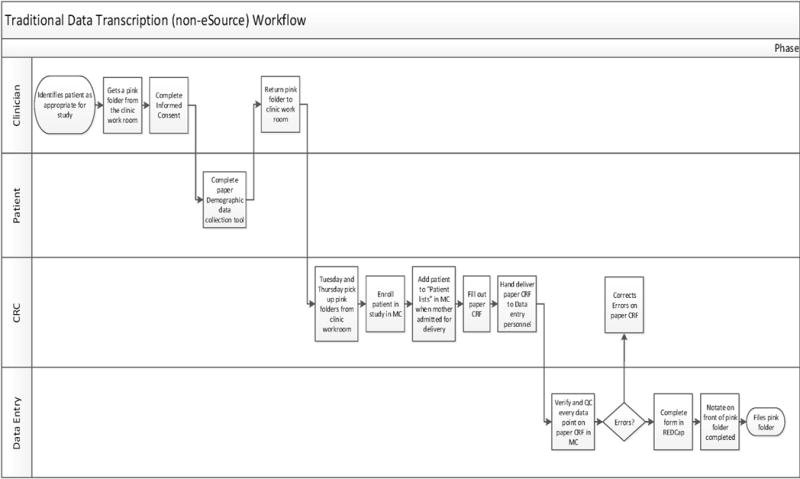
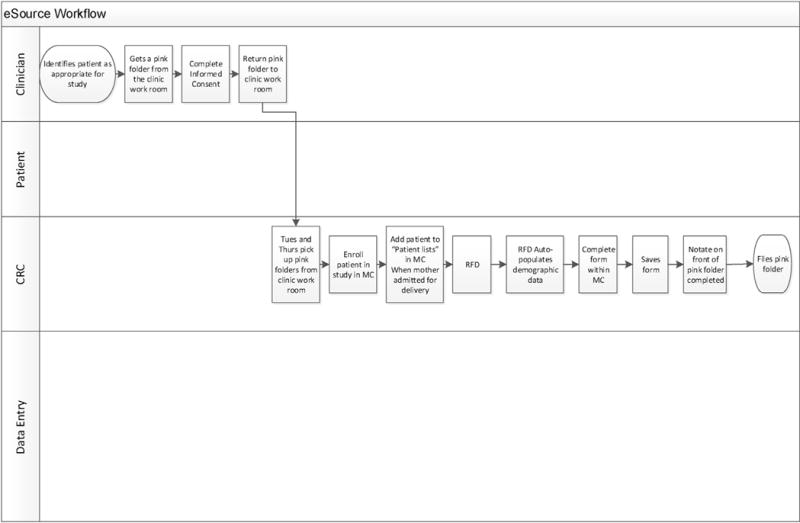
Objective: This pilot study compared eSource-enabled versus traditional manual data transcription (non-eSource methods) for the collection of clinical registry information. The primary study objective was to compare the time spent completing registry forms using eSource versus non-eSource methods The secondary objectives were to compare data quality associated with these two data capture methods and the flexibility of the workflows. This study directly addressed fundamental questions relating to eSource adoption: what time-savings can be realized, and to what extent does eSource improve data quality.
Materials and methods: The study used time and motion methods to compare eSource versus non-eSource data capture workflows for a single center OB/GYN registry. Direct observation by industrial engineers using specialized computer software captured keystrokes, mouse clicks and video recordings of the study team in their normal work environment completing real-time data collection.
Results: The overall average data capture time was reduced with eSource versus non-eSource methods (difference, 151s per case; eSource, 1603s; non-eSource, 1754s; p=0.051). The average data capture time for the demographic data was reduced (difference, 79s per case; eSource, 133s; non-eSource, 213s; p<0.001). This represents a 37% time reduction (95% confidence interval 27% to 47%). eSourced data field transcription errors were also reduced (eSource, 0%; non-eSource, 9%).
Conclusion: The use of eSource versus traditional data transcription was associated with a significant reduction in data entry time and data quality errors. Further studies in other settings are needed to validate these results.
Keywords: Data accuracy; Data collection; Data retrieval; Information extraction; Registries; Time-motion analysis.
Copyright © 2017 The Authors. Published by Elsevier B.V. All rights reserved.
Figures
References
-
- Eisenstein EL, Collins R, Cracknell BS, et al. Sensible approaches for reducing clinical trial costs. Clin Trials. 2008;5(1):75–84. - PubMed
-
- Morrison BW, Cochran CJ, White JG. Monitoring the quality of conduct of clinical trials: a survey of current practices. Clin Trials. 2011;8(3):342–349. - PubMed
Publication types
MeSH terms
Grants and funding
LinkOut - more resources
Full Text Sources
Other Literature Sources
Miscellaneous
