Sandhoff Disease without Hepatosplenomegaly Due to Hexosaminidase B Gene Mutation
- PMID: 28553389
- PMCID: PMC5437798
- DOI: 10.4103/1817-1745.205623
Sandhoff Disease without Hepatosplenomegaly Due to Hexosaminidase B Gene Mutation
Abstract
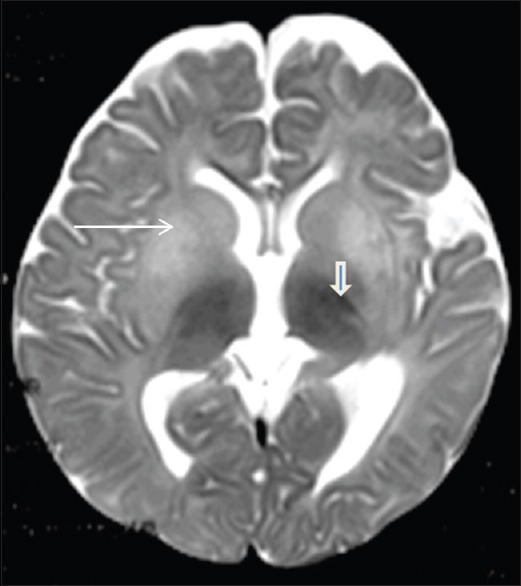
Sandhoff disease is a neurodegenerative disease caused due to deficiency of hexosaminidase (HEX) A and B. A 1-year-old male child presented with regression of milestones, exaggerated startle response, decreased vision, and seizures from 6 months of age. The child had coarse facies without hepatosplenomegaly. Serum levels of β hexosaminidase total (A + B) were low. Genetic testing for Sandhoff disease revealed a homozygous missense variant on HEXB gene. The case is presented to highlight that the absence of hepatosplenomegaly should not restrain in suspecting Sandhoff disease.
Keywords: Cherry red spot; Sandhoff disease; hepatosplenomegaly; hexosaminidase; hexosaminidase B gene.
Conflict of interest statement
There are no conflicts of interest.
Figures
References
-
- Yun YM, Lee SN. A case refort of Sandhoff disease. Korean J Ophthalmol. 2005;19:68–72. - PubMed
-
- Pastores GM. Lysosomal storage diseases. In: Swaiman KF, editor. Swaiman's Pediatric Neurology. 5th ed. Philadelphia: Elsevier Saunders; 2012. pp. 403–51.
-
- Ozkara HA, Topçu M, Renda Y. Sandhoff disease in the Turkish population. Brain Dev. 1997;19:469–72. - PubMed
Publication types
LinkOut - more resources
Full Text Sources
Other Literature Sources
Miscellaneous