Observational Study
. 2017:2017:8704352.
doi: 10.1155/2017/8704352. Epub 2017 May 1.

Therapeutic Hypothermia Reduces Oxidative Damage and Alters Antioxidant Defenses after Cardiac Arrest

Affiliations
Observational Study

Therapeutic Hypothermia Reduces Oxidative Damage and Alters Antioxidant Defenses after Cardiac Arrest

Fernanda S Hackenhaar et al. Oxid Med Cell Longev. 2017.

Abstract

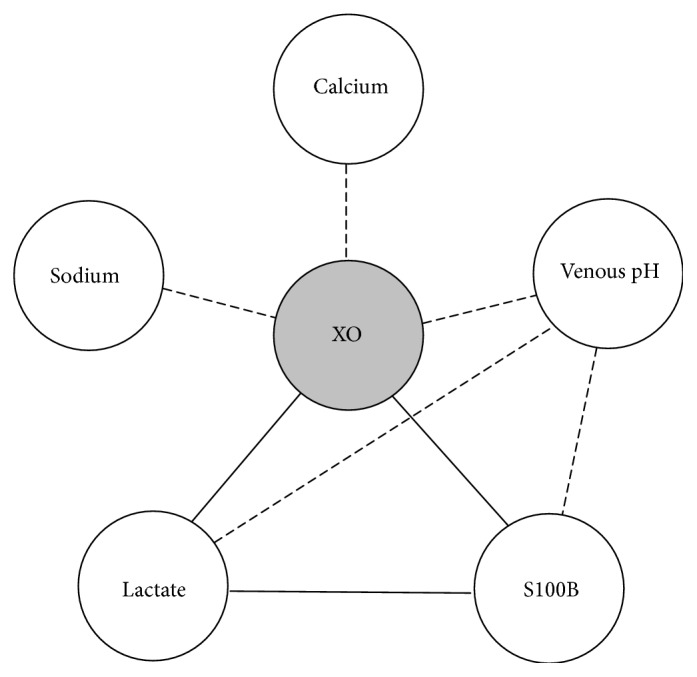
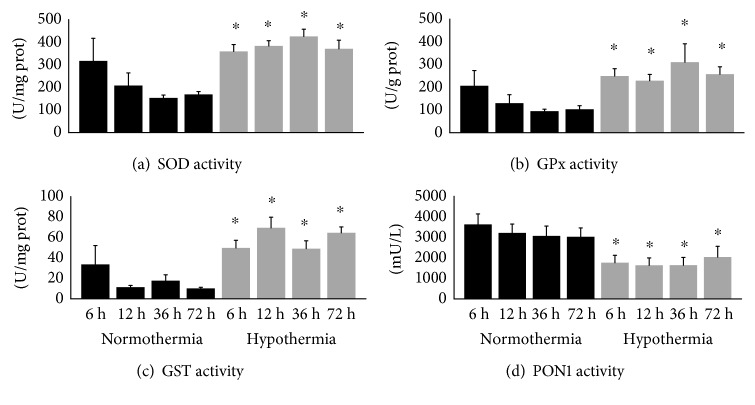
After cardiac arrest, organ damage consequent to ischemia-reperfusion has been attributed to oxidative stress. Mild therapeutic hypothermia has been applied to reduce this damage, and it may reduce oxidative damage as well. This study aimed to compare oxidative damage and antioxidant defenses in patients treated with controlled normothermia versus mild therapeutic hypothermia during postcardiac arrest syndrome. The sample consisted of 31 patients under controlled normothermia (36°C) and 11 patients treated with 24 h mild therapeutic hypothermia (33°C), victims of in- or out-of-hospital cardiac arrest. Parameters were assessed at 6, 12, 36, and 72 h after cardiac arrest in the central venous blood samples. Hypothermic and normothermic patients had similar S100B levels, a biomarker of brain injury. Xanthine oxidase activity is similar between hypothermic and normothermic patients; however, it decreases posthypothermia treatment. Xanthine oxidase activity is positively correlated with lactate and S100B and inversely correlated with pH, calcium, and sodium levels. Hypothermia reduces malondialdehyde and protein carbonyl levels, markers of oxidative damage. Concomitantly, hypothermia increases the activity of erythrocyte antioxidant enzymes superoxide dismutase, glutathione peroxidase, and glutathione S-transferase while decreasing the activity of serum paraoxonase-1. These findings suggest that mild therapeutic hypothermia reduces oxidative damage and alters antioxidant defenses in postcardiac arrest patients.


Figures
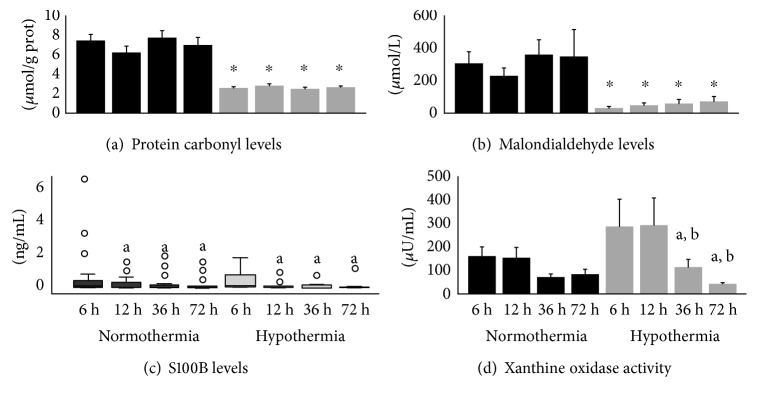
Figure 1
Figure 1
Biomarkers of oxidative damage and brain injury at 6, 12, 36, and 72 h after cardiac arrest (CA) in normothermic (n = 31) versus hypothermic (n = 11) patients. In hypothermic patients, body temperature reached 33°C at 6 and 12 h and 36°C at 36 and 72 h after CA. (a) Carbonyl levels, a biomarker of oxidative damage to proteins; (b) malondialdehyde levels, a biomarker of oxidative damage to lipids; (c) S100B levels, a biomarker of brain injury; (d) xanthine oxidase (XO) activity, a biomarker of generation of superoxide free radical. Data are expressed as mean ± standard error, except for S100B levels, which are expressed as median and interquartile range. Significantly different when comparing normothermic versus hypothermic groups at the same time point, p ≤ 0.05. aSignificantly different within the group when compared to 6 h, p < 0.05. bSignificantly different within the group when compared to 12 h, p ≤ 0.05.
Figure 2
Figure 2
Schematic representation of the correlation analysis of xanthine oxidase (XO) activity. Lines indicate positive (solid lines) and negative (dotted lines) correlations.
Figure 3
Figure 3
Antioxidant enzymatic activity at 6, 12, 36, and 72 h after cardiac arrest (CA) in normothermic (n = 31) versus hypothermic (n = 11) patients. In hypothermic patients, body temperature reached 33°C at 6 and 12 h and 36°C at 36 and 72 h after CA. (a) Superoxide dismutase (SOD) activity; (b) glutathione peroxidase (GPx) activity; (c) glutathione S-transferase (GST) activity; (d) paraoxonase-1 (PON1) activity. Data are expressed as mean ± standard error. Significantly different when comparing normothermic versus hypothermic groups at the same time point, p ≤ 0.05.

References

    1. Nolan J. P., Neumar R. W., Adrie C., et al. Post-cardiac arrest syndrome: epidemiology, pathophysiology, treatment, and prognostication a scientific statement from the international liaison committee on resuscitation; the american heart association emergency cardiovascular care committee; the council on cardiovascular surgery and anesthesia; the council on cardiopulmonary, perioperative, and critical care; the council on clinical cardiology; the council on stroke. Resuscitation. 2008;79(1):350–379. doi: 10.1016/j.ienj.2009.07.001. - DOI - PubMed
    1. Zhang Y.-S., Liu B., Luo X.-J., et al. A novel function of nuclear nonmuscle myosin regulatory light chain in promotion of xanthine oxidase transcription after myocardial ischemia/reperfusion. Free Radical Biology & Medicine. 2015;83:115–128. doi: 10.1016/j.freeradbiomed.2015.02.013. - DOI - PubMed
    1. Hackenhaar F. S., Fumagalli F., Li Volti G., et al. Relationship between post-cardiac arrest myocardial oxidative stress and myocardial dysfunction in the rat. Journal of Biomedical Science. 2014;21(1):p. 70. - PMC - PubMed
    1. Gielis J. F., Boulet G. A., Briede J. J., et al. Longitudinal quantification of radical bursts during pulmonary ischaemia and reperfusion. European Journal of Cardio-Thoracic Surgery. 2015;48(4):622–628. doi: 10.1093/ejcts/ezu518. - DOI - PubMed
    1. Angelos M. G., Kutala V. K., Torres C. A., et al. Hypoxic reperfusion of the ischemic heart and oxygen radical generation. American Journal of Physiology. Heart and Circulatory Physiology. 2006;290(1):341–347. doi: 10.1152/ajpheart.00223.2005. - DOI - PubMed

Publication types

LinkOut - more resources