. 2017 Apr 1;8(4):2503-2521.
doi: 10.1039/c7sc00154a. Epub 2017 Feb 17.

Fully conjugated ladder polymers

Affiliations

Fully conjugated ladder polymers

Jongbok Lee et al. Chem Sci. .

Abstract

Fully conjugated ladder polymers (cLPs), in which all the backbone units on the polymer main-chain are π-conjugated and fused, have attracted great interest owing to their intriguing properties, remarkable chemical and thermal stability, and potential suitability as functional organic materials. The synthesis of cLPs can be, in general, achieved by two main strategies: single-step ladderization and post-polymerization ladderization. Although a variety of synthetic methods have been developed, the chemistry of cLPs must contend with structural defects and low solubility that prevents complete control over synthesis and structural characterization. Despite these challenges, cLPs have been used for a wide range of applications such as organic light emitting diodes (OLEDs) and organic field effect transistors (OFETs), paralleling developments in processing methods. In this perspective, we discuss the background of historical syntheses including the most recent synthetic approaches, challenges related to the synthesis and structural characterization of well-defined cLPs with minimum levels of structural defects, cLPs' unique properties, and wide range of applications. In addition, we propose outlooks to overcome the challenges limiting the synthesis, analysis, and processing of cLPs in order to fully unlock the potential of this intriguing class of organic materials.


Figures
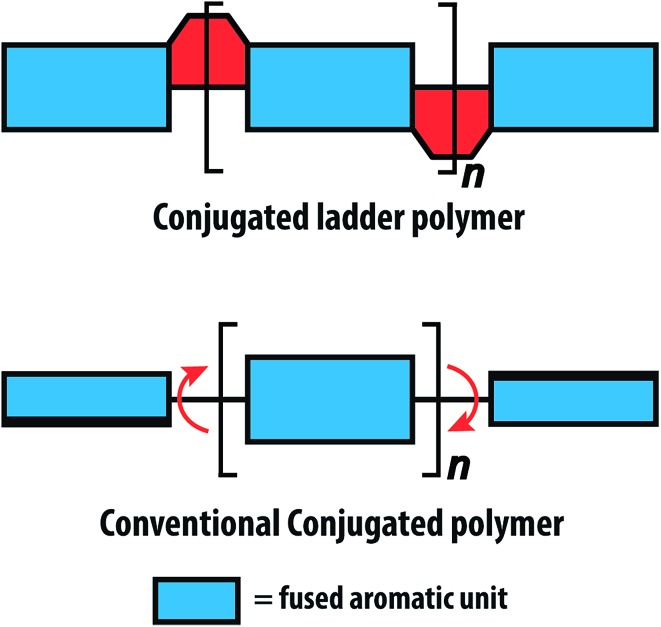
Fig. 1
Fig. 1. Graphical representation of conjugated ladder polymer (cLP) and conventional conjugated polymer with free torsional motions.
Fig. 2
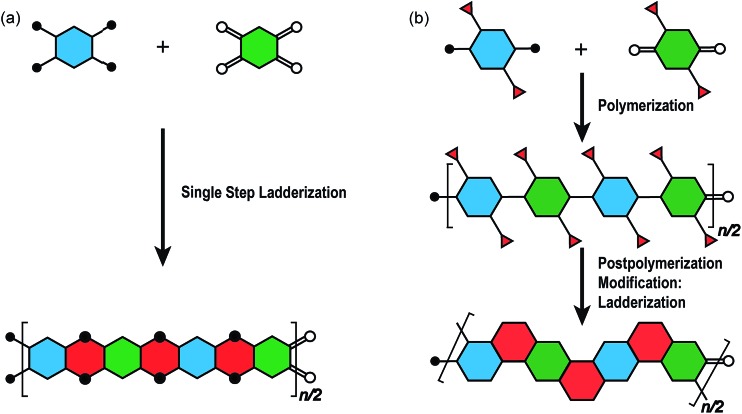
Fig. 2. Graphical synthetic approaches to construct a ladder polymer. (a) Single-step ladderization and (b) post-polymerization modification: ladderization.
Fig. 3
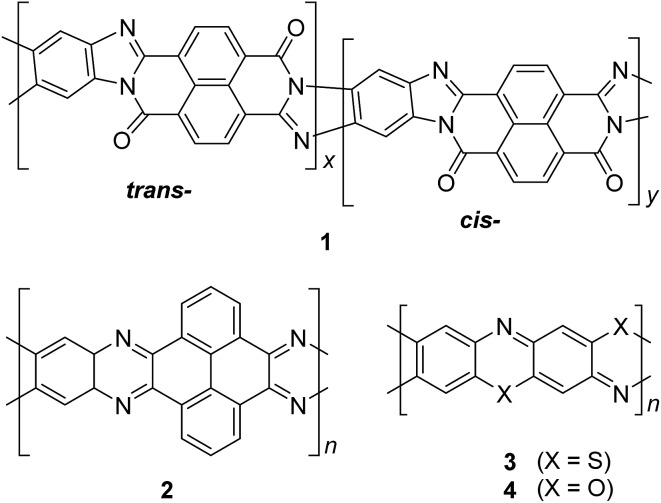
Fig. 3. Chemical structures of trans and cis poly(benzimidazole benzophenanthroline) (BBL) 1, polyquinoxaline (PQL) 2, poly(phenthiazine) (PTL) 3, and poly(phenooxazine) (POL) 4.
Scheme 1
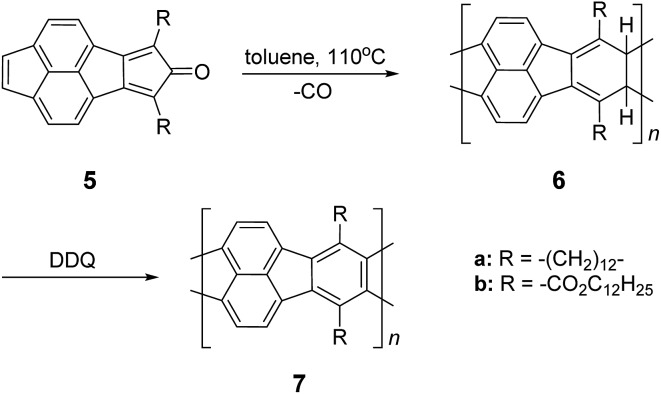
Scheme 1. Synthesis of ladder polymer 7 by Diels–Alder reaction followed by dehydrogenation.
Scheme 2
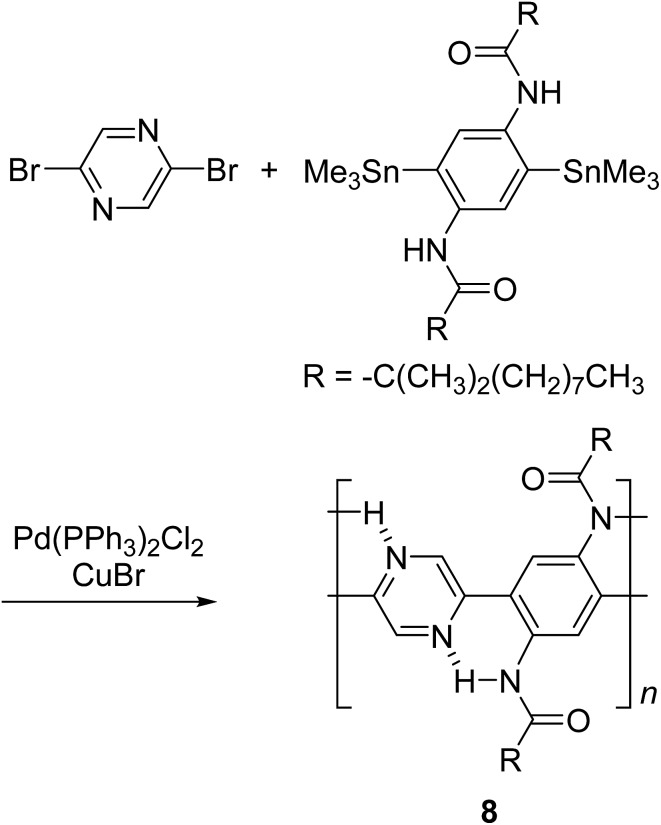
Scheme 2. Synthesis of ladder polymer 8 by self-assembled intramolecular N–H interaction.
Scheme 3
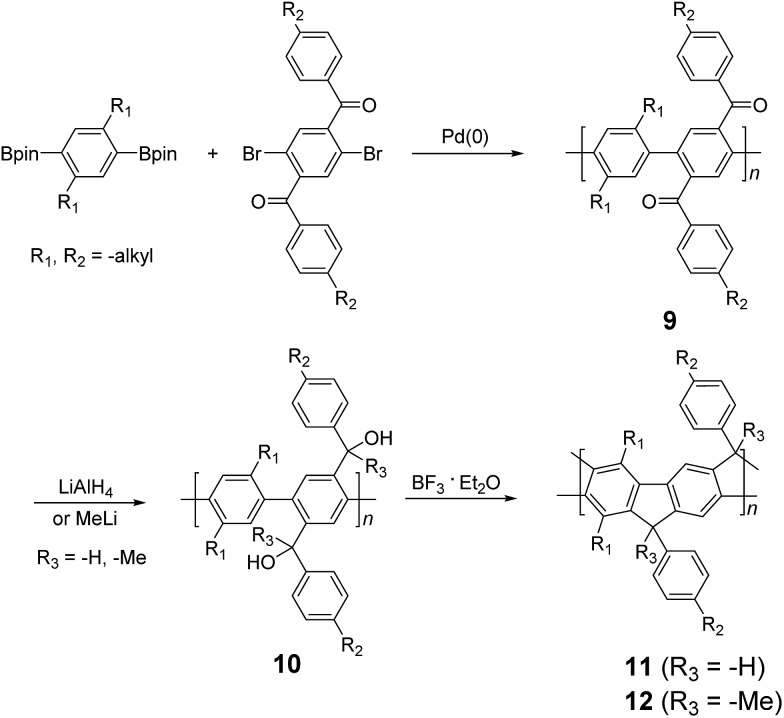
Scheme 3. Synthesis of poly(p-phenylene) ladder polymers (LPPPs) 11 and 12 by Friedel–Craft ring annulation.
Scheme 4
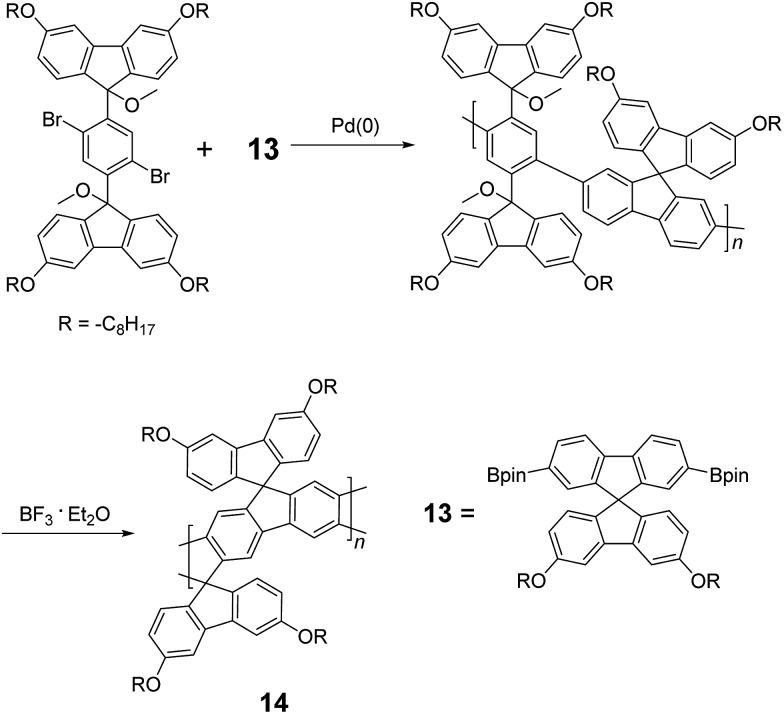
Scheme 4. Synthesis of spiro-bridged LPPP 14 by Friedel–Craft ring annulation.
Scheme 5
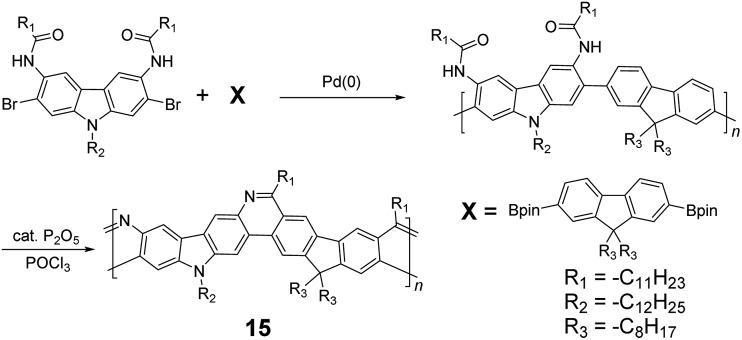
Scheme 5. Synthesis of carbazole-fluorene-based ladder polymer 15 by Bischler-Napieralski cyclization.
Scheme 6
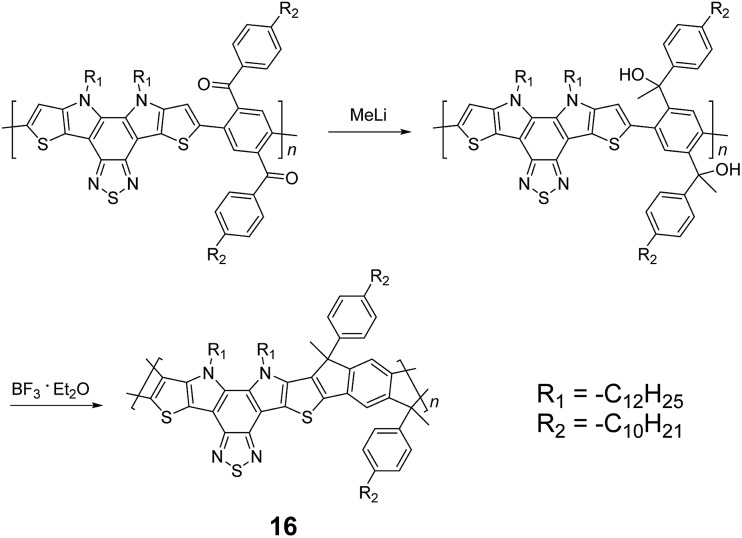
Scheme 6. Synthesis of D–A type ladder polymer 16 by Friedel–Craft ring annulation.
Scheme 7
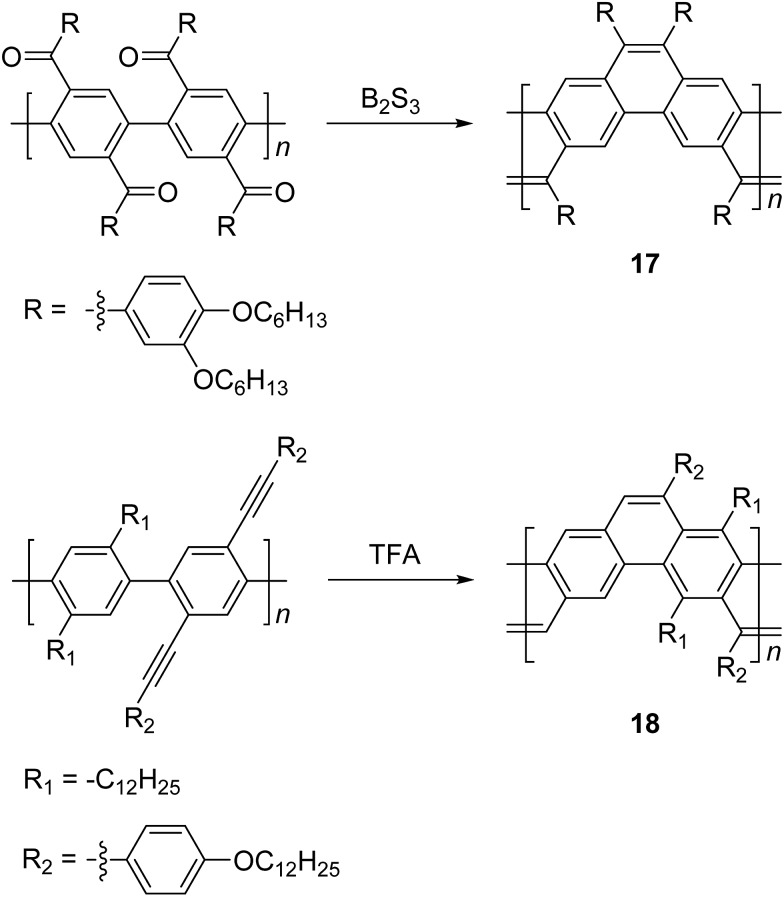
Scheme 7. Synthesis of poly(p-phenacene)s 17 and 18 by carbonyl olefination and electrophile-induced cyclization, respectively.
Scheme 8
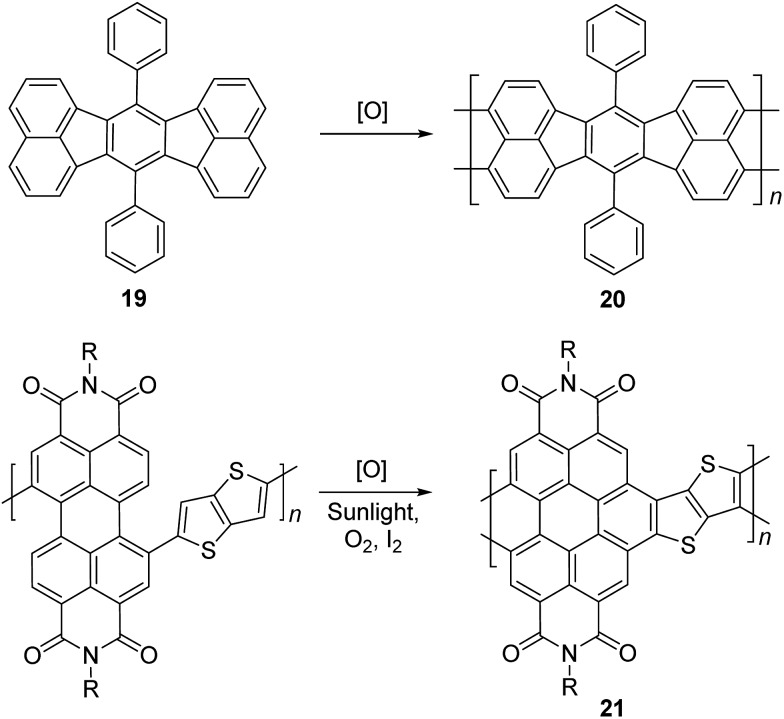
Scheme 8. Synthesis of ladder polymer 20 by electrochemical oxidation and D–A type ladder polymer 21 by photochemical oxidation.
Scheme 9
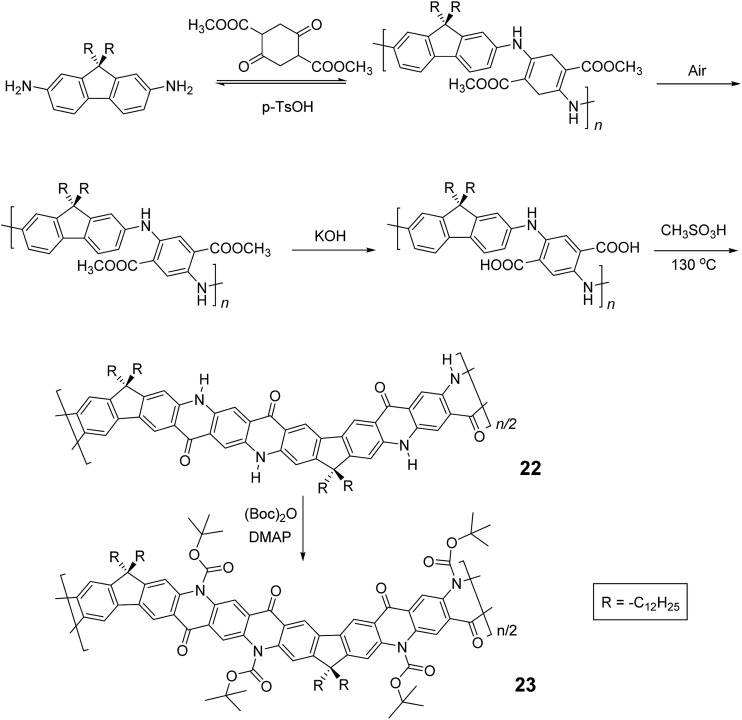
Scheme 9. Metal catalyst-free synthesis of quinacridone derived ladder polymers 22 and 23.
Scheme 10
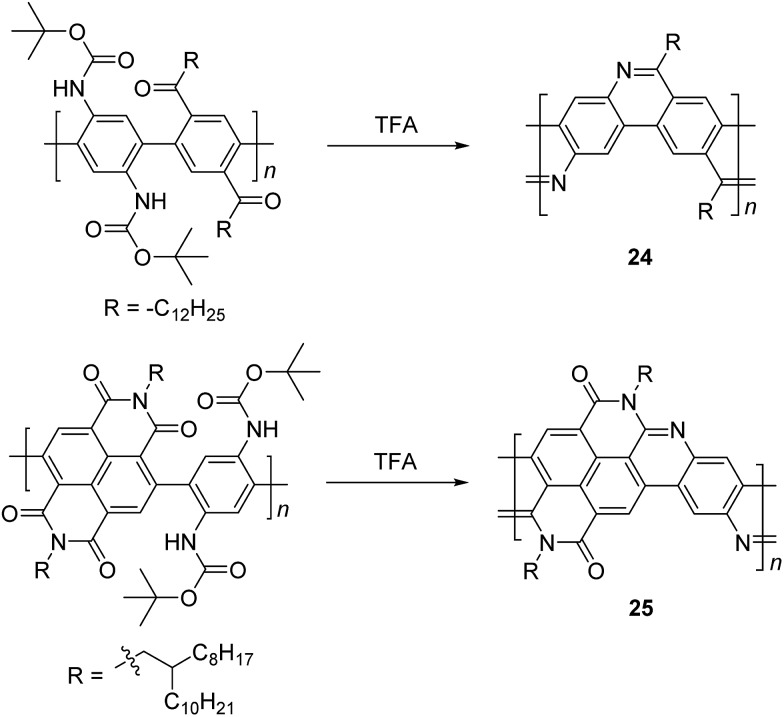
Scheme 10. Synthesis of imine-bridged LPPP 24 and D–A type ladder polymer 25 by thermodynamically controlled imine condensation.
Scheme 11
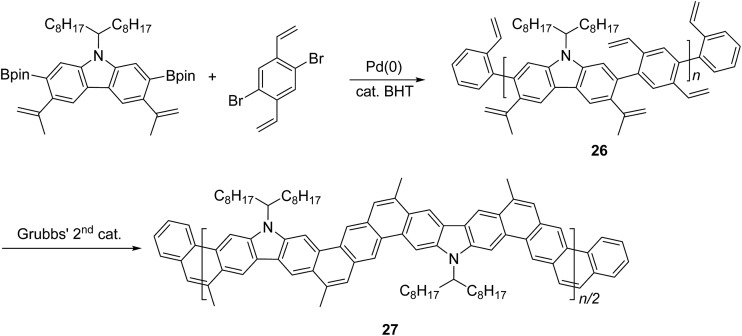
Scheme 11. Synthesis of carbazole-based ladder polymer 27 by thermodynamically controlled ring-closing olefin metathesis.
Fig. 4
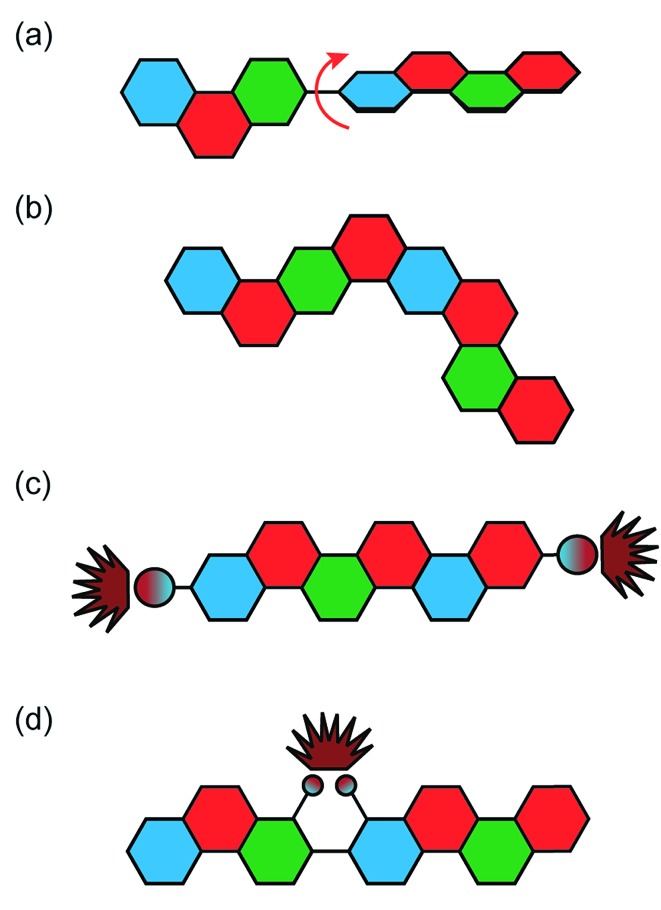
Fig. 4. Defects common in cLPs. (a) Conjugation breaking torsional defects formed by incomplete ladderization or postsynthetic degradation, (b) regioisomeric structures created during nonregioselective syntheses, and non-conjugation breaking emissive defects (c) as a result of non-ladderized chain end groups, and (d) internally in the polymer chain.
Fig. 5
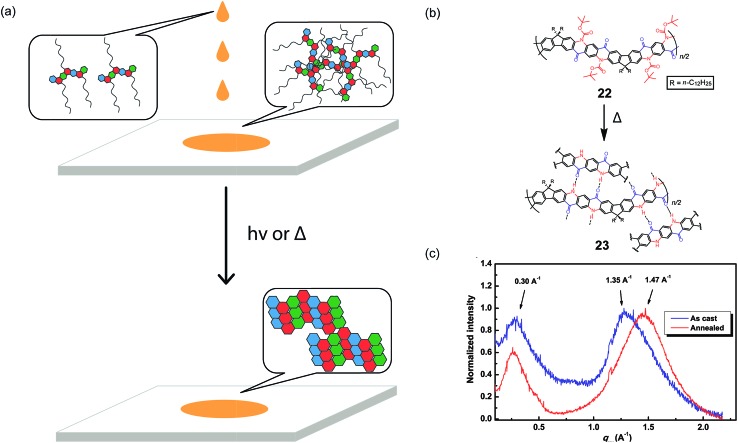
Fig. 5. (a) Proposed illustration using cleavable side chains in cLPs processing to obtain a well-ordered, solvent resistant film from an easily processed material. (b) Schematic representation of Boc cleavage of 22 by thermal annealing in the solid state. (c) GIXD of the as-cast film of 22 (blue) in comparison with that of the annealed thin film (red). Reproduced from ref. 51 with permission from Elsevier.
Fig. 6
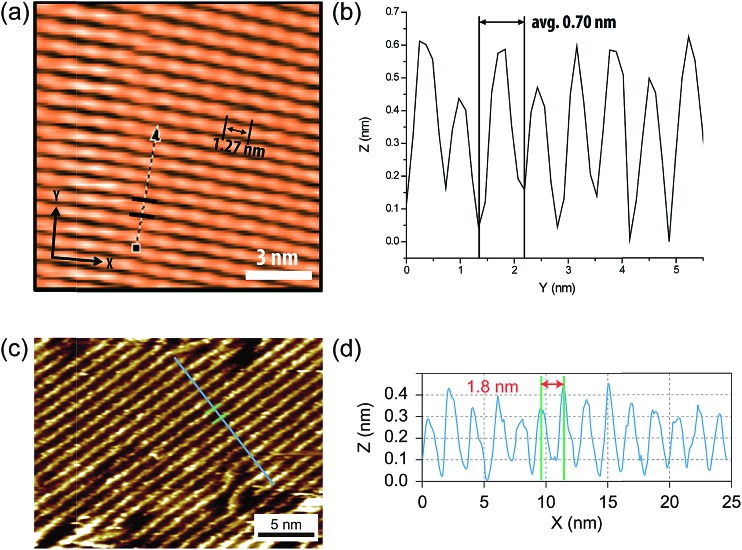
Fig. 6. (a) STM images of cLP 27 on HOPG. (b) Section profile along the arrow line drawn in (a). (c) STM images of the graphene nanoribbon on HOPG from ref. 68. (d) Section profile along the blue line in (c). Reproduced from ref. 7 and 68 with permission from The Royal Society of Chemistry and Nature Publishing Group, respectively.
Fig. 7
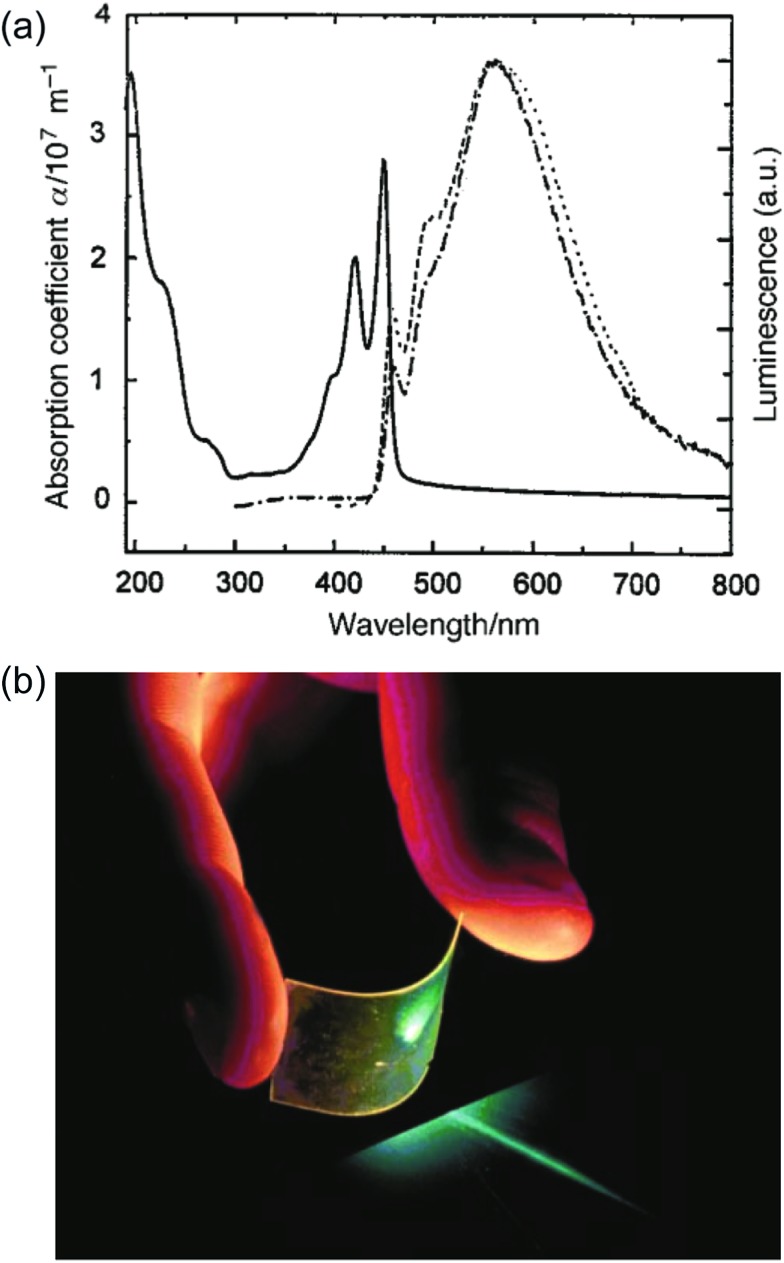
Fig. 7. Optical properties of ladder polymers. (a) Absorption (—) and PL spectra () of a thin film of MeLPPP 12. (b) A photo of a blue, flexible laser made from MeLPPP 12. Reproduced from ref. 2 with permission from The Royal Society of Chemistry.
Fig. 8
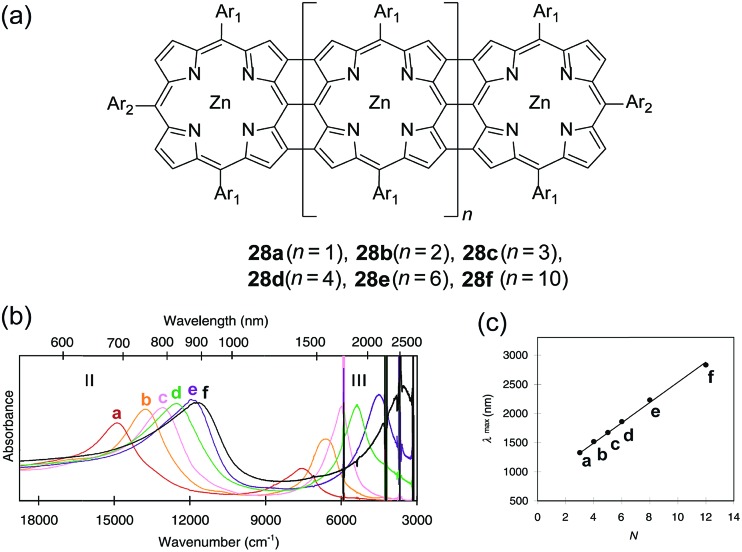
Fig. 8. (a) Chemical structures of ladder-type porphyrins 28a–f. (b) UV-vis-IR absorption spectra of porphyrins 28a–f. (c) Plot of IR absorption maximum (band III) versus the number of porphyrins (N). Modified and reproduced from ref. 97 with permission from The American Association for the Advancement of Science.
Fig. 9
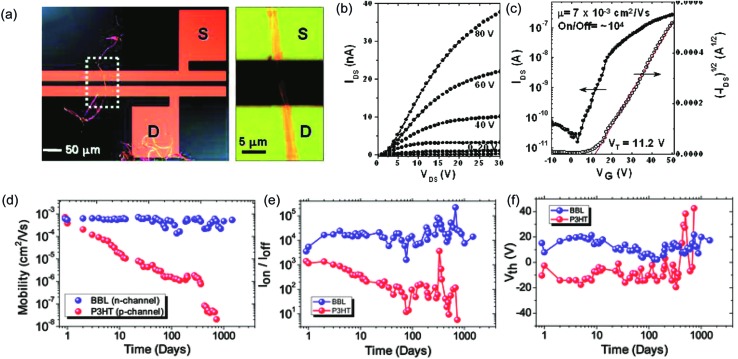
Fig. 9. Performance of BBL 1 based OFETs. (a) A single BBL nanobelt bridging the source–drain electrode to generate a transistor. (b) Output curve of a typical BBL nanobelt transistor. (c) Transfer curve of the corresponding transistor. (d–f) Air stability analysis of P3HT and BBL transistors. Plot of (d) mobility, (e) current on/off ratio, and (f) threshold voltage as a function of time for both BBL and P3HT transistors. Reproduced from ref. 21 and 101 with permission from American Chemical Society and The Royal Society of Chemistry, respectively.
Fig. 10
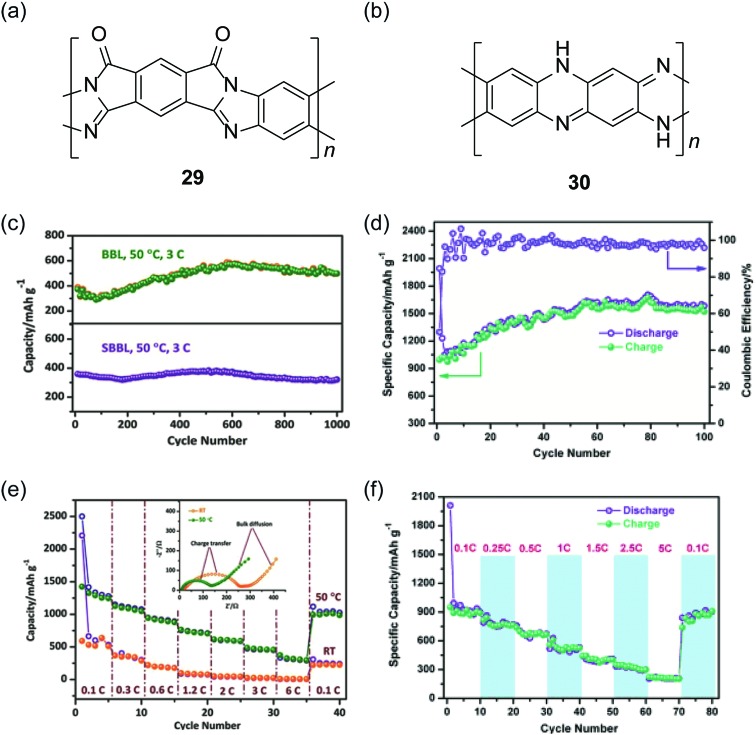
Fig. 10. Chemical structures of (a) SBBL 29 and (b) PQL 30. Electrochemical performance of ladder polymer nanoparticles. Cycling performance of (c) BBL 1, SBBL 29 and (d) PQL 30 nanoparticles showing their superb stability. Rate capability of (e) BBL 1, SBBL 29 and (f) PQL 30 nanoparticles. Reproduced from ref. 107 and 108 with permission from John Wiley and Sons.
None
Jongbok Lee, Alexander J. Kalin and Tianyu Yuan
None
Mohammed Al-Hashimi
None
Lei Fang

References

    1. Yu L., Chen M., Dalton L. R. Chem. Mater. 1990;2:649–659.
    1. Scherf U. J. Mater. Chem. 1999;9:1853–1864.
    1. Grimsdale A. C., Müllen K. Macromol. Rapid Commun. 2007;28:1676–1702.
    1. Jones R. S. R. G., Wilks E. S., Hess M., Kitayama T. and Metanomski W. V., Compedium of polymer terminology and nomenclature IUPAC recommendations 2008, The Royal Society of Chemistry, Cambridge, UK, 2008.
    1. Wu Y., Zhang J., Fei Z., Bo Z. J. Am. Chem. Soc. 2008;130:7192–7193. - PubMed