


Neuroimaging in former preterm children who received erythropoiesis stimulating agents
- PMID: 28553989
- PMCID: PMC5599329
- DOI: 10.1038/pr.2017.130
Neuroimaging in former preterm children who received erythropoiesis stimulating agents
Abstract
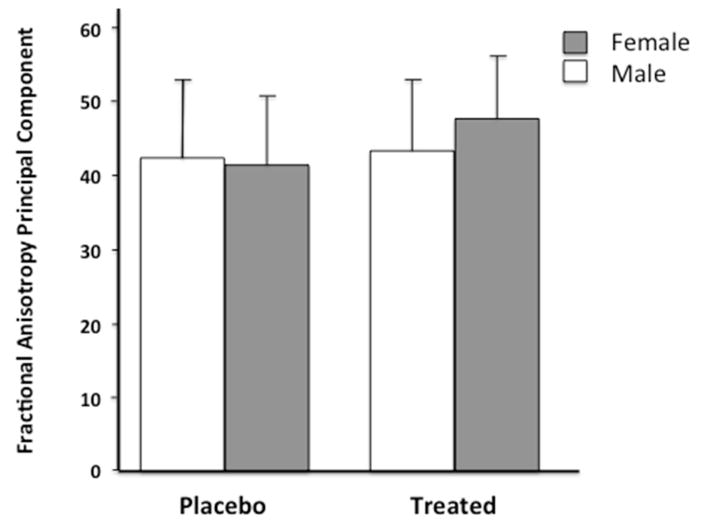
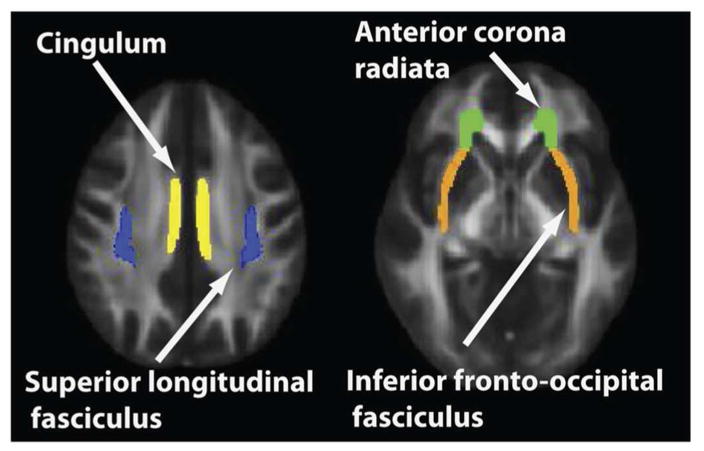
BackgroundIn premature children, erythropoiesis-stimulating agents (ESAs) may improve developmental outcome. It is not clear which of the several potential mechanisms are responsible for this improvement. High-resolution MRI and diffusion tensor imaging characterize brain structure and white matter organization, offering possible insight into the long-term effect of ESAs on brain development.MethodsMRI scans were performed at 3.5-4 years of age on former preterm infants treated with ESAs or placebo, and on healthy term controls. Mean cortical thickness, surface area, and fractional anisotropy (FA) were compared across study groups, and were correlated with general IQ measures.ResultsUnivariate analysis found no significant effect of ESAs on cortical thickness (P=0.366), surface area (P=0.940), or FA (P=0.150); however, there was a greater increase in FA among ESA-treated girls. Group analysis found significant correlations between FA and Full-Scale IQ (P=0.044) and Verbal IQ (P=0.036), although there was no significant relationship between Full-Scale IQ and FA among just the preterm children.ConclusionESA treatment may have a preferential effect on white matter development in girls, although factors other than just whole-brain FA are involved in mediating cognitive outcome.
Conflict of interest statement
Figures
References
-
- Blencowe H, Cousens S, Oestergaard MZ, et al. National, regional, and worldwide estimates of preterm birth rates in the year 2010 with time trends since 1990 for selected countries: a systematic analysis and implications. Lancet. 2012;379(9832):2162–72. - PubMed
-
- Hutchinson EA, De Luca CR, Doyle LW, et al. School-age outcomes of extremely preterm or extremely low birth weight children. Pediatrics. 2013;131(4):e1053–e1061. - PubMed
-
- Iwai M, Cao G, Yin W, et al. Erythropoietin promotes neuronal replacement through revascularization and neurogenesis after neonatal hypoxia/ischemia in rats. Stroke. 2007;38(10):2795–803. - PubMed
-
- Dzietko M, Felderhoff-Mueser U, Sifringer M, et al. Erythropoietin protects the developing brain against N-methyl-D-aspartate receptor antagonist neurotoxicity. Neurobiol Dis. 2004;15(2):177–87. - PubMed
Publication types
MeSH terms
Substances
Grants and funding
LinkOut - more resources
Full Text Sources
Other Literature Sources
Medical
