


Nanotechnology in agriculture: Opportunities, toxicological implications, and occupational risks
- PMID: 28554660
- PMCID: PMC6380358
- DOI: 10.1016/j.taap.2017.05.025
Nanotechnology in agriculture: Opportunities, toxicological implications, and occupational risks
Abstract
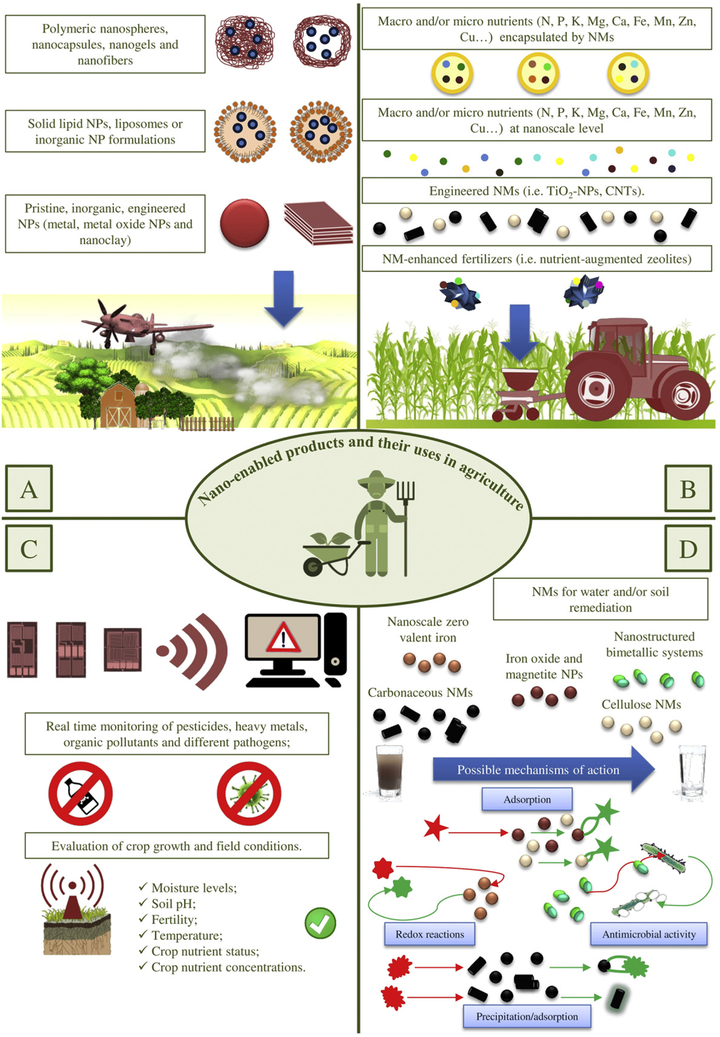
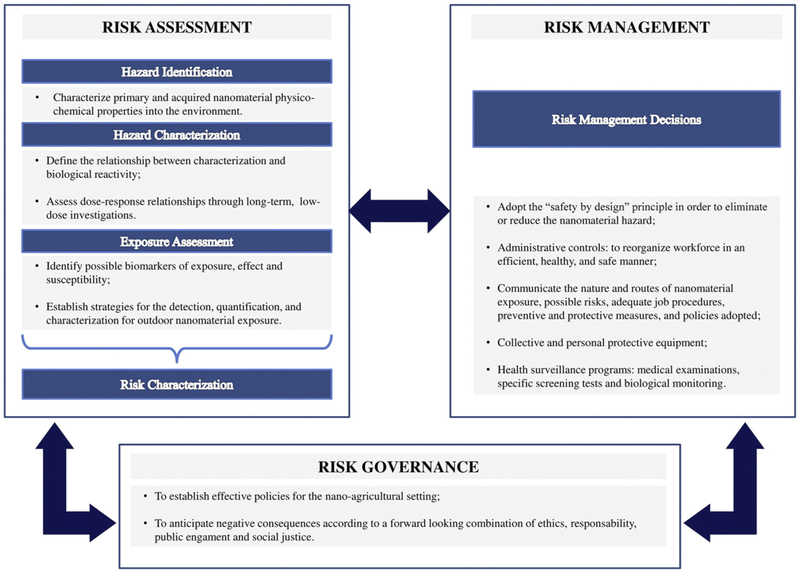
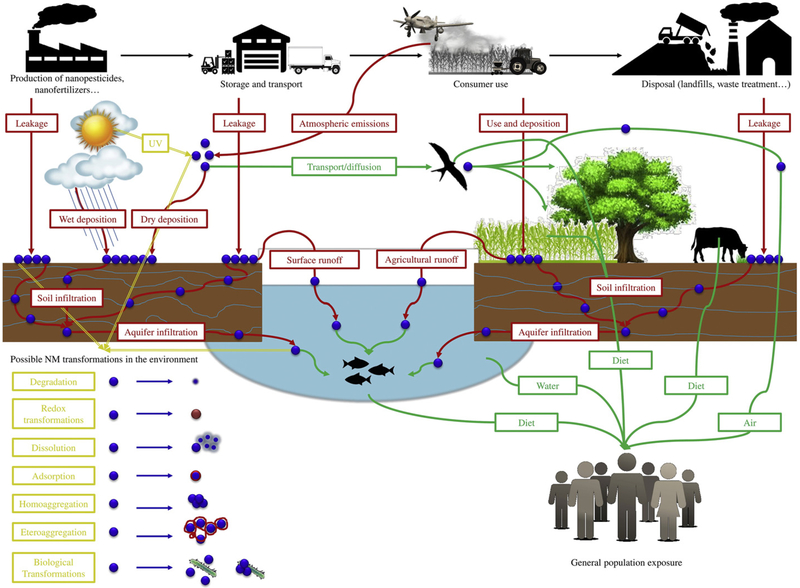
Nanotechnology has the potential to make a beneficial impact on several agricultural, forestry, and environmental challenges, such as urbanization, energy constraints, and sustainable use of resources. However, new environmental and human health hazards may emerge from nano-enhanced applications. This raises concerns for agricultural workers who may become primarily exposed to such xenobiotics during their job tasks. The aim of this review is to discuss promising solutions that nanotechnology may provide in agricultural activities, with a specific focus on critical aspects, challenging issues, and research needs for occupational risk assessment and management in this emerging field. Eco-toxicological aspects were not the focus of the review. Nano-fertilizers, (nano-sized nutrients, nano-coated fertilizers, or engineered metal-oxide or carbon-based nanomaterials per se), and nano-pesticides, (nano-formulations of traditional active ingredients or inorganic nanomaterials), may provide a targeted/controlled release of agrochemicals, aimed to obtain their fullest biological efficacy without over-dosage. Nano-sensors and nano-remediation methods may detect and remove environmental contaminants. However, limited knowledge concerning nanomaterial biosafety, adverse effects, fate, and acquired biological reactivity once dispersed into the environment, requires further scientific efforts to assess possible nano-agricultural risks. In this perspective, toxicological research should be aimed to define nanomaterial hazards and levels of exposure along the life-cycle of nano-enabled products, and to assess those physico-chemical features affecting nanomaterial toxicity, possible interactions with agro-system co-formulants, and stressors. Overall, this review highlights the importance to define adequate risk management strategies for workers, occupational safety practices and policies, as well as to develop a responsible regulatory consensus on nanotechnology in agriculture.
Keywords: Nano-enabled agrochemicals; Nano-enhanced environmental remediation; Nanocellulose; Nanotechnology; Nanotoxicology; Occupational risk assessment and management.
Copyright © 2017 Elsevier Inc. All rights reserved.
Conflict of interest statement
Conflict of interest statement
The authors declare they have no conflict of interest.
Figures
References
-
- Adeleye AS, Conway JR, Garner K, Huang Y, Su Y, Keller AA, 2016. Engineered nanomaterials for water treatment and remediation: costs, benefits, and applicability. Chem. Eng. J 286:640–662. 10.1016/j.cej.2015.10.105. - DOI
Publication types
MeSH terms
Substances
Grants and funding
LinkOut - more resources
Full Text Sources
Other Literature Sources
Medical
