Relationship Between Meeting 24-Hour Movement Guidelines and Cardiometabolic Risk Factors in Children
- PMID: 28556685
- PMCID: PMC5607096
- DOI: 10.1123/jpah.2017-0090
Relationship Between Meeting 24-Hour Movement Guidelines and Cardiometabolic Risk Factors in Children
Abstract
Background: The purpose of this study was to evaluate the relationship between adherence to pediatric 24-hour movement guidelines (moderate to vigorous physical activity, sedentary behavior, and sleep) and cardiometabolic risk factors.
Methods: The sample included 357 white and African American children aged 5-18 years. Physical activity, television viewing, and sleep duration were measured using questionnaires, and the 24-hour movement guidelines were defined as ≥60 minutes per day of moderate to vigorous physical activity on ≥5 days per week, ≤ 2 hours per day of television, and sleeping 9-11 hours per night (ages 5-13 y) or 8-10 hours per night (ages 14-18 y). Waist circumference, body fat, abdominal visceral and subcutaneous adipose tissue, blood pressure, fasting triglycerides, high-density lipoprotein cholesterol, and glucose were measured in a clinical setting.
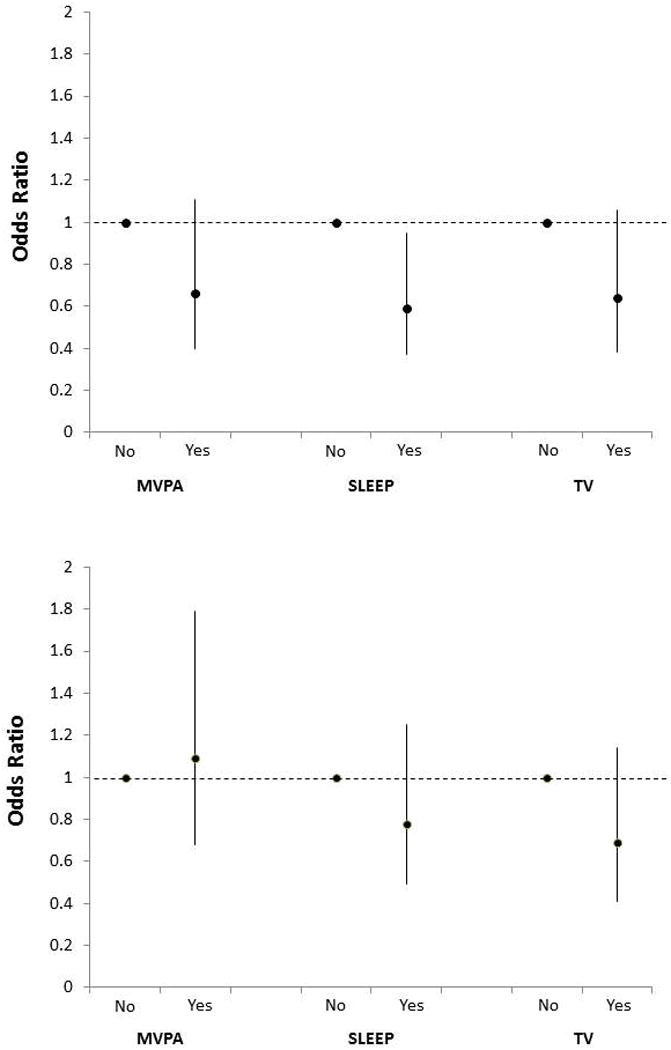
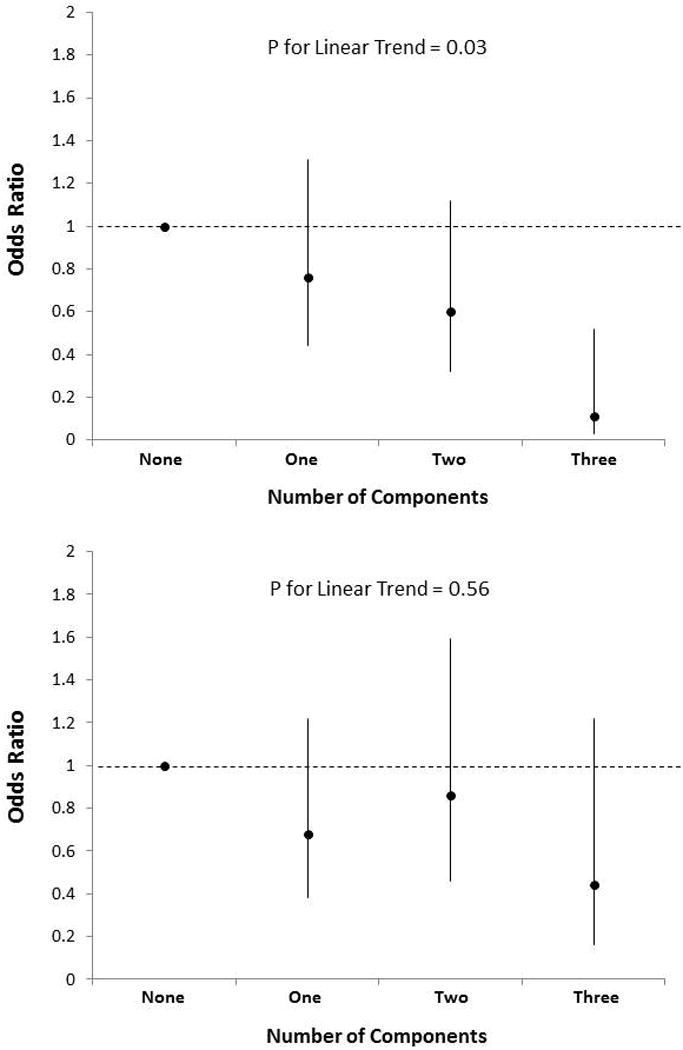
Results: A total of 26.9% of the sample met none of the guidelines, whereas 36.4%, 28.3%, and 8.4% of the sample met 1, 2, or all 3 guidelines, respectively. There were significant associations between the number of guidelines met and body mass index, visceral and subcutaneous adipose tissue, triglycerides, and glucose. There were no associations with blood pressure or high-density lipoprotein cholesterol.
Conclusions: Meeting more components of the 24-hour movement guidelines was associated with lower levels of obesity and several cardiometabolic risk factors. Future efforts should consider novel strategies to simultaneously improve physical activity, sedentary time, and sleep in children.
Keywords: obesity; pediatrics; physical activity; sedentary behavior; sleep.
Figures
References
-
- U.S. Department of Health and Human Services. 2008 Physical Activity Guidelines for Americans. Washington, DC: US Government Printing Office; 2008.
-
- World Health Organization. Global Recommendations on Physical Activity for Health. Geneva, Switzerland: World Health Organization; 2010. - PubMed
-
- Tremblay MS, Leblanc AG, Janssen I, et al. Canadian sedentary behaviour guidelines for children and youth. Appl Physiol Nutr Metab. 2011;36:59–64. - PubMed
Publication types
MeSH terms
Grants and funding
LinkOut - more resources
Full Text Sources
Other Literature Sources
Medical
Miscellaneous