


Disease Prevention: An Opportunity to Expand Edible Plant-Based Vaccines?
- PMID: 28556800
- PMCID: PMC5492011
- DOI: 10.3390/vaccines5020014
Disease Prevention: An Opportunity to Expand Edible Plant-Based Vaccines?
Abstract
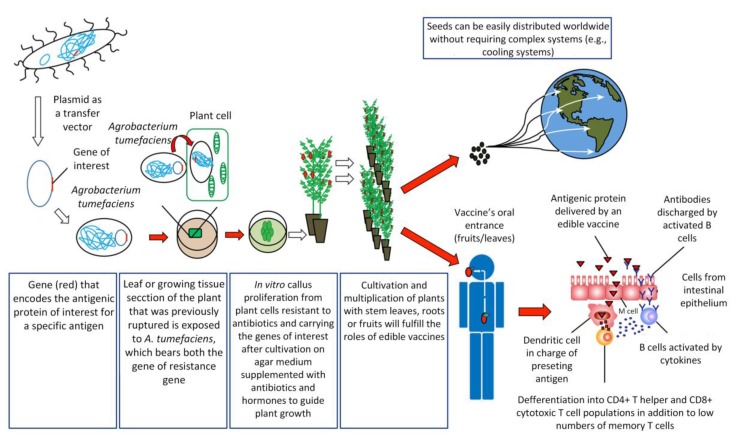
The lethality of infectious diseases has decreased due to the implementation of crucial sanitary procedures such as vaccination. However, the resurgence of pathogenic diseases in different parts of the world has revealed the importance of identifying novel, rapid, and concrete solutions for control and prevention. Edible vaccines pose an interesting alternative that could overcome some of the constraints of traditional vaccines. The term "edible vaccine" refers to the use of edible parts of a plant that has been genetically modified to produce specific components of a particular pathogen to generate protection against a disease. The aim of this review is to present and critically examine "edible vaccines" as an option for global immunization against pathogenic diseases and their outbreaks and to discuss the necessary steps for their production and control and the list of plants that may already be used as edible vaccines. Additionally, this review discusses the required standards and ethical regulations as well as the advantages and disadvantages associated with this powerful biotechnology tool.
Keywords: disease outbreaks; edible vaccine; food biotechnology; genetic modification; immunogenicity; medicinal food.
Conflict of interest statement
The authors declare that they have no conflict of interest.
Figures
References
-
- López M., Mallorquín P., Pardo R., Vega M. Vacunas de Nueva Generación. Genoma España Salud humana; Madrid, España: 2004. p. 113.
Publication types
LinkOut - more resources
Full Text Sources
Other Literature Sources
