


Akt as a target for cancer therapy: more is not always better (lessons from studies in mice)
- PMID: 28557977
- PMCID: PMC5520506
- DOI: 10.1038/bjc.2017.153
Akt as a target for cancer therapy: more is not always better (lessons from studies in mice)
Abstract
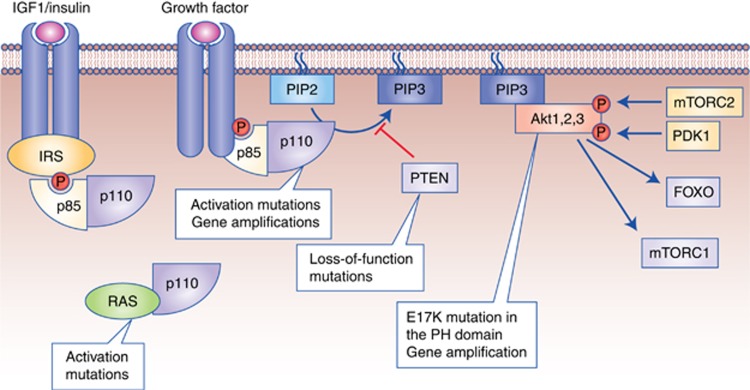
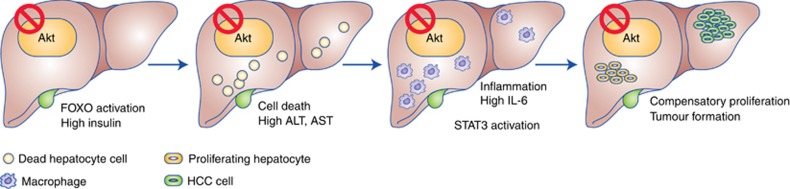
The PI3K/Akt signalling pathway is one of the most frequently altered signalling networks in human cancers and has become an attractive target in anticancer therapy. Several drugs targeting this pathway are currently in different phases of clinical trials. However, accumulating reports suggest that adverse effects such as hyperglycaemia and hyperinsulinaemia accompany treatment with pan-PI3K and pan-Akt inhibitors. Thus, understanding the consequences of the systemic deletion or inhibition of Akt activity in vivo is imperative. Three Akt isoforms may individually affect different cancer cells in culture to varying degrees that could suggest specific targeting of different Akt isoforms for different types of cancer. However, the results obtained in cell culture do not address the consequences of Akt isoform inhibition at the organismal level and consequently fail to predict the feasibility of targeting these isoforms for cancer therapy. This review summarises and discusses the consequences of genetic deletions of Akt isoforms in adult mice and their implications for cancer therapy. Whereas combined Akt1 and Akt2 rapidly induced mortality, hepatic Akt inhibition induced liver injury that promotes hepatocellular carcinoma. These findings may explain some of the side effects exerted by pan-PI3K and pan-Akt inhibitors and suggest that close attention must be paid when targeting all Akt isoforms as a therapeutic intervention.
Conflict of interest statement
The authors declare no conflict of interest.
Figures
References
-
- Bhaskar PT, Hay N (2007) The two TORCs and Akt. Dev Cell 12: 487–502. - PubMed
-
- Cariaga-Martinez AE, Lopez-Ruiz P, Nombela-Blanco MP, Motino O, Gonzalez-Corpas A, Rodriguez-Ubreva J, Lobo MV, Cortes MA, Colas B (2013) Distinct and specific roles of AKT1 and AKT2 in androgen-sensitive and androgen-independent prostate cancer cells. Cell Signal 25: 1586–1597. - PubMed
Publication types
MeSH terms
Substances
Grants and funding
LinkOut - more resources
Full Text Sources
Other Literature Sources
Medical
Miscellaneous
