


Effect of meteorological factors and geographic location on methicillin-resistant Staphylococcus aureus and vancomycin-resistant enterococci colonization in the US
- PMID: 28558010
- PMCID: PMC5448764
- DOI: 10.1371/journal.pone.0178254
Effect of meteorological factors and geographic location on methicillin-resistant Staphylococcus aureus and vancomycin-resistant enterococci colonization in the US
Abstract
Background: Little is known about the effect of meteorological conditions and geographical location on bacterial colonization rates particularly of antibiotic-resistant Gram-positive bacteria. We aimed to evaluate the effect of season, meteorological factors, and geographic location on methicillin-resistant Staphylococcus aureus (MRSA) and vancomycin-resistant enterococci (VRE) colonization.
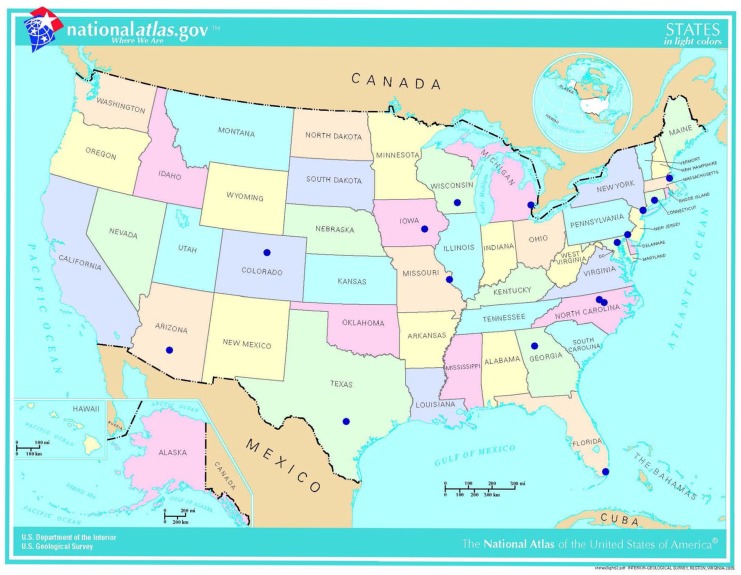
Methods: The prospective cohort included all adults admitted to 20 geographically-dispersed ICUs across the US from September 1, 2011 to October 4, 2012. Nasal and perianal swabs were collected at admission and tested for MRSA and VRE colonization respectively. Poisson regression models using monthly aggregated colonization counts as the outcome and mean temperature, relative humidity, total precipitation, season, and/or latitude as predictors were constructed for each pathogen.
Results: A total of 24,704 ICU-admitted patients were tested for MRSA and 24,468 for VRE. On admission, 10% of patients were colonized with MRSA and 12% with VRE. For MRSA and VRE, a 10% increase in relative humidity was associated with approximately a 9% increase in prevalence rate. Southerly latitudes in the US were associated with higher MRSA colonization, while northerly latitudes were associated with higher VRE colonization. In contrast to MRSA, the association between VRE colonization and latitude was observed only after adjusting for relative humidity, which demonstrates how this effect is highly driven by this meteorological factor.
Conclusions: To our knowledge, we are the first to study the effect of meteorological factors and geographical location/latitude on MRSA and VRE colonization in adults. Increasing humidity was associated with greater MRSA and VRE colonization. Southerly latitudes in the US were associated with greater MRSA and less VRE. The effect of these factors on MRSA and VRE rates has the potential not only to inform patient management and treatment, but also infection prevention interventions.
Conflict of interest statement
Figures
References
-
- Perencevich EN, McGregor JC, Shardell M, Furuno JP, Harris AD, Morris JG Jr, et al. Summer peaks in the incidences of gram-negative bacterial infection among hospitalized patients. Infect Control Hosp Epidemiol. 2008;29: 1124–1131. - PubMed
MeSH terms
Grants and funding
LinkOut - more resources
Full Text Sources
Other Literature Sources
Medical
