


Treatment adherence and perception in patients on maintenance hemodialysis: a cross - sectional study from Palestine
- PMID: 28558719
- PMCID: PMC5450383
- DOI: 10.1186/s12882-017-0598-2
Treatment adherence and perception in patients on maintenance hemodialysis: a cross - sectional study from Palestine
Abstract
Background: Adherence to diet recommendations, fluid restriction, prescribed medications, and attendance at hemodialysis (HD) sessions are essential for optimal and effective treatment of patients with end-stage renal disease. No data regarding this issue are available from Palestine. Therefore, this study was carried out to assess adherence to diet, fluid restriction, medications, and HD sessions.
Methods: A cross-sectional study of HD patients at An-Najah National University Hospital was carried out during summer, 2016. Self-reported adherence behavior was obtained using a valid and reliable questionnaire (End-Stage Renal Disease Adherence Questionnaire: ESRD-AQ). Predialytic serum levels of potassium and phosphate were obtained as clinical indicator of diet and medication adherence respectively. In addition, interdialytic body weight (IDW) was also obtained from medical records and analyzed in relation to reported adherence of fluid restriction.
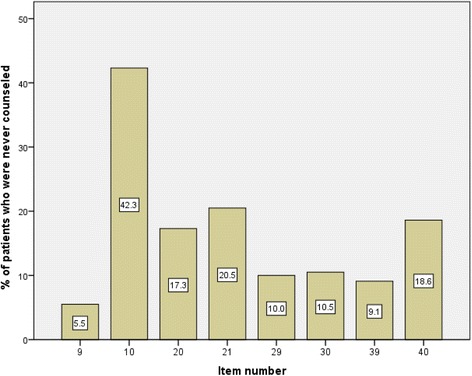
Results: A total of 220 patients answered all questions pertaining to ESRD-AQ. The mean age ± standard deviation of participants was 56.82 ± 14.51 years. Dietary adherence was observed in 24% while that of fluid restriction adherence was observed in 31% of studied patients. Reported adherence to HD sessions was 52% while that for medications was 81%. Overall, 122 (55.5%) patients had good adherence, 89 (40.5%) had moderate adherence, and 9 (4.1%) had poor adherence behavior. Male patients had significantly higher overall adherence scores than females (p = 0.034). A significant correlation between reported diet adherence and serum pre-HD potassium level (p < 0.01) was observed. A significant correlation between reported fluid restriction adherence and IDW (p < 0.01) was also found. However, no significant correlation between reported adherence and pre-HD phosphate level. There was significant correlation between overall perception and overall adherence score (p < 0.001). Counselling of patients regarding importance of adherence modalities was lowest for "staying for the entire dialysis time". Multivariate analysis indicated that elderly male patients who were city residents had higher odds of having higher adherence score.
Conclusions: There was a good percentage of patients who had overall moderate or poor adherence. ESRD-AQ could be used to assess some aspects of HD adherence. Counselling and education of patients on HD are important to improve therapeutic outcome.
Keywords: Clinical outcomes; Hemodialysis; Palestine; Perception; Treatment adherence.
Figures
References
-
- Kidney Disease: Improving Global Outcomes (KDIGO) CKD Work Group: KDIGO. 2012 clinical practice guideline for the evaluation and management of chronic kidney disease. Kidney Int Suppl. 2013(3):1–150.
-
- Abecassis M, Bartlett ST, Collins AJ, Davis CL, Delmonico FL, Friedewald JJ, et al. Kidney transplantation as primary therapy for end-stage renal disease: a National Kidney Foundation/Kidney Disease Outcomes Quality Initiative (NKF/KDOQI™) conference. Clin J Am Soc Nephrol. 2008;3(2):471–480. doi: 10.2215/CJN.05021107. - DOI - PMC - PubMed
-
- Kaza BNK, Sabi KA, Amekoudi EYM, Imangue G, Al-Torayhi MH, Tsevi CM, et al. Kidney transplantation: Hemodialysis and surrounding are they informed enough? Indian J Transplant. 2015;9(3):101–104. doi: 10.1016/j.ijt.2015.10.001. - DOI
MeSH terms
Substances
LinkOut - more resources
Full Text Sources
Other Literature Sources
Medical
