Breast Implant-Associated Anaplastic Large Cell Lymphoma (ALCL): A Case Report
- PMID: 28559535
- PMCID: PMC5460956
- DOI: 10.12659/ajcr.903161
Breast Implant-Associated Anaplastic Large Cell Lymphoma (ALCL): A Case Report
Abstract
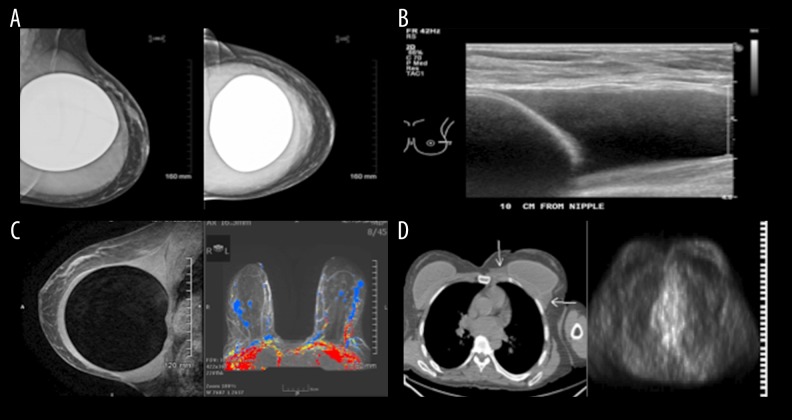
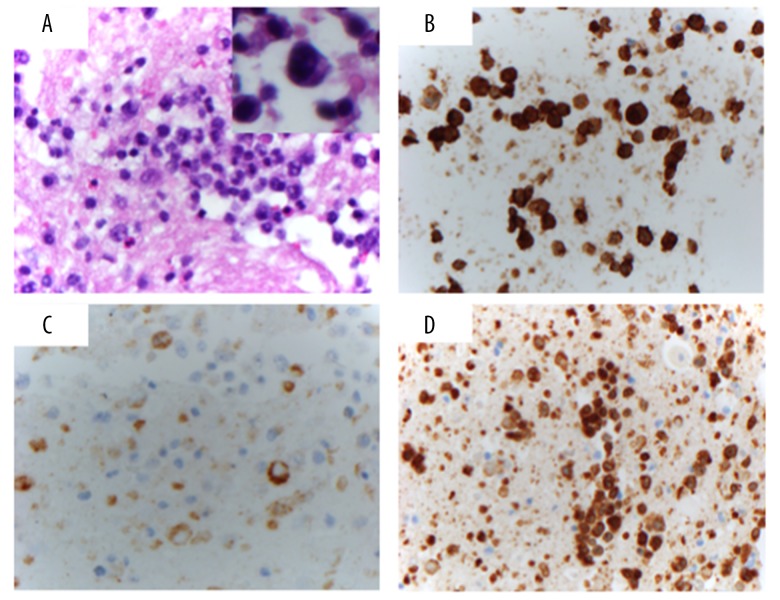
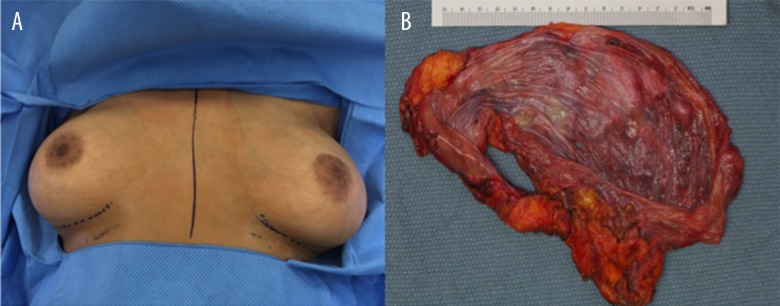
BACKGROUND Anaplastic large cell lymphomas (ALCL) are a rare type of primary breast lymphoma. The association between breast implants and ALCL was first described in 1997 and since then 34-173 cases have been presented. The annual incidence of breast implant-associated ALCL (BI-ALCL) is 0.1-0.3 per 100 000 women who undergo breast reconstruction, and cases are often underreported due to the rarity of these tumors. BI-ALCL arises from the inflammatory T cells surrounding the fibrous capsule, and most tumors are in situ. CASE REPORT Here, we present the case of a 51-year-old woman with ALCL following bilateral silicone breast implants. The patient presented with breast enlargement and tenderness 9 years following reconstructive surgery. Imagining studies showed fluid collection surrounding the affected breast implant. Staging studies and histocytopathology examination confirmed the presence BI-ALCL without capsular invasion or metastasis. Complete surgical excision was performed. The patient continues to be in complete remission. CONCLUSIONS Due to the rarity of these tumors, establishing the diagnosis of BI-ALCL can be challenging and requires a multidisciplinary approach. Clinicians should be aware of the relationship between breast implants and BI-ALCL.
Conflict of interest statement
Figures
References
-
- Alexander DD, Mink PJ, Adami HO, et al. The non-Hodgkin lymphomas: A review of the epidemiologic literature. Int J Cancer. 2007;120(Suppl. 12):1–39. - PubMed
-
- Talwalkar SS, Miranda RN, Valbuena JR, et al. Lymphomas involving the breast: A study of 106 cases comparing localized and disseminated neoplasms. Am J Surg Pathol. 2008;32:1299–309. - PubMed
-
- Hapgood G, Savage KJ. The biology and management of systemic anaplastic large cell lymphoma. Blood. 2015;126:17–25. - PubMed
-
- Drexler HG, Gignac SM, von Wasielewski R, et al. Pathobiology of NPM-ALK and variant fusion genes in anaplastic large cell lymphoma and other lymphomas. Leukemia. 2000;14:1533–59. - PubMed
-
- Altekruse SF, Kosary CL, Krapcho M, et al. SEER Cancer Statistics Review, 1975–2007. National Cancer institute; Bethesda, MD: http://seer.cancer.gov/csr/1975_2007/, table 19.28, based on November 2009 SEER data submission, poster to the SEER web site, 2010.
Publication types
MeSH terms
LinkOut - more resources
Full Text Sources
Medical