


Peptide-modified chitosan hydrogels promote skin wound healing by enhancing wound angiogenesis and inhibiting inflammation
- PMID: 28559985
- PMCID: PMC5446517
Peptide-modified chitosan hydrogels promote skin wound healing by enhancing wound angiogenesis and inhibiting inflammation
Abstract
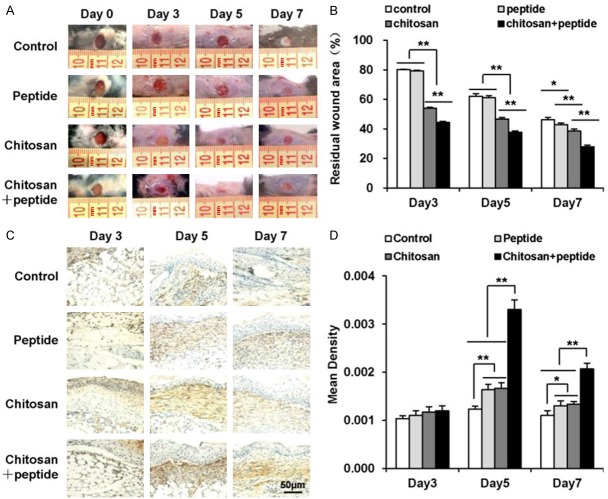
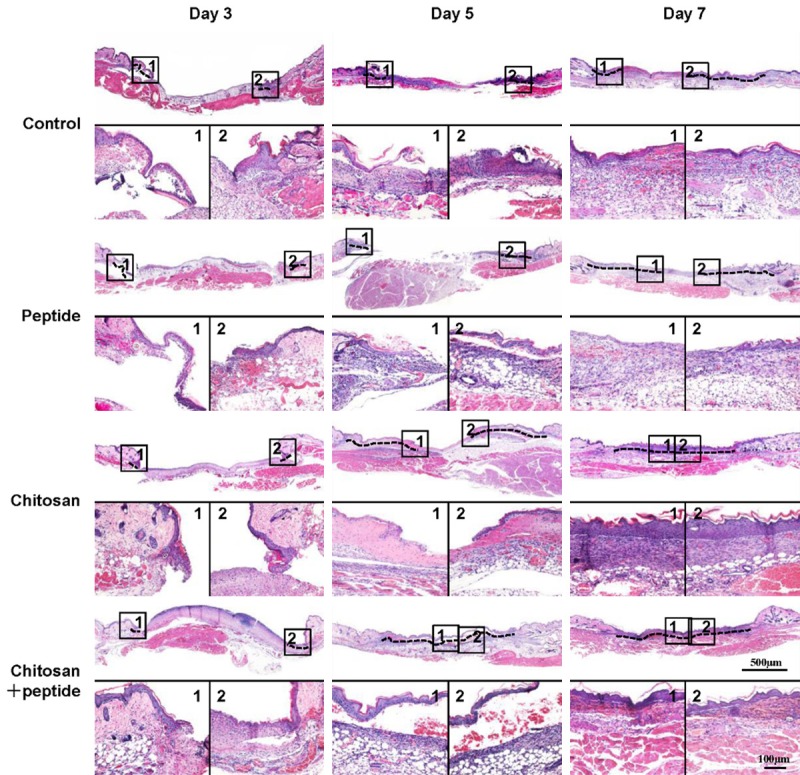
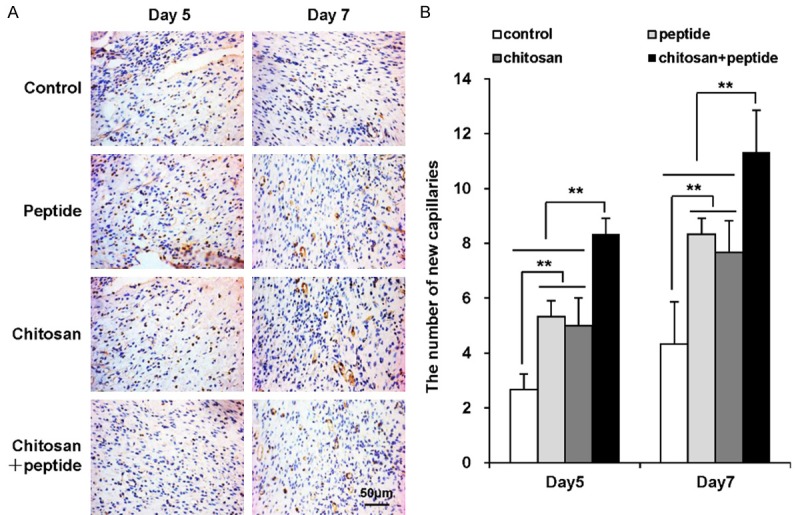
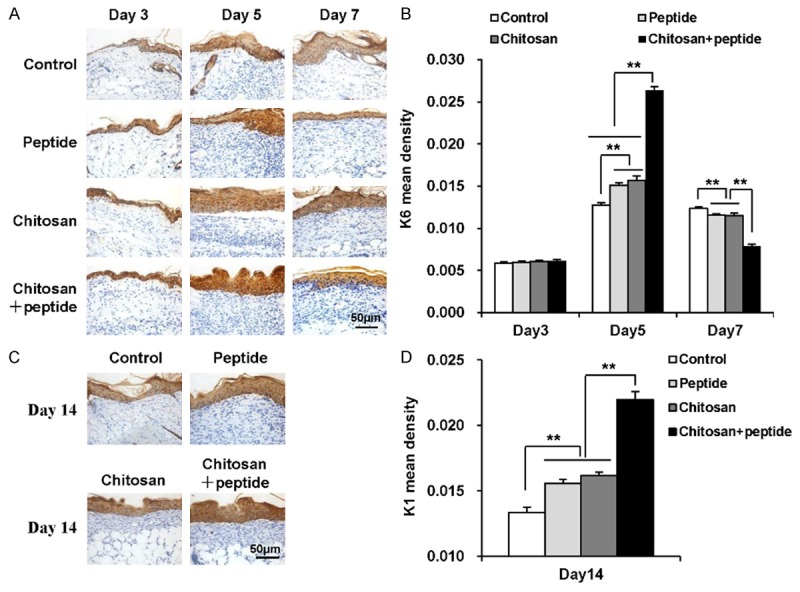
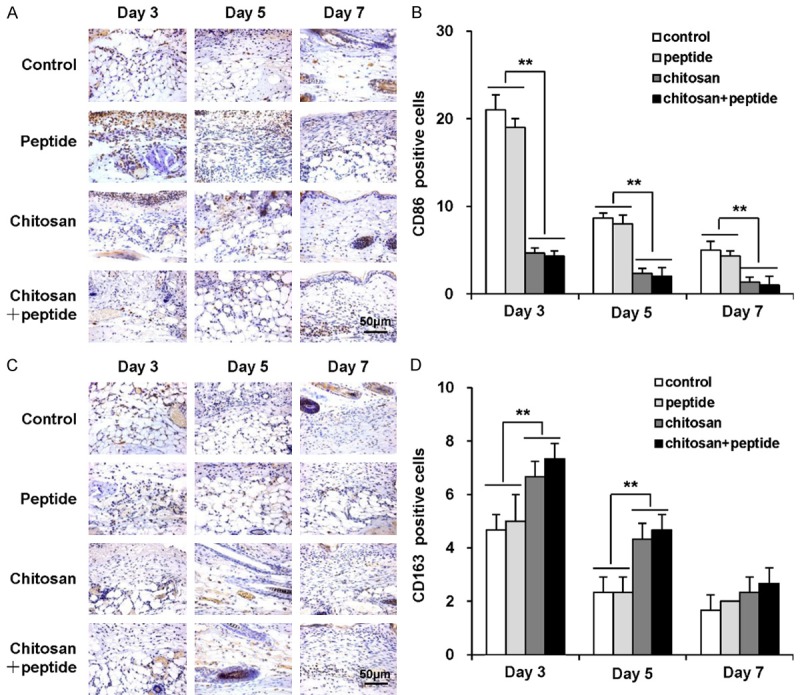
Cutaneous wound healing following trauma is a complex and dynamic process involving multiple overlapping events following trauma. Two critical elements affecting skin wound healing are neovascularization and inflammation. A nascent vessel can provide nutrition and oxygen to a healing wound. Therefore, treatments strategies that enhance angiogenesis and inhibit inflammation can promote skin wound healing. Previous studies have shown that the SIKVAV peptide (Ser-Ile-Lys-Val-Ala-Val) from laminin can promote angiogenesis in vitro. This study evaluated the effects of peptide SIKVAV-modified chitosan hydrogels on skin wound healing. We established skin wounds established in mice and treated them with SIKVAV-modified chitosan hydrogels. H&E staining showed that peptide-modified chitosan hydrogels accelerated the reepithelialization of wounds compared with the negative and positive controls. Immunohistochemistry analysis demonstrated that more myofibroblasts were deposited at wounds treated with peptide-modified chitosan hydrogels that at those treated with negative and positive controls. In addition, peptide-modified chitosan hydrogels promoted angiogenesis as well as keratinocyte proliferation and differentiation, but inhibited inflammation in skin wounds. Taken together, these results suggest that SIKVAV-modified chitosan hydrogels are a promising treatment component for healing-impaired wounds.
Keywords: SIKVAV; angiogenesis; chitosan hydrogel; inflammation; re-epithelialization; wound healing.
Conflict of interest statement
None.
Figures
References
-
- Zoller N, Valesky E, Butting M, Hofmann M, Kippenberger S, Bereiter-Hahn J, Bernd A, Kaufmann R. Clinical application of a tissue-cultured skin autograft: an alternative for the treatment of non-healing or slowly healing wounds? Dermatology. 2014;229:190–198. - PubMed
-
- Takayama Y, Aoki R. Roles of lactoferrin on skin wound healing. Biochem Cell Biol. 2012;90:497–503. - PubMed
-
- Curtis K, Lam M, Mitchell R, Black D, Taylor C, Dickson C, Jan S, Palmer CS, Langcake M, Myburgh J. Acute costs and predictors of higher treatment costs of trauma in New South Wales, Australia. Injury. 2014;45:279–284. - PubMed
LinkOut - more resources
Full Text Sources