. 2017 May 15;9(5):2567-2578.
eCollection 2017.

Low-expression of TMEM100 is associated with poor prognosis in non-small-cell lung cancer

Affiliations

Low-expression of TMEM100 is associated with poor prognosis in non-small-cell lung cancer

Zhitao Han et al. Am J Transl Res. .

Abstract

Transmembrane protein 100 (TMEM100) was first identified as a transcript from the mouse genome. Recent studies have demonstrated that TMEM100 is involved in hepatocellular carcinoma (HCC) malignancy. However, the distribution and clinical significance of TMEM100 in non-small-cell lung carcinoma (NSCLC) remains poorly understood. This study aims to explore the significance of TMEM100 expression in NSCLC. We found that TMEM100 expression was significantly reduced in NSCLC tissues when compared with that in adjacent normal lung tissues (P<0.001). Kaplan-Meier survival analysis showed that overall survival of patients with lower expressions of TMEM100 was significantly shorter (n=152, P<0.05). In addition, TMEM100 overexpression in NSCLC cell lines inhibited cell proliferation in vitro and in vivo. Transwell migration and invasion assay showed that TMEM100 significantly suppressed the migration and invasion of NSCLC cell lines. In contrast, knocking down TMEM100 promoted NSCLC proliferation and migration. Finally, we found that TMEM100 worked as a cancer suppressor gene mainly by inhibiting the TNF signaling pathway. In conclusion, TMEM100 acted as a tumor suppressor in NSCLC and may prove to be a potential prognostic biomarker and therapeutic target for NSCLC.

Keywords: TMEM100; non-small-cell lung cancer (NSCLC); prognosis; signaling pathway; tumor necrosis factor (TNF).


Conflict of interest statement

None.

Figures
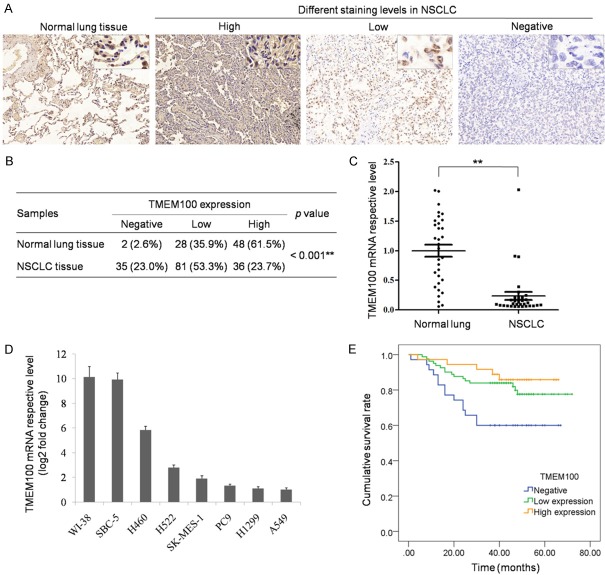
Figure 1
Figure 1
TMEM100 was down-regulated in NSCLC and associated with poor prognosis. A. Detection of TMEM100 expression in normal lung tissue and NSCLC tissue by immunohistochemical staining of TMEM100, as expressed as negative, low or high. B. Statistics of all samples associated with TMEM100 staining. C. Verification of TMEM100 expression in normal lung tissue and NSCLC tissue by PCR. D. Detection of TMEM100 expression in different NSCLC cells by qPCR. E. Analysis of the association between TMEM100 expression and overall survival of 152 NSCLC patients by Kaplan-Meier survival Curves. *: P<0.05; **: P<0.001.
Figure 2
Figure 2
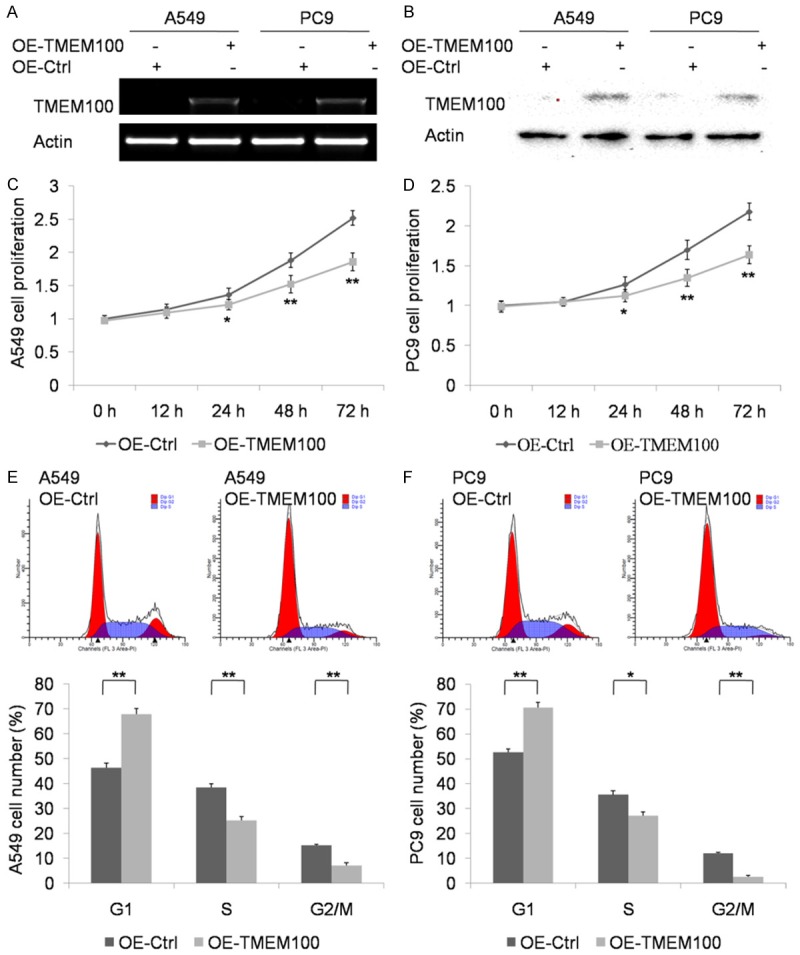
TMEM100 overexpression inhibits NSCLC cell proliferation in vitro. A, B. Confirmation of TMEM100 overexpression after transfection with OE-TMEM100 or pcDNA3.1+ plasmids by PCR and Western blot. C, D. Detection of the proliferation of A549 and PC9 cells transfected with OE-TMEM100 or pcDNA3.1+ plasmids by CCK8 assay. E, F. Cell cycle assay for cell cycle of A549 and PC9 cells transfected with OE-TMEM100 or pcDNA3.1+ plasmids. *: P<0.05; **: P<0.001.
Figure 3
Figure 3
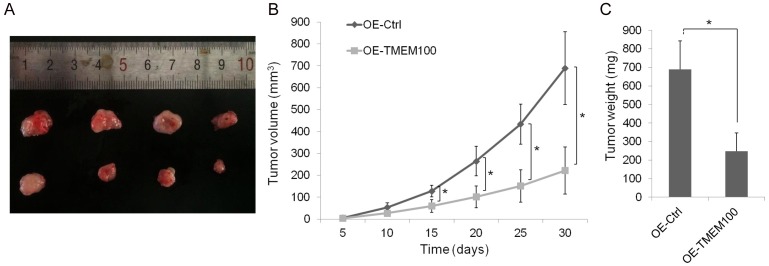
TMEM100 overexpression inhibits NSCLC cell proliferation in vivo. The model in nude mice was constructed by using PC9 cells infected with control vector or TMEM100 lentivirus. A. The size of subcutaneous tumors in these two groups were calculated and compared. B, C. The size and weight of tumors in overexpressed TMEM100 group was significantly smaller than that of control group (P<0.05). *: P<0.05; **: P<0.001.
Figure 4
Figure 4
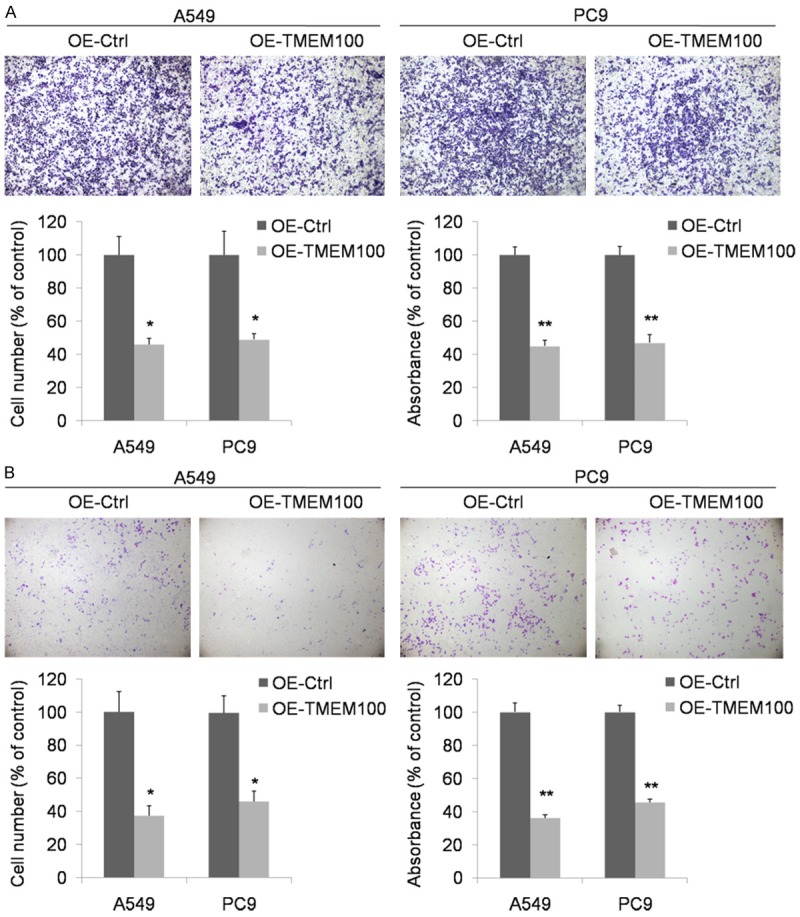
Transwell migration and invasion assay proved that TMEM100 overexpression inhibited the migration and invasion abilities of A549 and PC9 cells. A. Transwell migration assay showed that the number of cells migrating through the membrane was decreased markedly when TMEM100 was overexpressed. B. Transwell invasion assay showed that the number of cells migrating through the membrane was decreased markedly when TMEM100 was overexpressed. *: P<0.05; **: P<0.001.
Figure 5
Figure 5
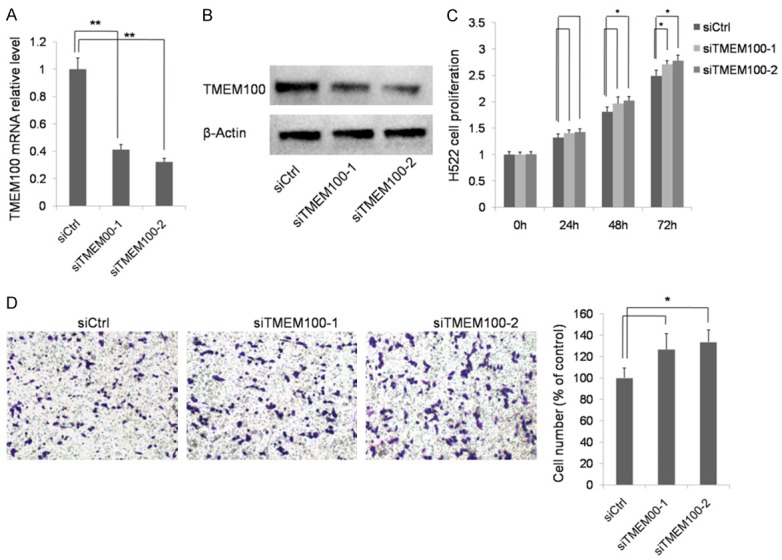
TMEM100 knockdown promotes NSCLC cell proliferation and migration. A, B. Confirmation of TMEM100 knockdown after transfection with siRNA by PCR and Western blot. C. Detection of the proliferation of H522 cells transfected with siCtrl, siTMEM100-1 or siTMEM100-2 by CCK8 assay. D. Transwell invasion assay showed that the number of cells migrating through the membrane was increased markedly when TMEM100 was knockdown. *: P<0.05; **: P<0.001.
Figure 6
Figure 6
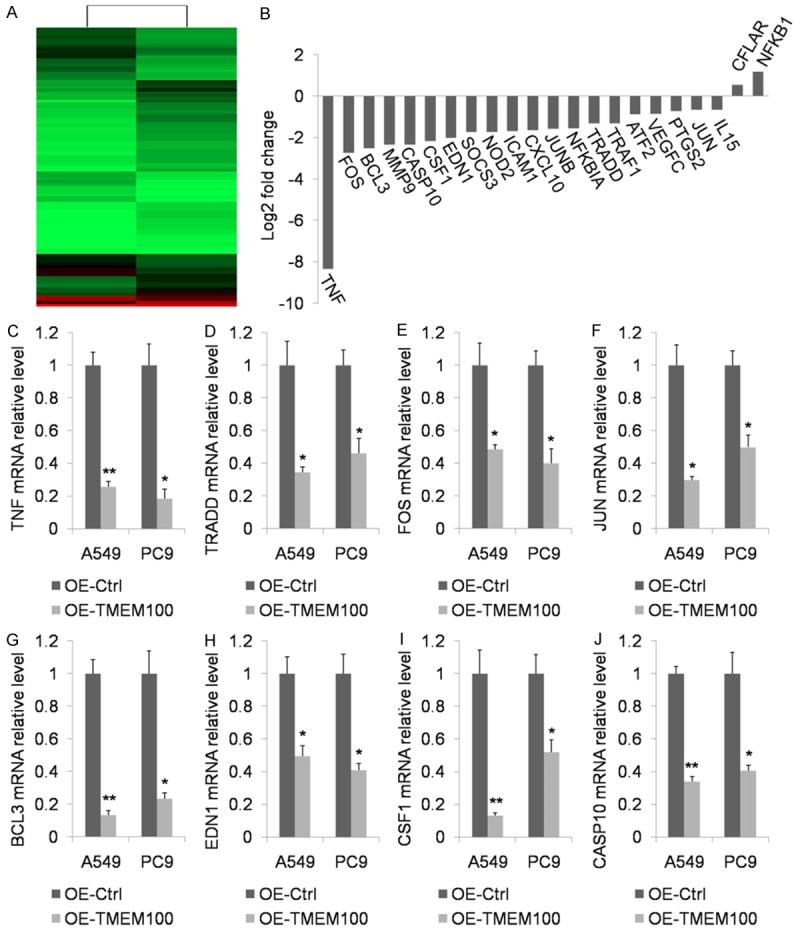
mRNA deep sequencing was applied to examine the difference in gene expression profiles after PC9 cell transfection with OE-TMEM100 or pcDNA3.1+ plasmids. A. A heat map showing that the expression level of some transcripts differed significantly between PC9 cells transfected with OE-TMEM100 and those with pcDNA3.1+ plasmids. B. The expression level of genes participating in TNF singling pathway underwent significant changes. C-I. qPCR was performed to verify genes participating in TNF singling pathway. J. Western blot assay was used to confirm the overexpression of TNF after OE-TMEM100 or pcDNA3.1+ plasmid transfection. *: P<0.05; **: P<0.001.

References

    1. Patel JN, Ersek JL, Kim ES. Lung cancer biomarkers, targeted therapies and clinical assays. Transl Lung Cancer Res. 2015;4:503–514. - PMC - PubMed
    1. Takeda M, Okamoto I, Nakagawa K. Clinical development of nintedanib for advanced non-small-cell lung cancer. Ther Clin Risk Manag. 2015;11:1701–1706. - PMC - PubMed
    1. Travis WD. Pathology of lung cancer. Clin Chest Med. 2002;23:65–81. - PubMed
    1. Goldstraw P, Ball D, Jett JR, Le Chevalier T, Lim E, Nicholson AG, Shepherd FA. Non-small cell lung cancer. Lancet. 2011;378:1727–1740. - PubMed
    1. Pastorino U. Lung cancer screening. Br J Cancer. 2010;102:1681–1686. - PMC - PubMed

LinkOut - more resources