


Correlation of neuter status and expression of heritable disorders
- PMID: 28560045
- PMCID: PMC5445488
- DOI: 10.1186/s40575-017-0044-6
Correlation of neuter status and expression of heritable disorders
Abstract
Background: Gonadectomy, or neutering, is a very common surgery for dogs having many positive effects on behavior, health, and longevity. There are also certain risks associated with neutering including the development of orthopedic conditions, cognitive decline, and a predisposition to some neoplasias. This study was designed specifically to identify if a correlation exists between neuter status and inherited conditions in a large aggregate cohort of dogs representing many different breeds.
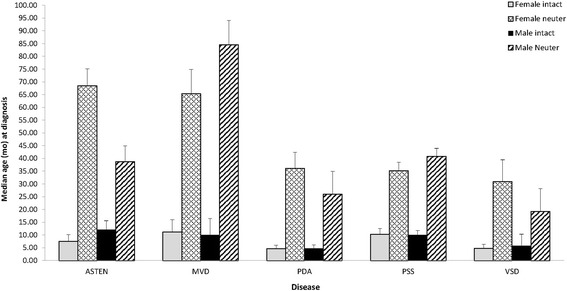
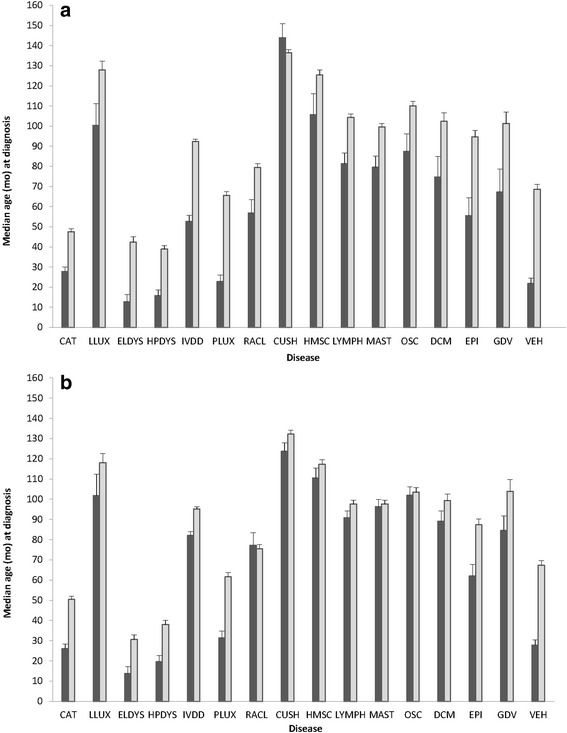
Results: Neutered dogs were at less risk for early and congenital conditions (aortic stenosis, early onset cataracts, mitral valve disease, patent ductus arteriosus, portosystemic shunt, and ventricular septal defect) than intact dogs. Neutering was also associated with reduced risk of dilated cardiomyopathy and gastric dilatation volvulus in males. Neutering was significantly associated with an increased risk for males and females for cancers (hemangiosarcoma, hyperadrenocorticism, lymphoma, mast cell tumor, and osteosarcoma), ruptured anterior cruciate ligament and epilepsy. Intervertebral disk disease was associated with increased risk in females only. For elbow dysplasia, hip dysplasia, lens luxation, and patellar luxation neutering had no significant effect on the risk for those conditions. Neutering was associated with a reduced risk of vehicular injury, a condition chosen as a control.
Conclusions: In this retrospective study, several conditions showed an increased risk associated with neutering whereas other conditions were less likely to be expressed in neutered dogs. The complexity of the interactions between neutering and inherited conditions underscores the need for reflective consultation between the client and the clinician when considering neutering. The convenience and advantages of neutering dogs that will not be included in a breeding program must be weighed against possible risk associated with neutering.
Keywords: Dog; Inherited disease; Neuter.
Figures
References
-
- McKenzie B. Evaluating the benefits and risks of neutering dogs and cats. CAB Rev Perspective Agriculture Vet Sci Nutr Nat Res. 2010;5:1–18.
-
- Bell F, Klausner J, Hayden D, Feeney D, Johnston S. Clinical and pathologic features of prostatic adenocarcinoma in sexually intact and castrated dogs: 31 cases (1970–1987) J Am Vet Med Assoc. 1991;199(11):1623. - PubMed
LinkOut - more resources
Full Text Sources
Other Literature Sources
