Eumelanin and pheomelanin are predominant pigments in bumblebee (Apidae: Bombus) pubescence
- PMID: 28560094
- PMCID: PMC5445944
- DOI: 10.7717/peerj.3300
Eumelanin and pheomelanin are predominant pigments in bumblebee (Apidae: Bombus) pubescence
Abstract
Background: Bumblebees (Hymenoptera: Apidae: Bombus) are well known for their important inter- and intra-specific variation in hair (or pubescence) color patterns, but the chemical nature of the pigments associated with these patterns is not fully understood. For example, though melanization is believed to provide darker colors, it still unknown which types of melanin are responsible for each color, and no conclusive data are available for the lighter colors, including white.
Methods: By using dispersive Raman spectroscopy analysis on 12 species/subspecies of bumblebees from seven subgenera, we tested the hypothesis that eumelanin and pheomelanin, the two main melanin types occurring in animals, are largely responsible for bumblebee pubescence coloration.
Results: Eumelanin and pheomelanin occur in bumblebee pubescence. Black pigmentation is due to prevalent eumelanin, with visible signals of additional pheomelanin, while the yellow, orange, red and brown hairs clearly include pheomelanin. On the other hand, white hairs reward very weak Raman signals, suggesting that they are depigmented. Additional non-melanic pigments in yellow hair cannot be excluded but need other techniques to be detected. Raman spectra were more similar across similarly colored hairs, with no apparent effect of phylogeny and both melanin types appeared to be already used at the beginning of bumblebee radiation.
Discussion: We suggest that the two main melanin forms, at variable amounts and/or vibrational states, are sufficient in giving almost the whole color range of bumblebee pubescence, allowing these insects to use a single precursor instead of synthesizing a variety of chemically different pigments. This would agree with commonly seen color interchanges between body segments across Bombus species.
Keywords: Bombus; Depigmentation; Eumelanin; Hymenoptera; Phenotype; Pheomelanin; Pigmentation; Pubescence; Raman spectroscopy.
Conflict of interest statement
The authors declare that they have no competing interests.
Figures
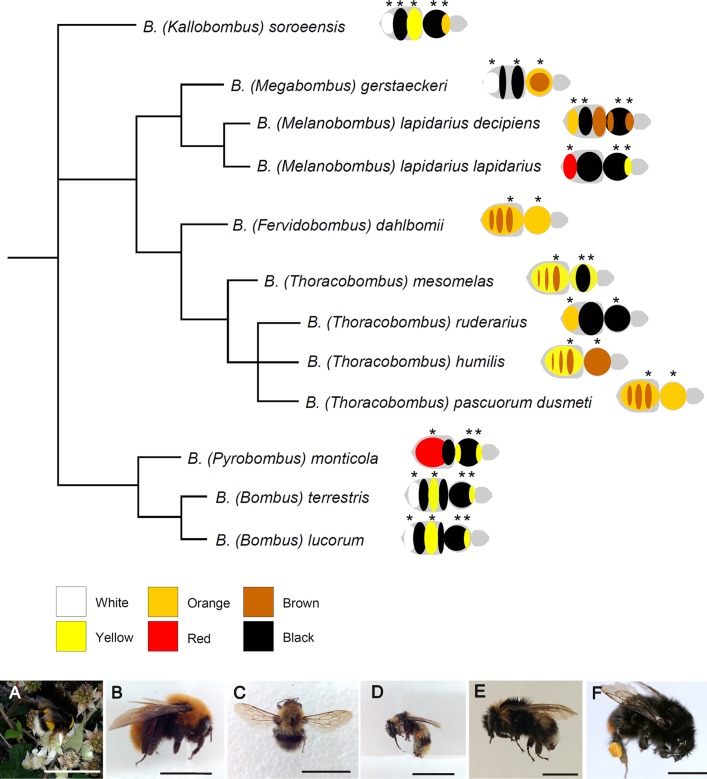
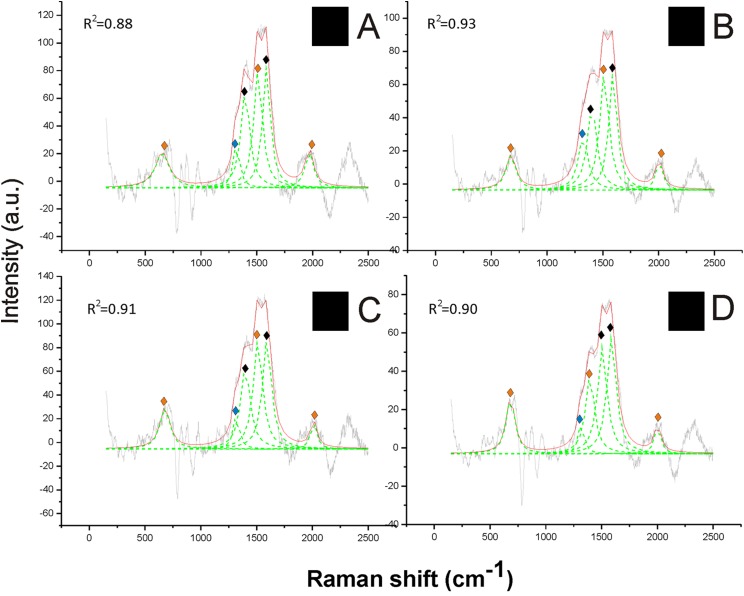
 signature peaks for pheomelanin,
  signature peaks for chitin. (A) Thorax of Bombus lucorum; (B) thorax of Bombus monticola; (C) abdomen of Bombus soroeensis; (D) thorax of Bombus terrestris.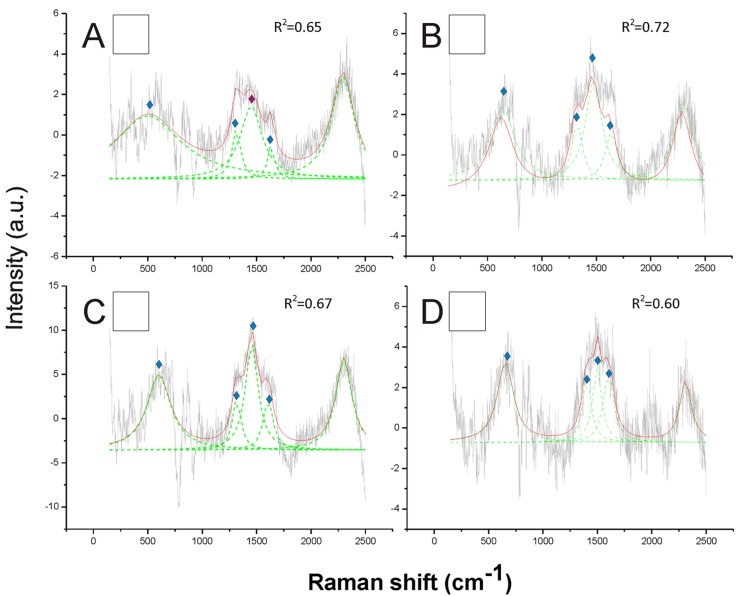
 Signature peaks for chitin,
  signature peaks for N-acetyl-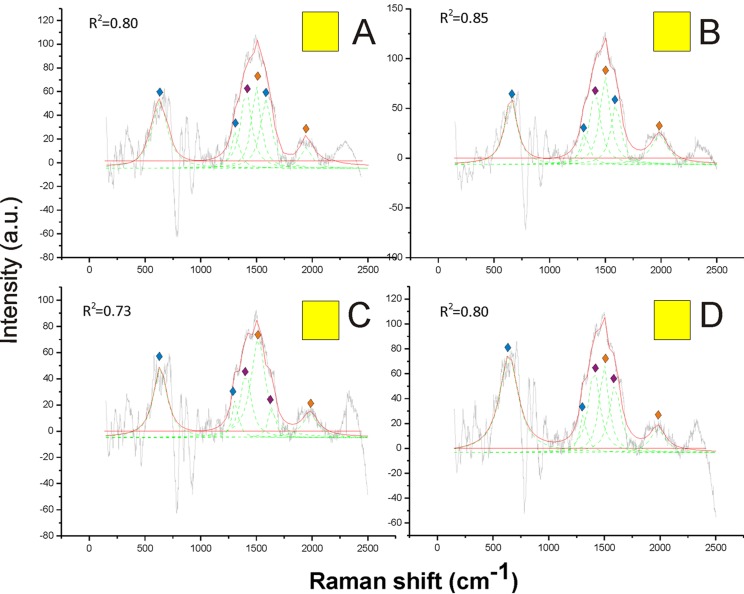
 Signature peaks for pheomelanin,
  signature peaks for chitin,
  signature peaks for N-acetyl-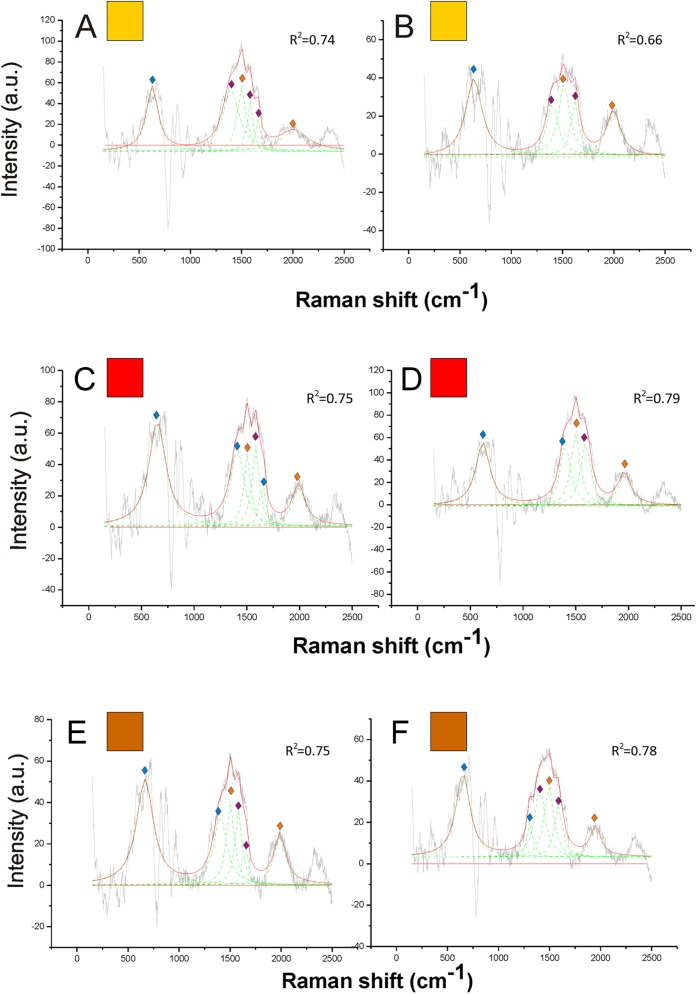
 Signature peaks for pheomelanin,
  signature peaks for chitin,
  signature peaks for N-acetyl-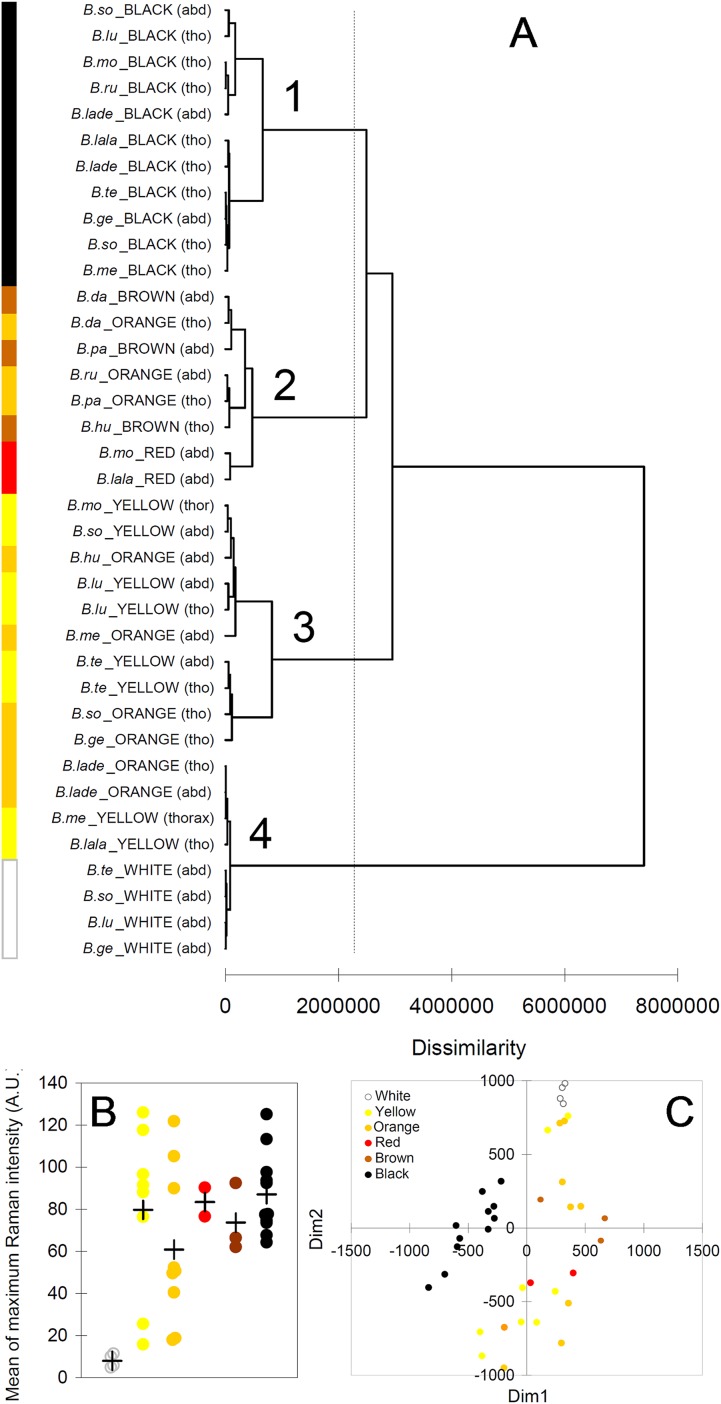
References
-
- Babiy PP. Neues zum Hummelproblem. Zeitschrift für wissenschaftliche Zoologie, Liepzig. 1925;125:502–512.
-
- Bennett ATD, Thery M. Avian color vision and coloration: multidisciplinary evolutionary biology. American Naturalist. 2007;169(1):S1–S6. doi: 10.1086/510163. - DOI
-
- Borg I, Groenen PJF. Modern Multidimensional Scaling: Theory and Applications. Second Edition. New York: Springer; 2005.
-
- Cameron SA, Hines HM, Williams PH. A comprehensive phylogeny of the bumble bees (Bombus) Biological Journal of the Linnean Society. 2007;91(1):161–188. doi: 10.1111/j.1095-8312.2007.00784.x. - DOI
LinkOut - more resources
Full Text Sources
Other Literature Sources