


Neurokinin 1 receptor signaling in endosomes mediates sustained nociception and is a viable therapeutic target for prolonged pain relief
- PMID: 28566424
- PMCID: PMC6034632
- DOI: 10.1126/scitranslmed.aal3447
Neurokinin 1 receptor signaling in endosomes mediates sustained nociception and is a viable therapeutic target for prolonged pain relief
Abstract
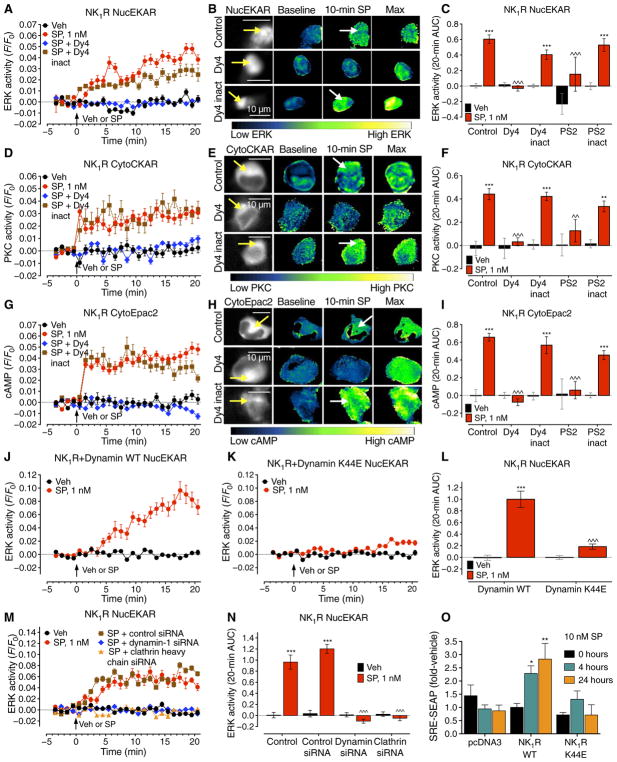
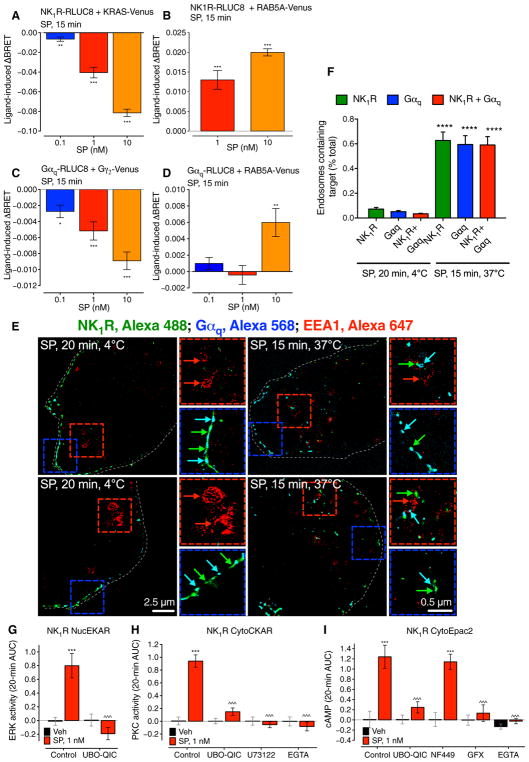
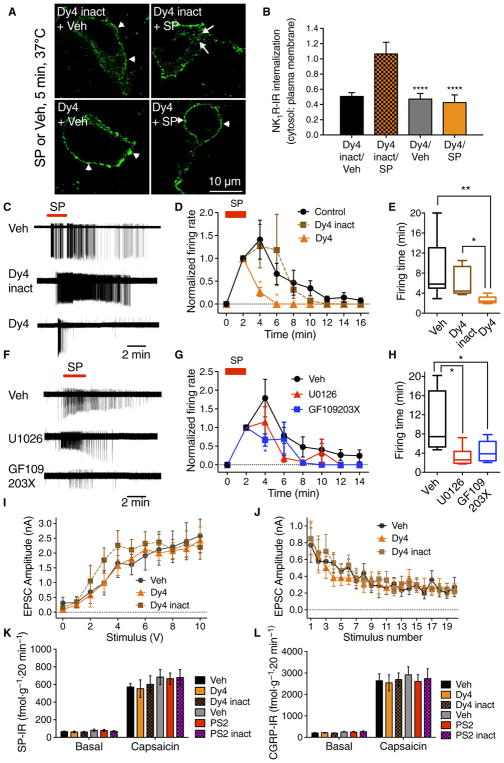
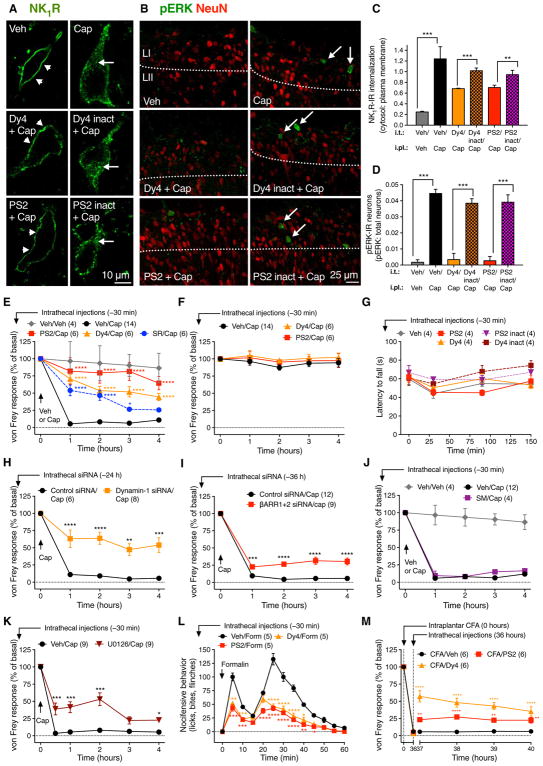
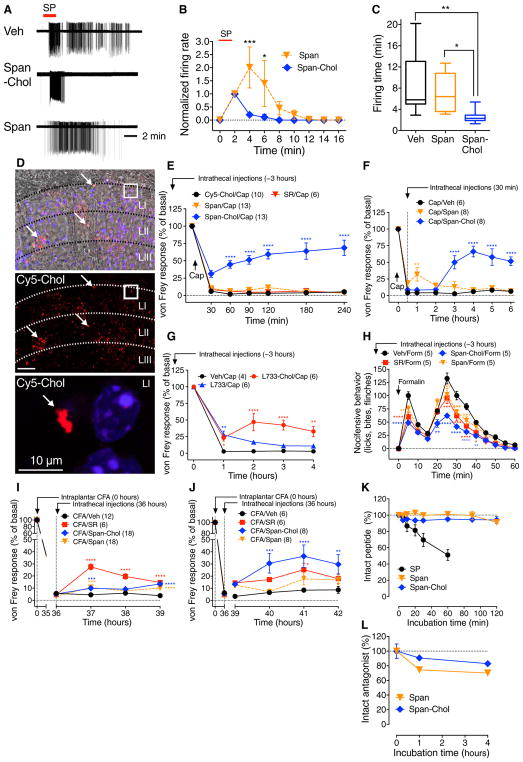
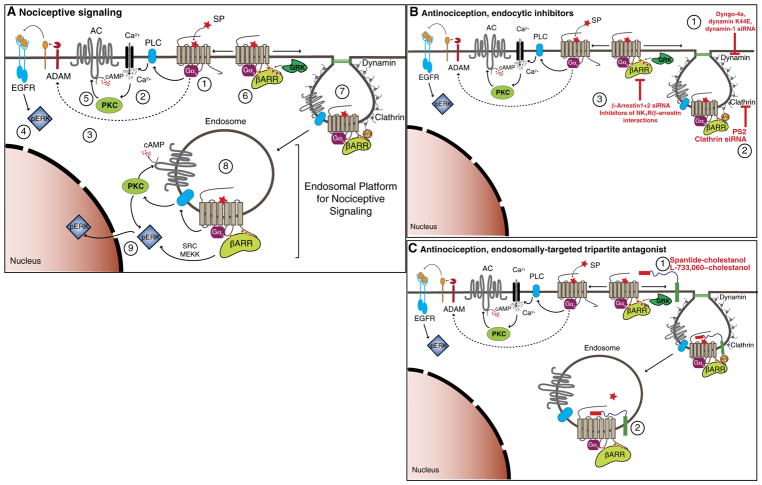
Typically considered to be cell surface sensors of extracellular signals, heterotrimeric GTP-binding protein (G protein)-coupled receptors (GPCRs) control many pathophysiological processes and are the target of 30% of therapeutic drugs. Activated receptors redistribute to endosomes, but researchers have yet to explore whether endosomal receptors generate signals that control complex processes in vivo and are viable therapeutic targets. We report that the substance P (SP) neurokinin 1 receptor (NK1R) signals from endosomes to induce sustained excitation of spinal neurons and pain transmission and that specific antagonism of the NK1R in endosomes with membrane-anchored drug conjugates provides more effective and sustained pain relief than conventional plasma membrane-targeted antagonists. Pharmacological and genetic disruption of clathrin, dynamin, and β-arrestin blocked SP-induced NK1R endocytosis and prevented SP-stimulated activation of cytosolic protein kinase C and nuclear extracellular signal-regulated kinase, as well as transcription. Endocytosis inhibitors prevented sustained SP-induced excitation of neurons in spinal cord slices in vitro and attenuated nociception in vivo. When conjugated to cholestanol to promote endosomal targeting, NK1R antagonists selectively inhibited endosomal signaling and sustained neuronal excitation. Cholestanol conjugation amplified and prolonged the antinociceptive actions of NK1R antagonists. These results reveal a critical role for endosomal signaling of the NK1R in the complex pathophysiology of pain and demonstrate the use of endosomally targeted GPCR antagonists.
Copyright © 2017, American Association for the Advancement of Science.
Conflict of interest statement
Figures


References
-
- Han B, Compton WM, Jones CM, Cai R. Nonmedical prescription opioid use and use disorders among adults aged 18 through 64 years in the United States, 2003–2013. JAMA. 2015;314:1468–1478. - PubMed
-
- Audet M, Bouvier M. Insights into signaling from the β2-adrenergic receptor structure. Nat Chem Biol. 2008;4:397–403. - PubMed
-
- Geppetti P, Veldhuis NA, Lieu T, Bunnett NW. G protein-coupled receptors: Dynamic machines for signaling pain and itch. Neuron. 2015;88:635–649. - PubMed
Publication types
MeSH terms
Substances
Grants and funding
LinkOut - more resources
Full Text Sources
Other Literature Sources
Medical
