The Ecology of Prions
- PMID: 28566466
- PMCID: PMC5584314
- DOI: 10.1128/MMBR.00001-17
The Ecology of Prions
Abstract
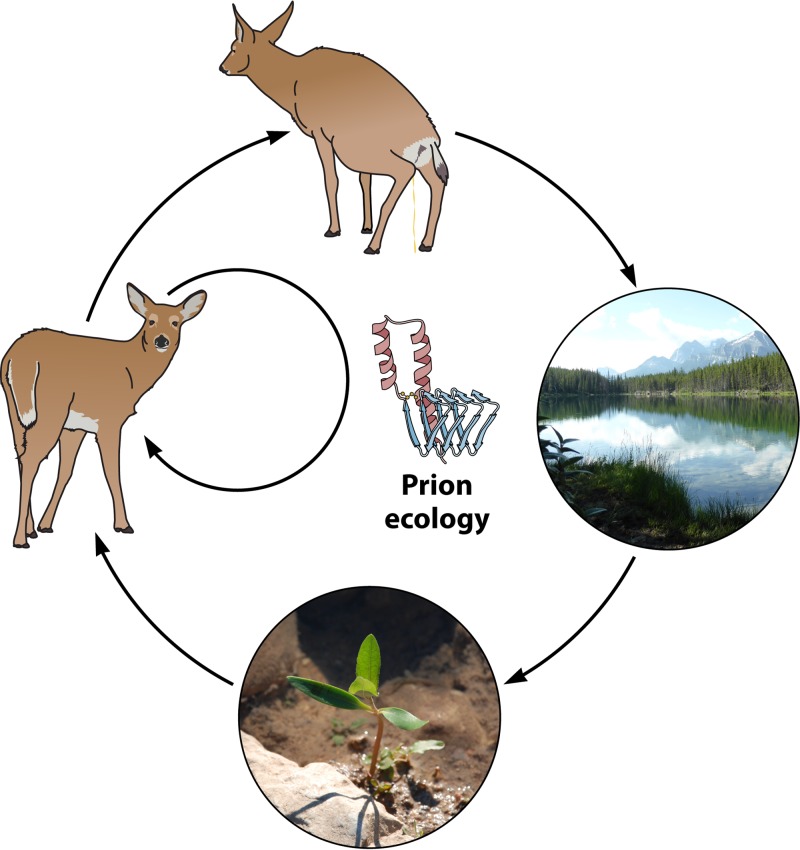
Chronic wasting disease (CWD) affects cervids and is the only known prion disease readily transmitted among free-ranging wild animal populations in nature. The increasing spread and prevalence of CWD among cervid populations threaten the survival of deer and elk herds in North America, and potentially beyond. This review focuses on prion ecology, specifically that of CWD, and the current understanding of the role that the environment may play in disease propagation. We recount the discovery of CWD, discuss the role of the environment in indirect CWD transmission, and consider potentially relevant environmental reservoirs and vectors. We conclude by discussing how understanding the environmental persistence of CWD lends insight into transmission dynamics and potential management and mitigation strategies.
Keywords: cervids; chronic wasting disease; ecology; environment; plants; prions; soil; transmission; water.
Copyright © 2017 American Society for Microbiology.
Figures


References
-
- Beck E, Daniel PM. 1987. Neuropathology of transmissible spongiform encephalopathies, p 331–385. In Prusiner SB, McKinley MP (ed), Prions: novel infectious pathogens causing scrapie and Creutzfeldt-Jakob disease. Academic Press, San Diego, CA.
Publication types
MeSH terms
Substances
LinkOut - more resources
Full Text Sources
Other Literature Sources