Clinical Characteristics and Outcome of Acute Heart Failure in Korea: Results from the Korean Acute Heart Failure Registry (KorAHF)
- PMID: 28567084
- PMCID: PMC5449528
- DOI: 10.4070/kcj.2016.0419
Clinical Characteristics and Outcome of Acute Heart Failure in Korea: Results from the Korean Acute Heart Failure Registry (KorAHF)
Abstract
Background and objectives: The burden of heart failure has increased in Korea. This registry aims to evaluate demographics, clinical characteristics, management, and long-term outcomes in patients hospitalized for acute heart failure (AHF).
Subjects and methods: We prospectively enrolled a total of 5625 consecutive subjects hospitalized for AHF in one of 10 tertiary university hospitals from March 2011 to February 2014. Descriptive statistics were used to determine the baseline characteristics of the study population and to compare them with those from other registries.
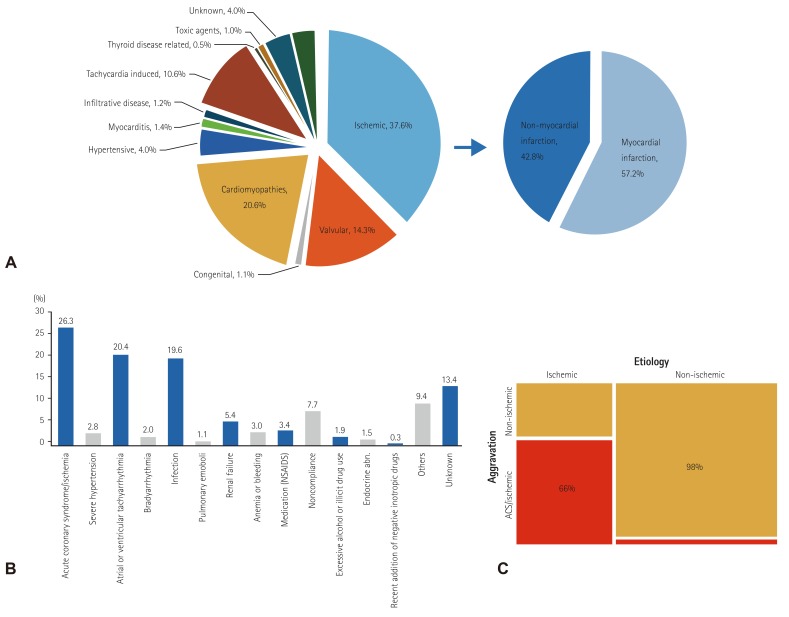
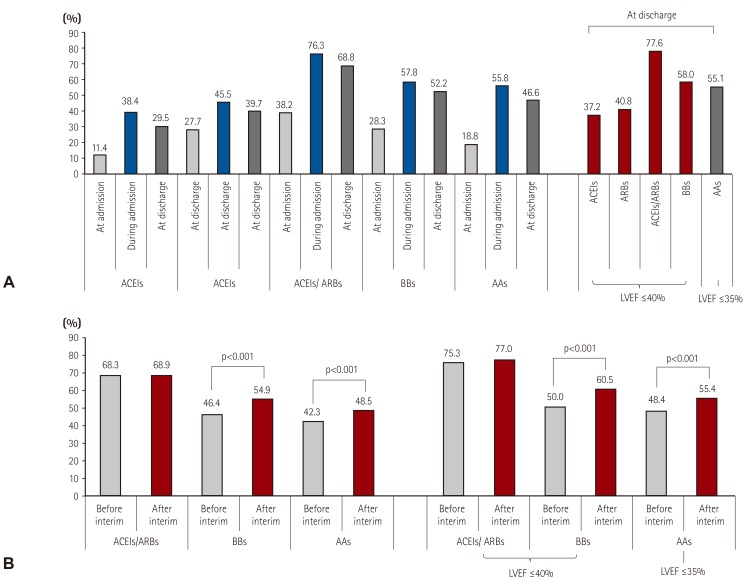
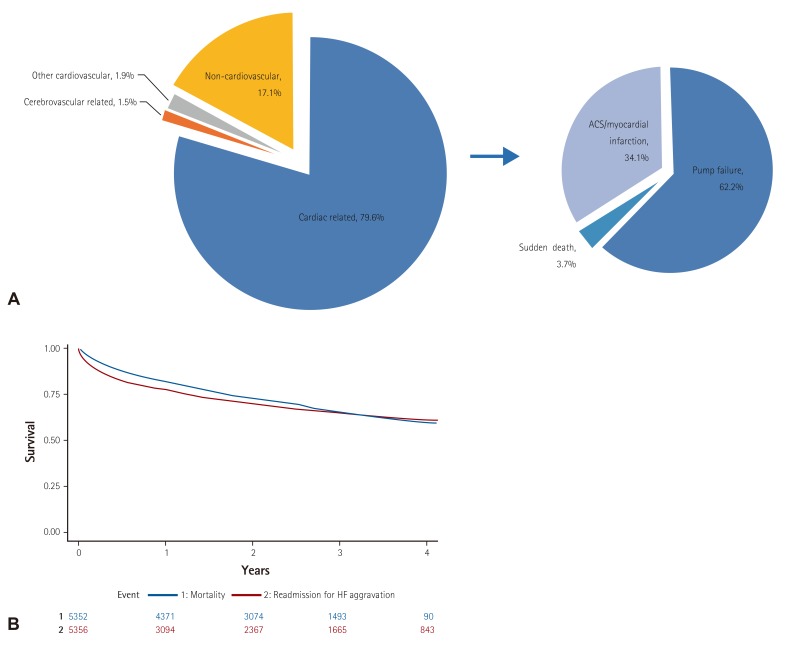
Results: The mean age was 68.5±14.5 years, 53.2% were male, and 52.2% had de novo heart failure. The mean systolic and diastolic blood pressures were 131.2±30.3 mmHg and 78.6±18.8 mmHg at admission, respectively. The left ventricular ejection fraction was ≤40% in 60.5% of patients. Ischemia was the most frequent etiology (37.6%) and aggravating factor (26.3%). Angiotensin converting enzyme inhibitors/angiotensin receptor blockers, beta-blockers, and aldosterone antagonists were prescribed in 68.8%, 52.2%, and 46.6% of the patients at discharge, respectively. Compared with the previous registry performed in Korea a decade ago, extracorporeal membrane oxygenation (ECMO) and heart transplantation have been performed more frequently (ECMO 0.8% vs. 2.8%, heart transplantation 0.3% vs. 1.2%), and in-hospital mortality decreased from 7.6% to 4.8%. However, the total cost of hospital care increased by 40%, and one-year follow-up mortality remained high.
Conclusion: While the quality of acute clinical care and AHF-related outcomes have improved over the last decade, the long-term prognosis of heart failure is still poor in Korea. Therefore, additional research is needed to improve long-term outcomes and implement cost-effective care.
Keywords: Guideline adherence; Heart failure, acute heart failure; Mortality; Quality of health care; Treatment outcome.
Conflict of interest statement
The authors have no financial conflicts of interest.
Figures
References
-
- Ambrosy AP, Fonarow GC, Butler J, et al. The global health and economic burden of hospitalizations for heart failure: lessons learned from hospitalized heart failure registries. J Am Coll Cardiol. 2014;63:1123–1133. - PubMed
-
- Heidenreich PA, Trogdon JG, Khavjou OA, et al. Forecasting the future of cardiovascular disease in the United States: a policy statement from the American Heart Association. Circulation. 2011;123:933–944. - PubMed
-
- Okura Y, Ramadan MM, Ohno Y, et al. Impending epidemic: future projection of heart failure in Japan to the year 2055. Circ J. 2008;72:489–491. - PubMed
-
- Curtis LH, Whellan DJ, Hammill BG, et al. Incidence and prevalence of heart failure in elderly persons, 1994-2003. Arch Intern Med. 2008;168:418–424. - PubMed
LinkOut - more resources
Full Text Sources
Other Literature Sources
Medical