


Clinical Impact of Blood Glucose Monitoring Accuracy: An In-Silico Study
- PMID: 28569076
- PMCID: PMC5951046
- DOI: 10.1177/1932296817710474
Clinical Impact of Blood Glucose Monitoring Accuracy: An In-Silico Study
Abstract
Background: Patients with diabetes rely on blood glucose (BG) monitoring devices to manage their condition. As some self-monitoring devices are becoming more and more accurate, it becomes critical to understand the relationship between system accuracy and clinical outcomes, and the potential benefits of analytical accuracy.
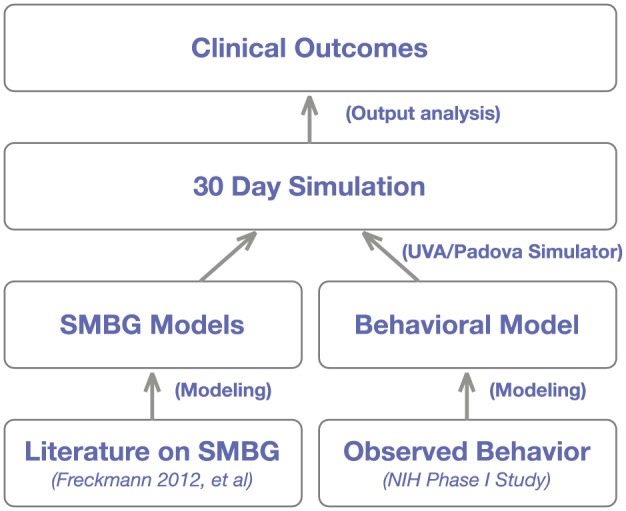
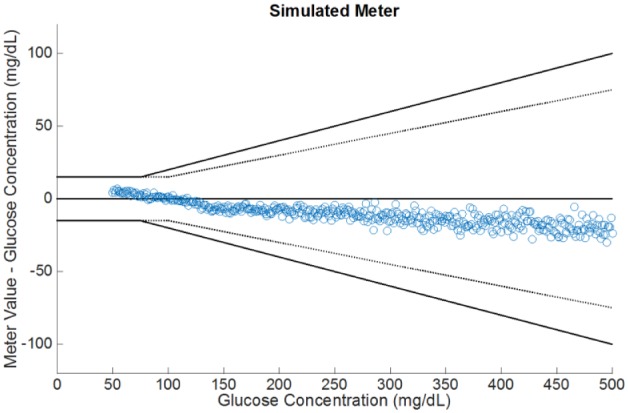
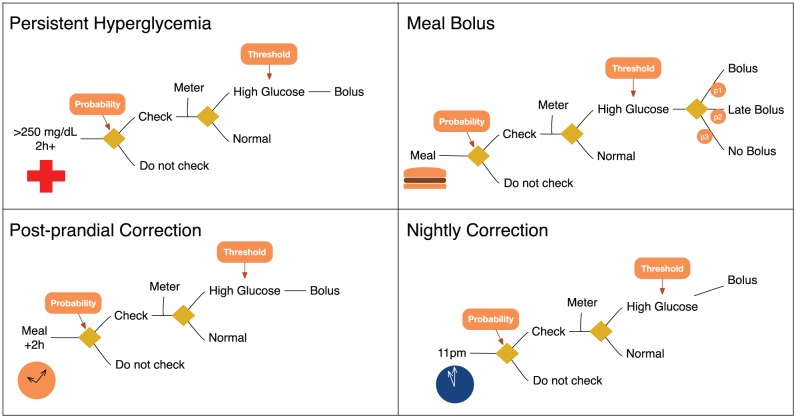
Methods: We conducted a 30-day in-silico study in type 1 diabetes mellitus (T1DM) patients using continuous subcutaneous insulin infusion (CSII) therapy and a variety of BG meters, using the FDA-approved University of Virginia (UVA)/Padova Type 1 Simulator. We used simulated meter models derived from the published characteristics of 43 commercial meters. By controlling random events in each parallel run, we isolated the differences in clinical performance that are directly associated with the meter characteristics.
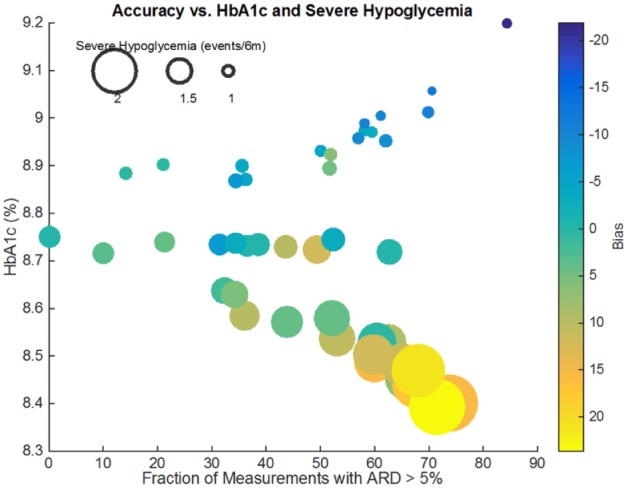
Results: A meter's systematic bias has a significant and inverse effect on HbA1c ( P < .01), while also affecting the number of severe hypoglycemia events. On the other hand, error, defined as the fraction of measurements beyond 5% of the true value, is a predictor of severe hypoglycemia events ( P < .01), but in the absence of bias has a nonsignificant effect on average glycemia (HbA1c). Both bias and error have significant effects on total daily insulin (TDI) and the number of necessary glucose measurements per day ( P < .01). Furthermore, these relationships can be accurately modeled using linear regression on meter bias and error.
Conclusions: Two components of meter accuracy, bias and error, clearly affect clinical outcomes. While error has little effect on HbA1c, it tends to increase episodes of severe hypoglycemia. Meter bias has significant effects on all considered metrics: a positive systemic bias will reduce HbA1c, but increase the number of severe hypoglycemia attacks, TDI use, and number of fingersticks per day.
Keywords: accuracy; blood glucose meters; clinical outcomes.
Conflict of interest statement
Figures
References
-
- Cobelli C, Dalla Man C, Pedersen MG, Bertoldo A, Toffolo G. Advancing our understanding of the glucose systems via modeling. IEEE Trans Biomed Eng. 2014;61(5):1577-1592. - PubMed
-
- Lee I, Sokolsky O, Chen S, et al. Challenges and research directions in medical cyber-physical systems. Proc IEEE. 2012;100(1):75-90.
MeSH terms
Substances
LinkOut - more resources
Full Text Sources
Other Literature Sources
Medical
Research Materials
