Review
. 2017 May 31;16(1):71.
doi: 10.1186/s12933-017-0550-6.

Platelets, diabetes and myocardial ischemia/reperfusion injury

Affiliations
Review

Platelets, diabetes and myocardial ischemia/reperfusion injury

Isabella Russo et al. Cardiovasc Diabetol. .

Abstract

Mechanisms underlying the pathogenesis of ischemia/reperfusion injury are particularly complex, multifactorial and highly interconnected. A complex and entangled interaction is also emerging between platelet function, antiplatelet drugs, coronary diseases and ischemia/reperfusion injury, especially in diabetic conditions. Here we briefly summarize features of antiplatelet therapy in type 2 diabetes (T2DM). We also treat the influence of T2DM on ischemia/reperfusion injury and how anti-platelet therapies affect post-ischemic myocardial damage through pleiotropic properties not related to their anti-aggregating effects. miRNA-based signature associated with T2DM and its cardiovascular disease complications are also briefly considered. Influence of anti-platelet therapies and different effects of healthy and diabetic platelets on ischemia/reperfusion injury need to be further clarified in order to enhance patient benefits from antiplatelet therapy and revascularization. Here we provide insight on the difficulty to reduce the cardiovascular risk in diabetic patients and report novel information on the cardioprotective role of widely used anti-aggregant drugs.

Keywords: Antiplatelet therapy; Aspirin; Cardioprotection; Type 2 diabetes.


Figures
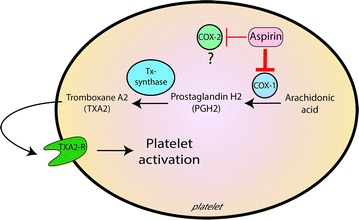
Fig. 1
Fig. 1
Aspirin’s target in platelets: aspirin inhibits cyclo-Oxygenase-1 (COX-1), limiting thromboxane A2 (TXA2) formation. The thickness of line represents the power of aspirin in inhibiting COX, which is about 200-fold higher for COX-1 than COX-2, whose role in platelet function is not clear
Fig. 2
Fig. 2
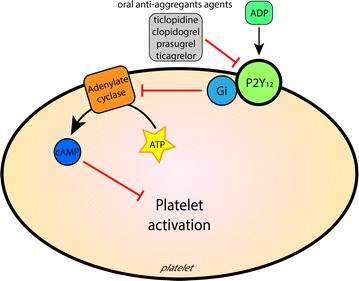
Target of oral anti-aggregant drugs in platelets: thienopyridine (clopidogrel and prasugrel) and non-thienopyridine (ticagrelor and cangrelor) directly or indirectly inhibit ADP receptor P2Y12, thus limiting adenylate cyclase inhibition and platelet aggregation
Fig. 3
Fig. 3
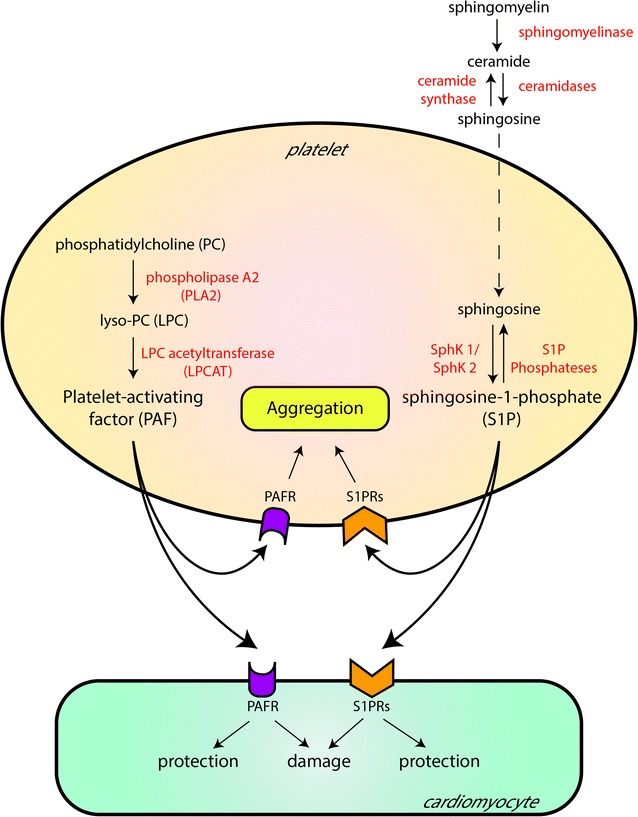
Among the factors released by platelets, some have double edged sword behavior. Depending on several factors (e.g. concentration and timing of infusion), they may induce both cardioprotection (i.e. preconditioning like effects) or injury to cardiomyocytes

References

    1. Stamler J, Vaccaro O, Neaton JD, Wentworth D. Diabetes, other risk factors, and 12-yr cardiovascular mortality for men screened in the multiple risk factor intervention trial. Diabetes Care. 1993;16:434–444. doi: 10.2337/diacare.16.2.434. - DOI - PubMed
    1. Sarwar N, Aspelund T, Eiriksdottir G, Gobin R, Seshasai SRK, Forouhi NG, et al. Markers of dysglycaemia and risk of coronary heart disease in people without diabetes: reykjavik prospective study and systematic review. PLoS Med. 2010;7:1–12. doi: 10.1371/journal.pmed.1000278. - DOI - PMC - PubMed
    1. Haffner SM, Lehto S, Rönnemaa T, Pyörälä K, Laakso M. Mortality from coronary heart disease in subjects with type 2 diabetes and in nondiabetic subjects with and without prior myocardial infarction. N Engl J Med. 1998;339:229–234. doi: 10.1056/NEJM199807233390404. - DOI - PubMed
    1. Mudaliar S. Intense management of diabetes mellitus: role of glucose control and antiplatelet agents. J Clin Pharmacol. 2004;44:414–422. doi: 10.1177/0091270004263045. - DOI - PubMed
    1. American Diabetes Association Executive summary: standards of medical care in diabetes–2013. Diabetes Care. 2013;36(Suppl 1):S4–S10. - PMC - PubMed

Publication types

MeSH terms