. 2017 Oct:83-84:91-98.
doi: 10.1016/j.jchemneu.2017.05.003. Epub 2017 May 30.

Phospho-specific antibodies targeting the amino terminus of the human dopamine transporter

Affiliations

Phospho-specific antibodies targeting the amino terminus of the human dopamine transporter

Caline S Karam et al. J Chem Neuroanat. 2017 Oct.

Abstract

The dopamine transporter (DAT), which mediates the inactivation of released dopamine through its reuptake, is the primary molecular target for the actions of psychostimulants. An increasing number of studies support an essential role for phosphorylation of serines (Ser) in the distal amino (N) terminus of DAT in regulating its function. Still, the molecular details of the regulation of phosphorylation and its impact on function are not fully understood. To address this, we have developed and characterized two distinct phospho-antibodies that recognize human DAT when it is phosphorylated at Ser7 or Ser12. Our data show that treatment of cells with phorbol 12-myristate 13-acetate (PMA), amphetamine (AMPH) or okadaic acid (OA) leads to an increase in the phosphorylation of DAT at both residues and that these responses are dependent on the activity of protein kinase C. We also show that AMPH-induced and OA-induced phosphorylation of DAT are dependent on Ca2+/calmodulin-dependent protein kinase α. Our data further suggest that the lipid raft localization of DAT is necessary for efficient N-terminal phosphorylation and for the associated behavioral effects of AMPH, demonstrating the potential of these novel antibodies as powerful tools to study DAT regulation and function in vivo.

Keywords: Amphetamine; CamKII; Dopamine efflux; Lipid rafts; Locomotor behavior; Phosphorylation.


Figures

Figure 1
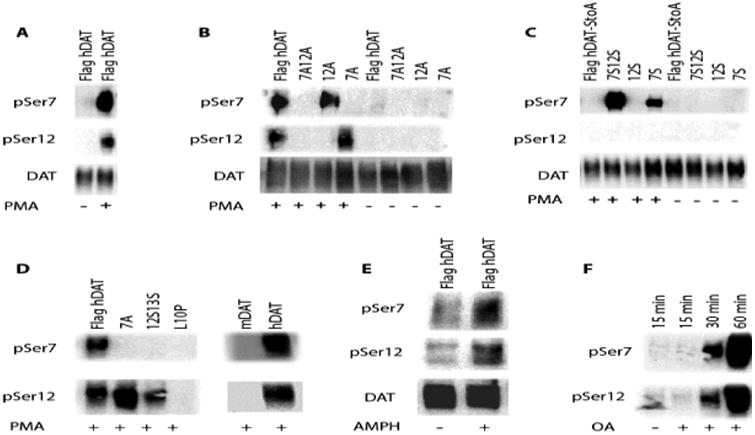
Figure 1. PMA, amphetamine and okadaic acid increase phosphorylation of human DAT Ser 7 and Ser 12
A) HEK293-derived EM4 cells stably expressing FLAG-tagged human DAT (FLAG-hDAT) were treated with 1 μM PMA (+) or vehicle (-) for 15 min. DAT was immunoprecipitated by the FLAG tag and probed for phosphorylated Ser7 (pSer7) or Ser12 (pSer12), or total DAT. Treatment with PMA led to robust phosphorylation of hDAT at Ser7 and Ser12. B) Ser7 and Ser12 in FLAG-hDAT were individually or simultaneously replaced with alanines (S7A, S12A or S7AS12A). pSer7 antibody did not detect PMA-induced DAT phosphorylation when either the S7A or S7AS12A mutant was expressed. pSer12 antibody did not detect DAT phosphorylation when either the S12A or S7AS12A mutant was expressed. C) Neither pSer7 nor pSer12 antibody detected PMA-induced DAT phosphorylation in lysates from cells expressing hDAT with all 5 N-terminal serines mutated to alanine (hDAT-StoA). Restoration of Ser7 (S7) or Ser7/Ser12 (S7S12) into hDAT-StoA led to robust signal with pSer7. Restoration of Ser12 (S12) alone did not restore the signal detected by either pSer7 or pSer12. D) Simultaneous restoration of S12 and S13 (S12S13) in hDAT-StoA background restored the signal detected by pSer12 but not pSer7. Neither pSer7 nor pSer12 detected PMA-induced DAT phosphorylation when the N-terminal Leu10 was mutated to proline in hDAT (L10P). Neither phosphoantibodies detected PMA-induced phosphorylation of mouse DAT (mDAT), as compared to a robust signal detected for human DAT (hDAT). E) Treatment with 10 μM amphetamine (AMPH) for 30 min increased phosphorylation at both Ser7 and Ser12. F) Treatment with 1 μM okadaic acid (OA) enhanced levels of Ser7 and Ser 12 phosphorylation in a time-dependent manner.
Figure 2
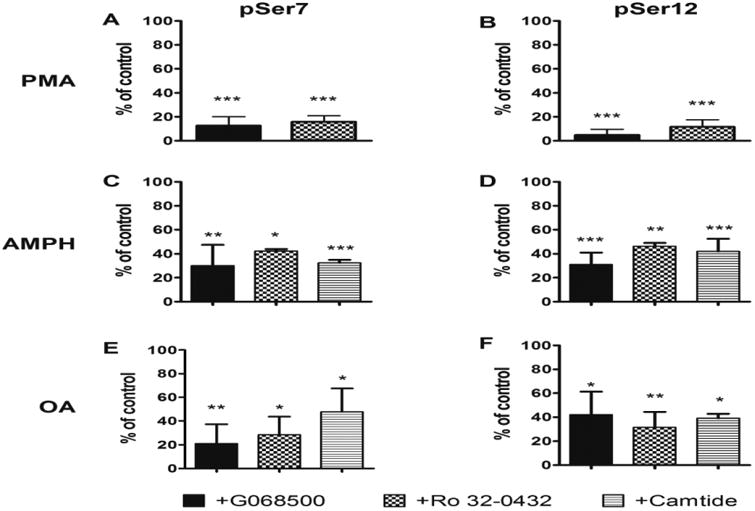
Figure 2. Inhibition of DAT phosphorylation by PKC and CaMKII inhibitors
Cells stably expressing FLAG-hDAT were treated with 1 μM PMA for 15 min (A and B), 10 μM AMPH for 10 min (C and D) or 4 μM OA for 15 min (E and F) in the presence or absence of an inhibitor: cells were incubated with 1 μM G06850 (solid black bars), 0.5 μM Ro 32-0432 (checkered bars), or 5 μM Camtide (striped bars), for 30 min prior to the addition of the activator. DAT was immunoprecipitated by the FLAG tag and probed for phosphorylated Ser7 (pSer7, A, C, E) or Ser12 (pSer12, B, D, F), or total DAT. Data are presented as percent inhibition of signal in the presence of inhibitor, compared to its absence. Data = mean±S.E.M with n≥3 per experiment. Significance of inhibition was calculated using one way ANOVA, followed by a post-hoc Dunnett's multiple comparison test. * P<0.05, ** P<0.01, *** P<0.001.
Figure 3
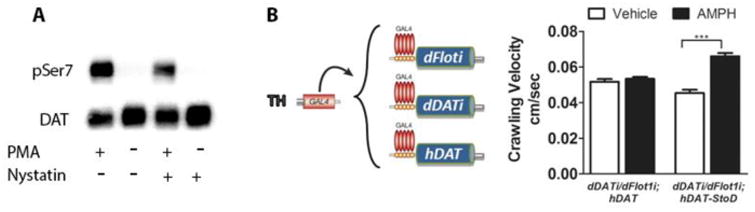
Figure 3. Pseudophosphorylation of DAT N-terminal serines bypasses the requirement for raft localization in the actions of amphetamine
A) Cells stably expressing FLAG DAT were incubated with or without 25 μg/mL nystatin for 20 min and then treated for 15 min with 0.5 μM PMA or vehicle. DAT was immunoprecipitated by the FLAG tag and probed for phosphorylated serine 7 (pSer7) or total DAT. B) Larvae expressing UAS-driven small RNA-mediated interference against both Drosophila DAT (dDATi) and Flot1 (dFlot1i) in dopamine neurons using a Gal4 driver specific to tyrosine hydroxylase (TH)-positive neurons (TH-GAL4) exhibited a blunted AMPH response that was not rescued by expression of hDAT. In contrast, expression of hDAT/S to D did rescue the response to AMPH (***P<0.001). Data = mean±S.E.M. (n ≥ 30 larvae per group).

References

    1. Adkins EM, Samuvel DJ, Fog JU, Eriksen J, Jayanthi LD, Vaegter CB, Ramamoorthy S, Gether U. Membrane mobility and microdomain association of the dopamine transporter studied with fluorescence correlation spectroscopy and fluorescence recovery after photobleaching. Biochemistry. 2007;46:10484–10497. - PubMed
    1. Amara SG, Kuhar MJ. Neurotransmitter transporters: recent progress. Annu Rev Neurosci. 1993;16:73–93. - PubMed
    1. Bowton E, Saunders C, Erreger K, Sakrikar D, Matthies HJ, Sen N, Jessen T, Colbran RJ, Caron MG, Javitch JA, et al. Dysregulation of dopamine transporters via dopamine D2 autoreceptors triggers anomalous dopamine efflux associated with attention-deficit hyperactivity disorder. J Neurosci. 2010;30:6048–6057. - PMC - PubMed
    1. Bruss M, Wieland A, Bonisch H. Molecular cloning and functional expression of the mouse dopamine transporter. J Neural Transm (Vienna) 1999;106:657–662. - PubMed
    1. Cervinski MA, Foster JD, Vaughan RA. Psychoactive substrates stimulate dopamine transporter phosphorylation and down-regulation by cocaine-sensitive and protein kinase C-dependent mechanisms. The Journal of biological chemistry. 2005;280:40442–40449. - PubMed

Substances