. 2017 Aug;66(8):2124-2136.
doi: 10.2337/db17-0098. Epub 2017 Jun 1.

Maternal Exercise Improves Glucose Tolerance in Female Offspring

Affiliations

Maternal Exercise Improves Glucose Tolerance in Female Offspring

Kristin I Stanford et al. Diabetes. 2017 Aug.

Abstract

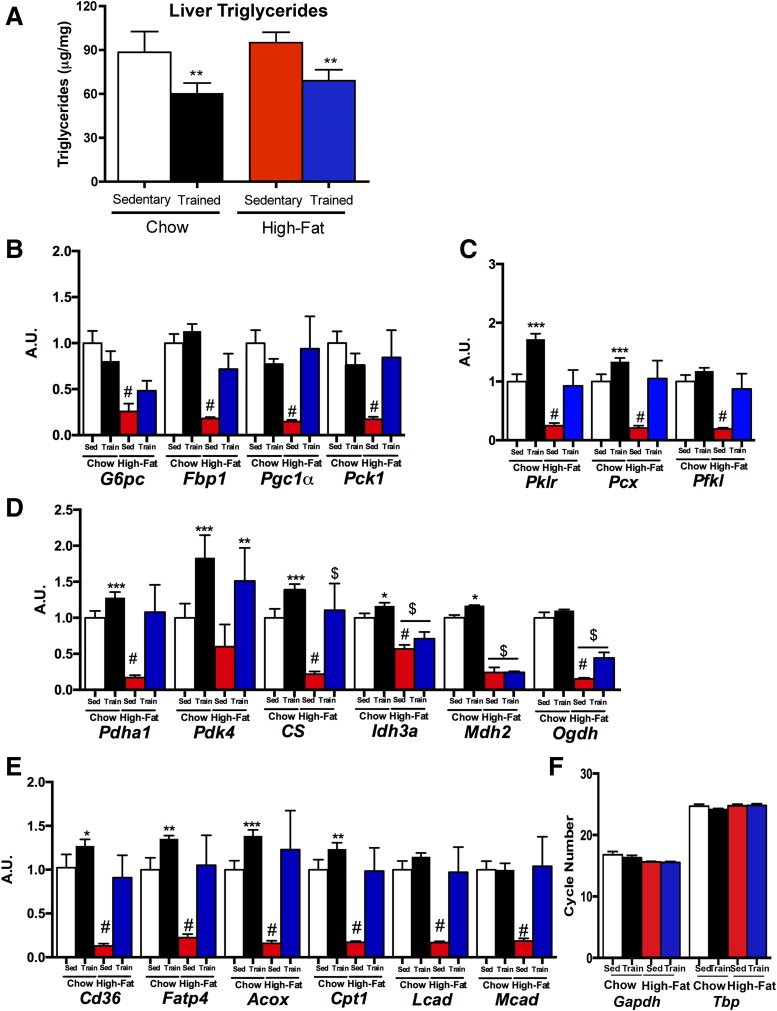
Poor maternal diet can lead to metabolic disease in offspring, whereas maternal exercise may have beneficial effects on offspring health. In this study, we determined ifmaternal exercise could reverse the detrimental effects of maternal high-fat feeding on offspring metabolism of female mice. C57BL/6 female mice were fed a chow (21%) or high-fat (60%) diet and further divided by housing in static cages or cages with running wheels for 2 weeks prior to breeding and throughout gestation. Females were bred with chow-fed sedentary C57BL/6 males. High fat-fed sedentary dams produced female offspring with impaired glucose tolerance compared with offspring of chow-fed dams throughout their first year of life, an effect not present in the offspring from high fat-fed dams that had trained. Offspring from high fat-fed trained dams had normalized glucose tolerance, decreased fasting insulin, and decreased adiposity. Liver metabolic function, measured by hepatic glucose production in isolated hepatocytes, hyperinsulinemic-euglycemic clamps, liver triglyceride content, and liver enzyme expression, was enhanced in offspring from trained dams. In conclusion, maternal exercise negates the detrimental effects of a maternal high-fat diet on glucose tolerance and hepatocyte glucose metabolism in female offspring. The ability of maternal exercise to improve the metabolic health of female offspring is important, as this intervention could combat the transmission of obesity and diabetes to subsequent generations.


Figures

Figure 1
Figure 1
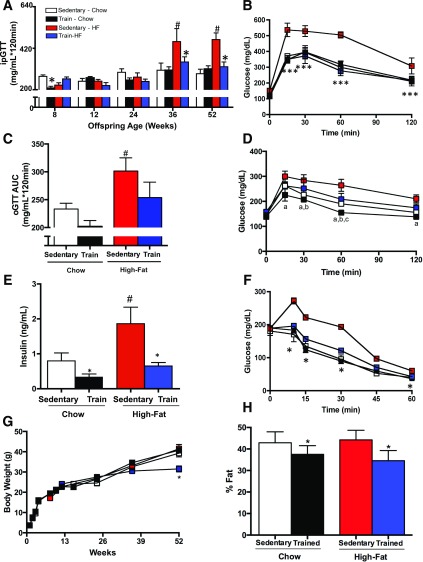
Maternal exercise negates the detrimental effects of a maternal high-fat diet on offspring metabolic health. A and B: ipGTT was measured over a 52-week period in offspring of dams that were sedentary or trained and fed a chow or high-fat diet. Offspring were injected with 2 g glucose/kg body weight. Glucose area under the curve (AUC) (A) and glucose excursion curve (B) of female offspring from sedentary and trained dams fed a chow or high-fat diet. Data are expressed as means ± SEM (n = 10–20/group). Symbols represent differences compared with sedentary control groups (*P < 0.05; ***P < 0.001; #P < 0.05 high fat–fed sedentary vs. chow-fed sedentary). C and D: For oGTTs, 46- to 56-week-old female offspring were gavaged with 1 g glucose/kg body weight. Glucose AUC (C) and glucose excursion curve (D) of female offspring from sedentary and trained dams fed a chow or high-fat diet. Data are expressed as means ± SEM (n = 3–7/group). Symbols and letters represent statistical differences (#P < 0.05 high fat–fed vs. all chow-fed groups; aP < 0.05 chow-fed trained vs. high fat–fed sedentary; bP < 0.05 chow-fed sedentary vs. high fat–fed sedentary; cP < 0.05 high fat–fed trained vs. high fat–fed sedentary). E: Fasting serum insulin concentrations at 52 weeks of age. Data are expressed as means ± SEM (n = 23–25/group). F: For insulin tolerance tests, mice were injected with 1 unit insulin/kg i.p. and data expressed as glucose for female offspring. Data are expressed as means ± SEM (n = 10–20/group). Symbols represent differences compared with sedentary control groups (*P < 0.05, #P < 0.05 high fat–fed sedentary vs. chow-fed sedentary). Body weight (G) and percent fat mass (H) of female offspring at 52 weeks. Data are expressed as means ± SEM (n = 23–25/group). Asterisks represent differences compared with sedentary control groups (*P < 0.05, high fat–fed sedentary vs. chow-fed sedentary).
Figure 2
Figure 2
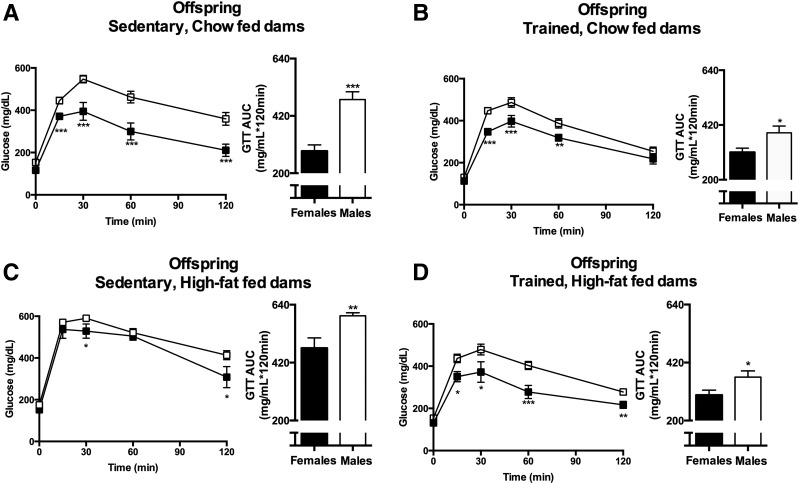
Maternal exercise negates the detrimental effects of a maternal high-fat diet on the metabolic health of both male and female offspring metabolic health. A–D: Glucose tolerance was measured at 52 weeks of age in offspring of dams that were sedentary or trained and fed a chow or high-fat diet. For GTTs, offspring were injected with 2 g glucose/kg body weight, intraperitoneal. Glucose excursion curve and glucose area under the curve (AUC) of male and female offspring from sedentary, chow-fed dams (A); trained, chow-fed dams (B); sedentary, high fat–fed dams (C); and trained, high fat–fed dams (D). Data are expressed as means ± SEM (n = 10–20/group). Asterisks represent differences compared with sedentary control groups (*P < 0.05, **P < 0.01; ***P < 0.001).
Figure 3
Figure 3
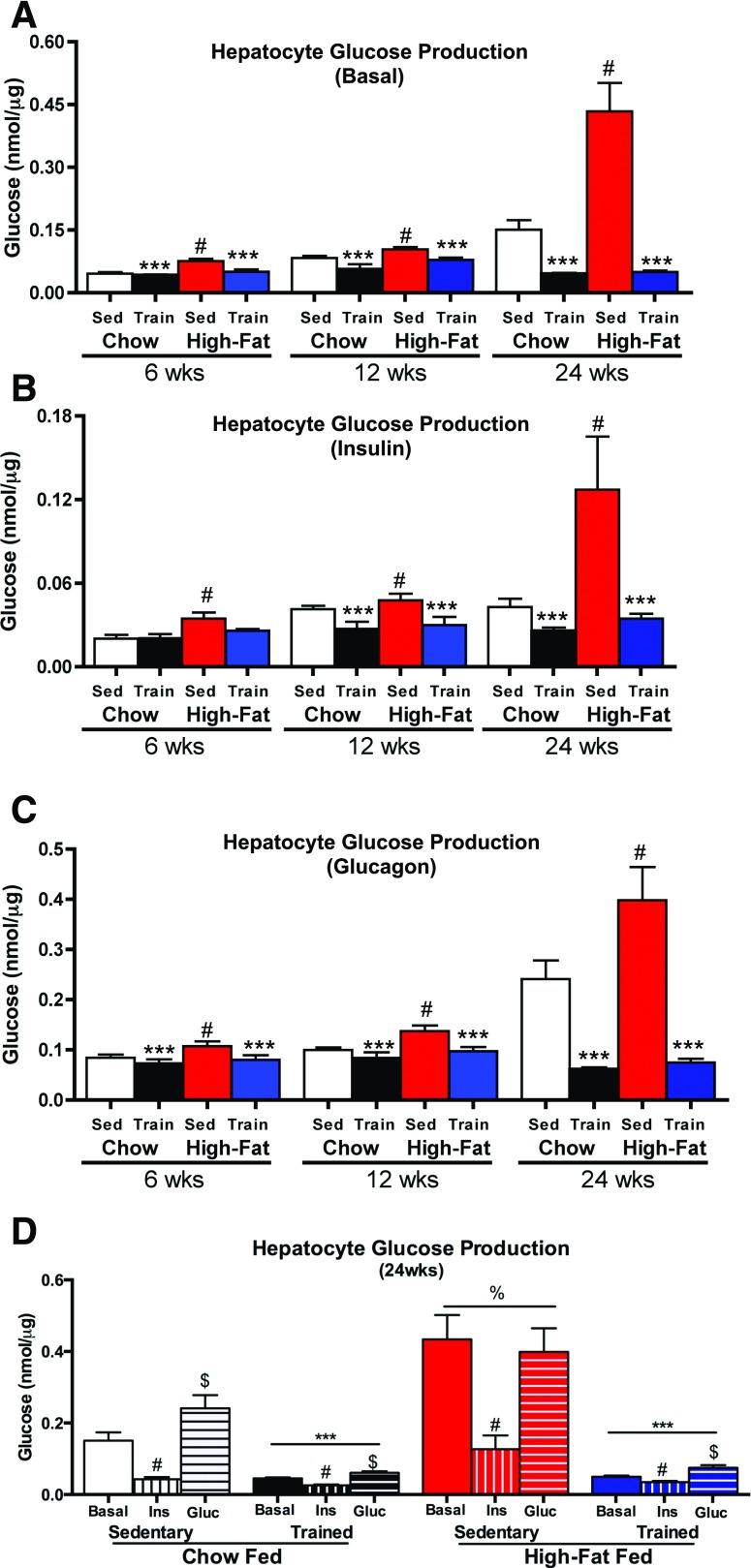
Maternal exercise improves hepatic function in isolated hepatocytes regardless of diet. Hepatic glucose production was measured in isolated hepatocytes after 4 h in the basal state (A), after incubation with insulin (B), or after stimulation with glucagon (C). Data are expressed as means ± SEM (n = 12/group). Symbols represent differences compared with sedentary control groups (***P < 0.001; #P < 0.05 high fat–fed sedentary vs. chow-fed sedentary). D: Data represent basal, insulin-suppressed, and glucagon-stimulated data at the 24-week time point. Symbols represent differences compared with basal state (#P < 0.001; $P < 0.05 vs. basal) or sedentary control groups (***P < 0.001) or versus all other groups (%P < 0.001).
Figure 4
Figure 4
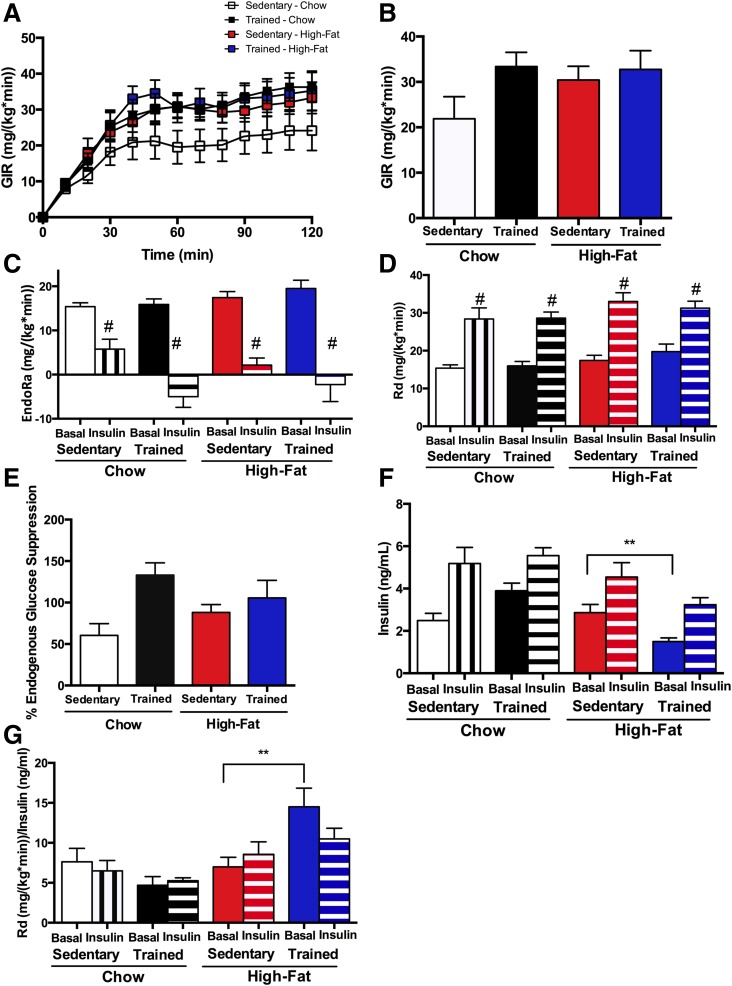
Hyperinsulinemic-euglycemic clamps in offspring. A–E: Hyperinsulinemic-euglycemic clamps were performed in 52-week-old female offspring from sedentary or trained dams fed a chow or high-fat diet. There was no difference in GIR (A and B), EndoRa (C), Rd (D), or percentage of endogenous glucose suppression (E). F: Fasting insulin was significantly reduced in the basal state in offspring from trained high fat–fed dams. When normalized for fasting insulin, rate of glucose disappearance (Rd/Insulin) (G) was significantly increased in offspring from trained high fat–fed dams. Data are expressed as means ± SEM (n = 8/group). Symbols represent differences compared with sedentary control groups (**P < 0.05) or to basal state (#P < 0.01).
Figure 5
Figure 5
Maternal exercise alters hepatic composition and gene expression. Liver triglyceride concentration (A) was measured at 52 weeks of age in female offspring. Gene expression of hepatic genes involved in gluconeogenesis (B), pyruvate metabolism (C), Krebs cycle activity (D), fatty acid transport and oxidation (E), and liver housekeeping genes were measured at 52 weeks of age (F). Data are expressed as means ± SEM (n = 8/group). Symbols represent differences compared with sedentary control groups (*P < 0.05; **P < 0.01; ***P < 0.001; #P < 0.05 high fat–fed sedentary vs. chow-fed sedentary; $P < 0.05 high fat–fed sedentary vs. high fat–fed trained). A.U., arbitrary units.

Similar articles

Cited by

References

    1. National Task Force on the Prevention and Treatment of Obesity Overweight, obesity, and health risk. Arch Intern Med 2000;160:898–904 - PubMed
    1. Isganaitis E, Jimenez-Chillaron J, Woo M, et al. . Accelerated postnatal growth increases lipogenic gene expression and adipocyte size in low-birth weight mice. Diabetes 2009;58:1192–1200 - PMC - PubMed
    1. Isganaitis E, Woo M, Ma H, et al. . Developmental programming by maternal insulin resistance: hyperinsulinemia, glucose intolerance, and dysregulated lipid metabolism in male offspring of insulin-resistant mice. Diabetes 2014;63:688–700 - PMC - PubMed
    1. Jimenez-Chillaron JC, Hernandez-Valencia M, Reamer C, et al. . Beta-cell secretory dysfunction in the pathogenesis of low birth weight-associated diabetes: a murine model. Diabetes 2005;54:702–711 - PubMed
    1. Woo M, Isganaitis E, Cerletti M, et al. . Early life nutrition modulates muscle stem cell number: implications for muscle mass and repair. Stem Cells Dev 2011;20:1763–1769 - PMC - PubMed

Publication types

MeSH terms