


Epi-drugs in combination with immunotherapy: a new avenue to improve anticancer efficacy
- PMID: 28572863
- PMCID: PMC5450222
- DOI: 10.1186/s13148-017-0358-y
Epi-drugs in combination with immunotherapy: a new avenue to improve anticancer efficacy
Abstract
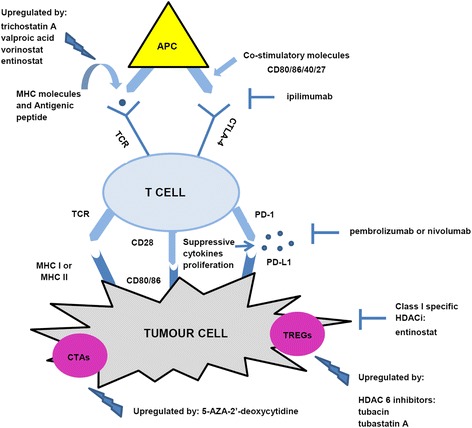
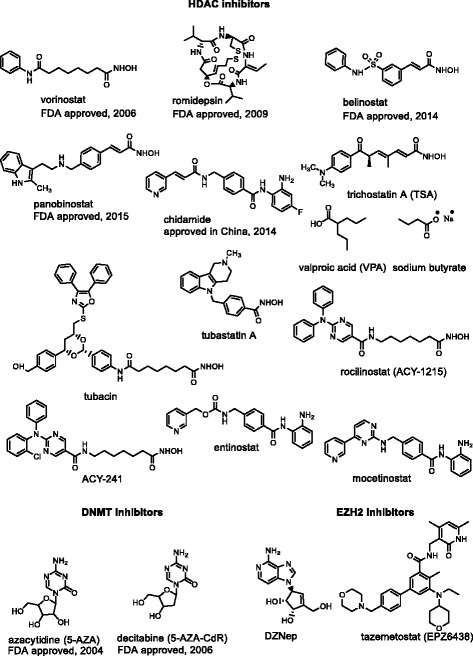
Immune checkpoint factors, such as programmed cell death protein-1/2 (PD-1, PD-2) or cytotoxic T lymphocyte-associated antigen-4 (CTLA-4) receptors, are targets for monoclonal antibodies (MAbs) developed for cancer immunotherapy. Indeed, modulating immune inhibitory pathways has been considered an important breakthrough in cancer treatment. Although immune checkpoint blockade therapy used to treat malignant diseases has provided promising results, both solid and haematological malignancies develop mechanisms that enable themselves to evade the host immune system. To overcome some major limitations and ensure safety in patients, recent strategies have shown that combining epigenetic modulators, such as inhibitors of histone deacetylases (HDACi) or DNA methyltransferases (DNMTi), with immunotherapeutics can be useful. Preclinical data generated using mouse models strongly support the feasibility and effectiveness of the proposed approaches. Indeed, co-treatment with pan- or class I-selective HDACi or DNMTi improved beneficial outcomes in both in vitro and in vivo studies. Based on the evidence of a pivotal role for HDACi and DNMTi in modulating various components belonging to the immune system, recent clinical trials have shown that both HDACi and DNMTi strongly augmented response to anti-PD-1 immunotherapy in different tumour types. This review describes the current strategies to increase immunotherapy responses, the effects of HDACi and DNMTi on immune modulation, and the advantages of combinatorial therapy over single-drug treatment.
Keywords: Cancer; DNA methylation; Epigenetics; HDAC inhibitors; Immune checkpoint inhibitors; Immunotherapy.
Figures
References
Publication types
MeSH terms
Substances
LinkOut - more resources
Full Text Sources
Other Literature Sources
Research Materials
