. 2017 Aug 1;26(15):2825-2837.
doi: 10.1093/hmg/ddx153.

Heterozygote galactocerebrosidase (GALC) mutants have reduced remyelination and impaired myelin debris clearance following demyelinating injury

Affiliations

Heterozygote galactocerebrosidase (GALC) mutants have reduced remyelination and impaired myelin debris clearance following demyelinating injury

Nicole J Scott-Hewitt et al. Hum Mol Genet. .

Abstract

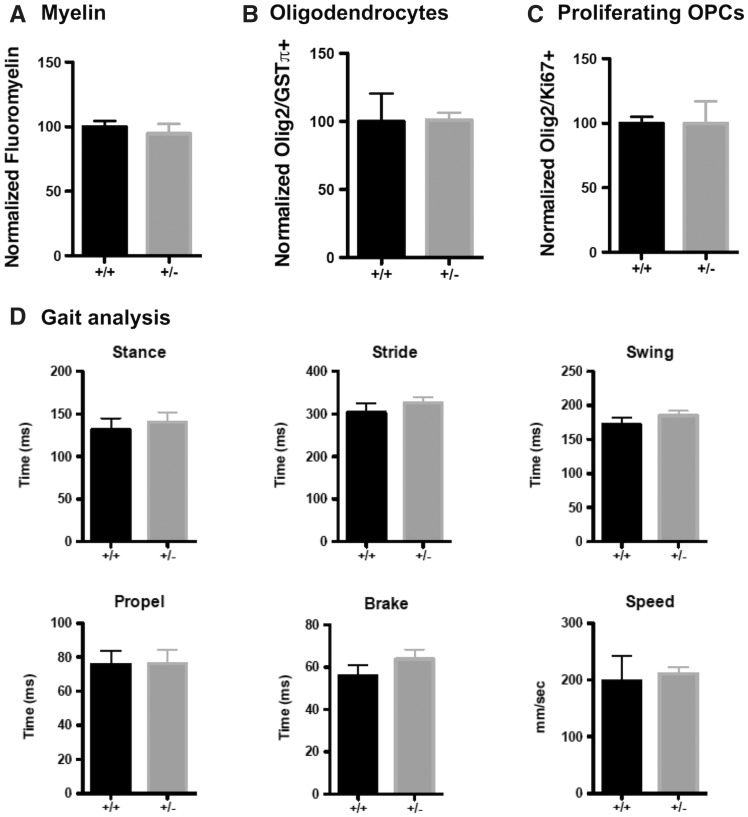
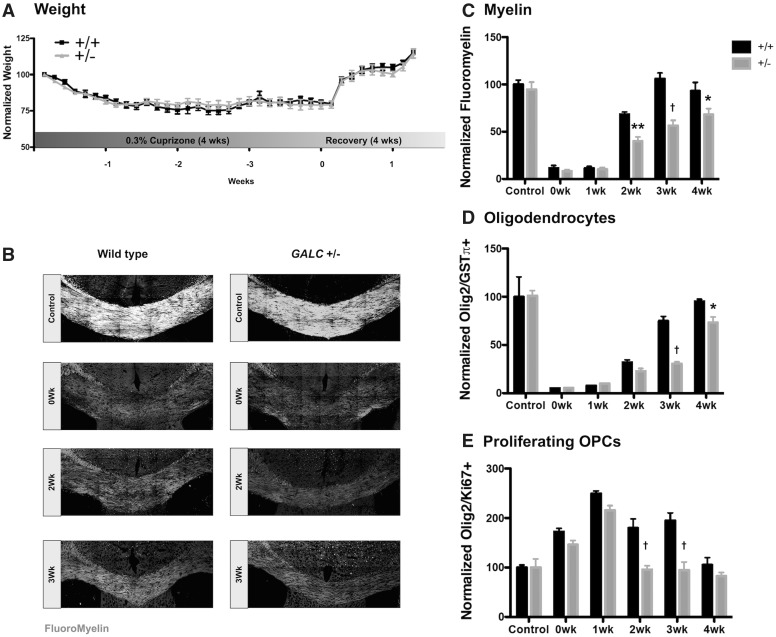
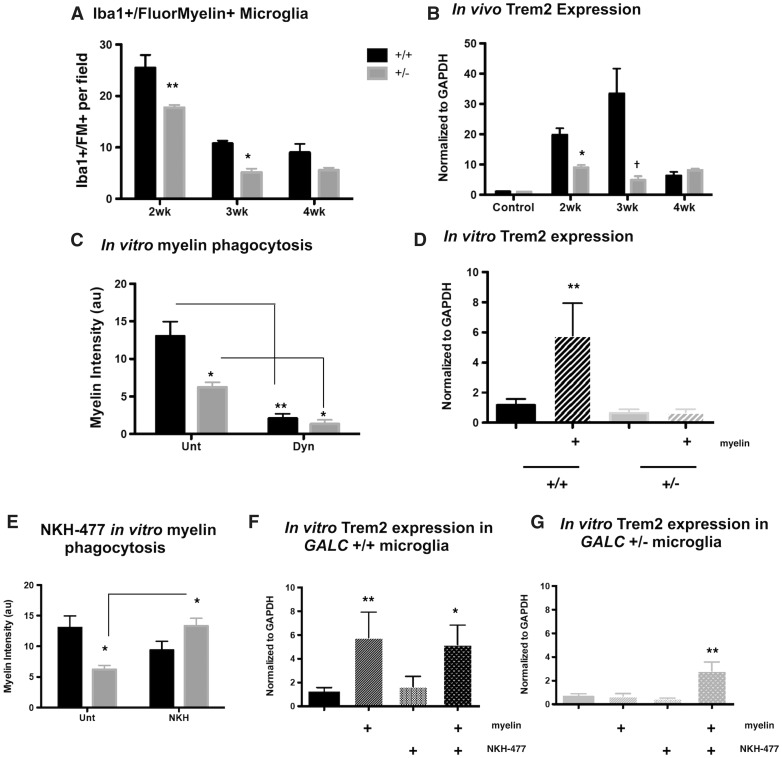
Genome-wide association studies are identifying multiple genetic risk factors for several diseases, but the functional role of these changes remains mostly unknown. Variants in the galactocerebrosidase (GALC) gene, for example, were identified as a risk factor for Multiple Sclerosis (MS); however, the potential biological relevance of GALC variants to MS remains elusive. We found that heterozygote GALC mutant mice have reduced myelin debris clearance and diminished remyelination after a demyelinating insult. We found no histological or behavioral differences between adult wild-type and GALC +/- animals under normal conditions. Following exposure to the demyelinating agent cuprizone, however, GALC +/- animals had significantly reduced remyelination during recovery. In addition, the microglial phagocytic response and elevation of Trem2, both necessary for clearing damaged myelin, were markedly reduced in GALC +/- animals. These altered responses could be corrected in vitro by treatment with NKH-477, a compound discovered as protective in our previous studies on Krabbe disease, which is caused by mutations in both GALC alleles. Our data are the first to show remyelination defects in individuals with a single mutant GALC allele, suggesting such carriers may have increased vulnerability to myelin damage following injury or disease due to inefficient myelin debris clearance. We thus provide a potential functional link between GALC variants and increased MS susceptibility, particularly due to the failure of remyelination associated with progressive MS. Finally, this work demonstrates that genetic variants identified through genome-wide association studies may contribute significantly to complex diseases, not by driving initial symptoms, but by altering repair mechanisms.


Figures

Figure 1
Figure 1
WT and GALC +/− age-matched animals do not have any differences in myelin, oligodendrocytes, proliferating OPCs, or motor behavior. (A–C) Quantification of (A) FluoroMyelin intensity, (B) the relative number of GSTpi+/Olig2+ oligodendrocytes, and (C) the relative number of dividing Ki67+/Olig2+ OPCs in the corpus callosa of three-month-old WT and GALC +/− littermates (N = 3 from different litters). Data are normalized to WT controls. (D) Quantification of stance, stride, swing, propel, and brake time, and travel speed, for three month old WT and GALC +/− littermates (N = 3 from different litters). Data for all graphs displayed as mean ± SEM.
Figure 2
Figure 2
GALC +/− animals have reduced remyelination following cuprizone exposure. (A) Quantification of relative weights of WT and GALC +/− animals exposed to 0.3% cuprizone diet over the course of 4 weeks of exposure and 1 week recovery (N = 6 from different litters). (B) Representative confocal images of FluoroMyelin intensity. Quantification of (C) FluoroMyelin intensity, (D) number of GSTpi+/Olig2+ oligodendrocytes, and (E) the relative number of dividing Ki67+/Olig2+ OPCs in the corpus callosa of three-month-old WT and GALC +/− littermates after 4 weeks exposure to 0.3% cuprizone diet (N = 3 from different litters per time point). Data are normalized to WT untreated age-matched controls. Data for all graphs displayed as mean ± SEM. *P < 0.05, **P < 0.01, P < 0.001 versus WT recovery-matched animals.
Figure 3
Figure 3
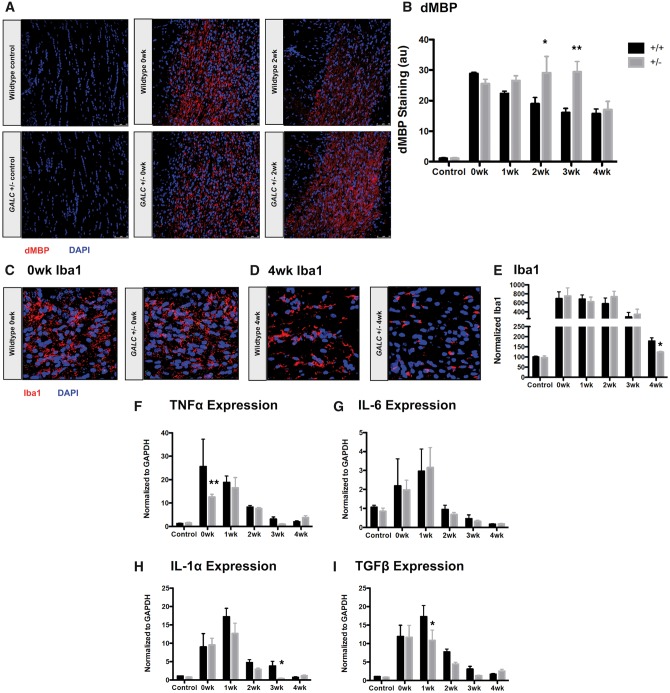
GALC+/− animals have elevated damaged myelin and altered microglial response following cuprizone exposure. (A,B) Representative confocal images and quantification of damaged Myelin Basic Protein (dMBP) in the corpus callosa of three-month-old WT and GALC +/− littermates after 4 weeks exposure to 0.3% cuprizone diet (N = 3 from different litters per time point). (C–E) Representative confocal images and quantification of Iba-1 microglial staining in (C) 0-week cuprizone recovery WT and GALC +/− animals, (D) 4-week cuprizone recovery WT and GALC +/− animals, and (E) quantification of Iba-1 staining in the corpus callosa of three month old WT and GALC +/− littermates after 4 weeks exposure to 0.3% cuprizone diet (N = 3 from different litters per time point). Data are normalized to WT controls. (F–I) Quantification of the relative levels of mRNA of (F) tumor necrosis factor alpha (TNFα), (G) interleukin-6 (IL-6), (H) interleukin-1 alpha (IL-1α), and (I) transforming growth factor beta (TGFβ). Data are normalized to GAPDH and represented as fold change over WT untreated controls (N = 3 from different litters). Data for all graphs displayed as mean ± SEM. *P < 0.05, **P < 0.01 versus WT recovery-matched animals.
Figure 4
Figure 4
GALC+/− microglia have reduced myelin phagocytosis in vivo following cuprizone exposure and in vitro. (A) Quantification of Iba-1 and FluoroMyelin staining in the corpus callosa of three month old WT and GALC+/− littermates after 4 weeks exposure to 0.3% cuprizone diet (N = 3 from different litters per time point). Data are represented as the average number of Iba-1+/FluoroMyelin+ cells per field of view. (B) Quantification of the relative levels of mRNA of Triggering receptor on myeloid cells 2 (Trem2). Data are normalized to GAPDH and represented as fold change over WT untreated controls (N = 3 from different litters). (C) Quantification of myelin phagocytosis: isolated microglia from three-month-old WT and GALC +/− littermates were loaded with Di-I (Invitrogen) labeled myelin overnight and imaged (N = 3 from different litters). Myelin phagocytosis was quantified by measuring fluorescent intensity. Cells were pretreated with Dynasore (100μM; Sigma) 1 h prior to myelin debris loading as a control. (D) Quantification of the relative levels of mRNA of Trem2 in isolated WT and GALC +/− microglia either untreated or treated overnight with myelin debris. Data are normalized to GAPDH and represented as fold change over WT untreated controls (N = 3 from different litters). (E) Quantification of myelin phagocytosis as described in (C); cells were left either untreated or treated with NKH-477 (1μM; Tocris) upon myelin loading. (F,G) Quantification of the relative levels of mRNA of Trem2 in isolated WT (F) and GALC +/− (G) microglia either untreated or treated overnight with myelin debris, with or without the addition of NKH-477 (1μM). Data are normalized to GAPDH and represented as fold change over WT untreated controls (N = 3 from different litters). Data for all graphs displayed as mean ± SEM. *P < 0.05, **P < 0.01, †P < 0.001 versus WT recovery-matched animals; *P < 0.05, **P < 0.01 versus WT untreated microglia.

References

    1. Gibson G. (2012) Rare and common variants: twenty arguments. Nat. Rev. Genet., 13, 135–145. - PMC - PubMed
    1. Liu Y., Gibson J., Wheeler J., Kwee L.C., Santiago-Turla C.M., Akafo S.K., Lichter P.R., Gaasterland D.E., Moroi S.E., Challa P.. et al. (2011) GALC deletions increase the risk of primary open-angle glaucoma: the role of Mendelian variants in complex disease. PLoS One, 6, e27134.. - PMC - PubMed
    1. Tayebi N., Walker J., Stubblefield B., Orvisky E., LaMarca M.E., Wong K., Rosenbaum H., Schiffmann R., Bembi B., Sidransky E. (2003) Gaucher disease with parkinsonian manifestations: does glucocerebrosidase deficiency contribute to a vulnerability to parkinsonism? Mol. Genet. Metab., 79, 104–109. - PubMed
    1. Mitsui J., Mizuta I., Toyoda A., Ashida R., Takahashi Y., Goto J., Fukuda Y., Date H., Iwata A., Yamamoto M.. et al. (2009) Mutations for Gaucher disease confer high susceptibility to Parkinson disease. Arch. Neurol., 66, 571–576. - PubMed
    1. Anheim M., Elbaz A., Lesage S., Durr A., Condroyer C., Viallet F., Pollak P., Bonaïti B., Bonaïti-Pellié C., Brice A.. et al. (2012) Penetrance of Parkinson disease in glucocerebrosidase gene mutation carriers. Neurology, 78, 417–420. - PubMed

Publication types