


Heterozygote galactocerebrosidase (GALC) mutants have reduced remyelination and impaired myelin debris clearance following demyelinating injury
- PMID: 28575206
- PMCID: PMC5886101
- DOI: 10.1093/hmg/ddx153
Heterozygote galactocerebrosidase (GALC) mutants have reduced remyelination and impaired myelin debris clearance following demyelinating injury
Abstract
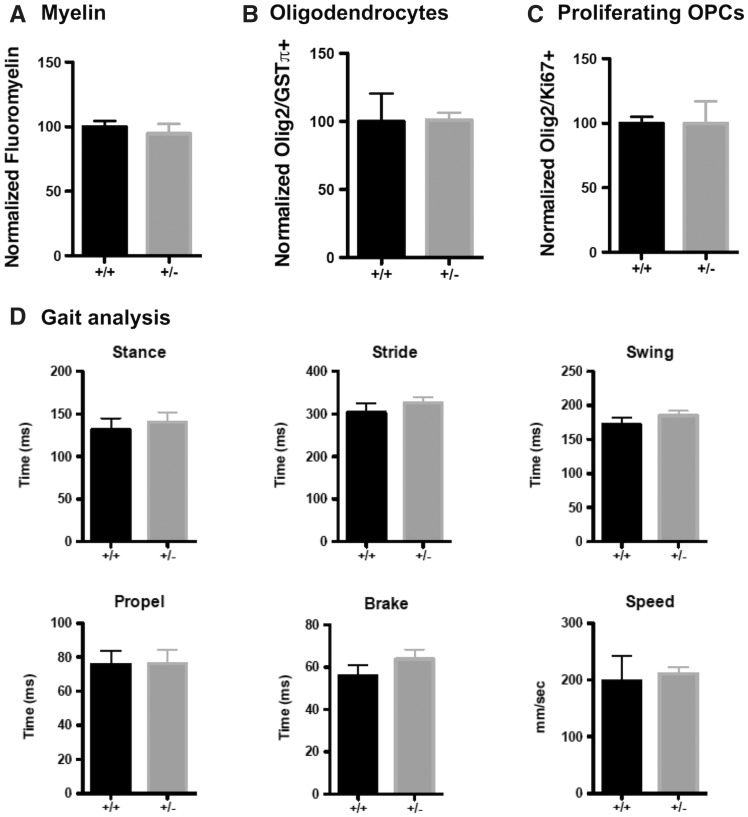
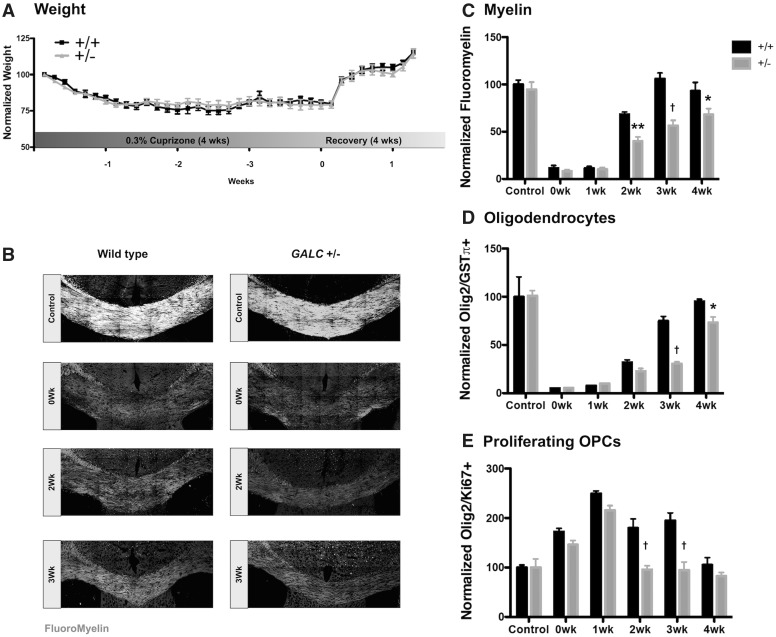
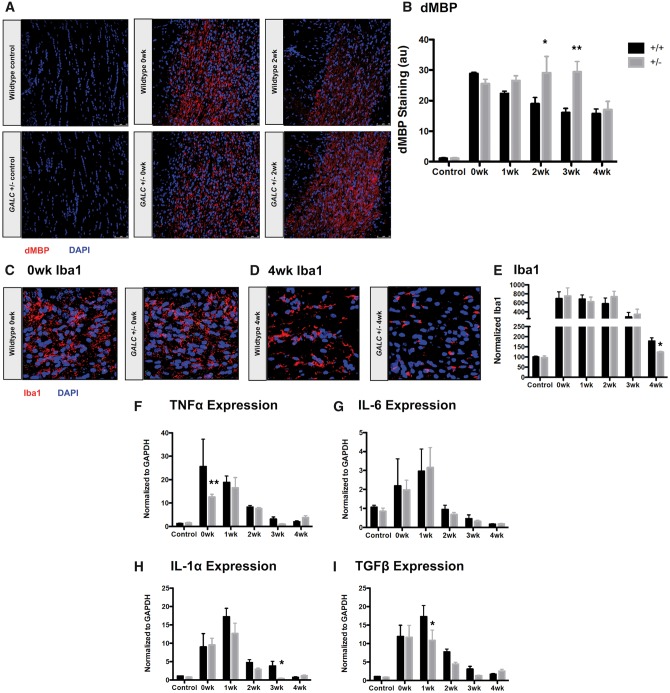
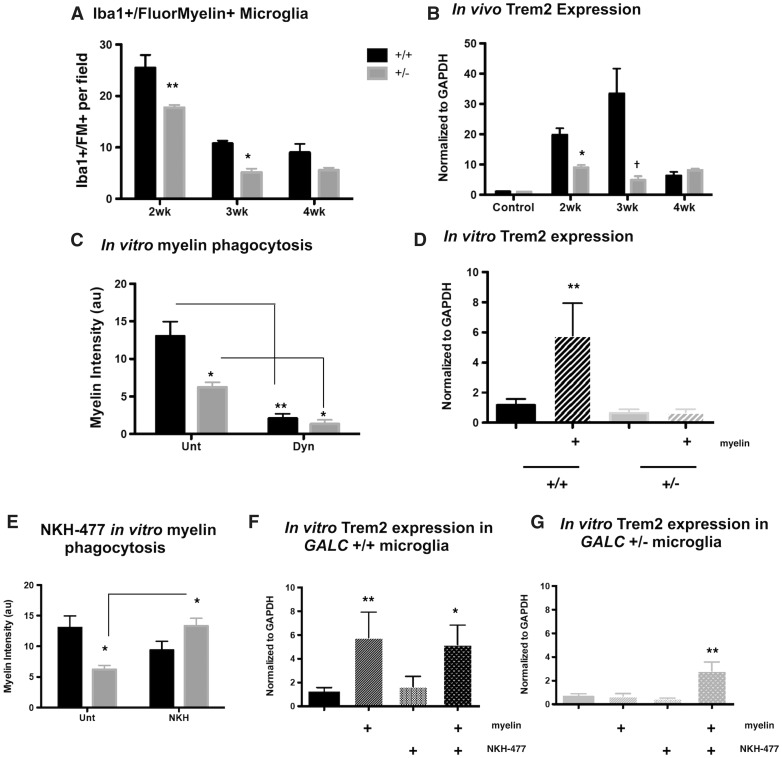
Genome-wide association studies are identifying multiple genetic risk factors for several diseases, but the functional role of these changes remains mostly unknown. Variants in the galactocerebrosidase (GALC) gene, for example, were identified as a risk factor for Multiple Sclerosis (MS); however, the potential biological relevance of GALC variants to MS remains elusive. We found that heterozygote GALC mutant mice have reduced myelin debris clearance and diminished remyelination after a demyelinating insult. We found no histological or behavioral differences between adult wild-type and GALC +/- animals under normal conditions. Following exposure to the demyelinating agent cuprizone, however, GALC +/- animals had significantly reduced remyelination during recovery. In addition, the microglial phagocytic response and elevation of Trem2, both necessary for clearing damaged myelin, were markedly reduced in GALC +/- animals. These altered responses could be corrected in vitro by treatment with NKH-477, a compound discovered as protective in our previous studies on Krabbe disease, which is caused by mutations in both GALC alleles. Our data are the first to show remyelination defects in individuals with a single mutant GALC allele, suggesting such carriers may have increased vulnerability to myelin damage following injury or disease due to inefficient myelin debris clearance. We thus provide a potential functional link between GALC variants and increased MS susceptibility, particularly due to the failure of remyelination associated with progressive MS. Finally, this work demonstrates that genetic variants identified through genome-wide association studies may contribute significantly to complex diseases, not by driving initial symptoms, but by altering repair mechanisms.
© The Author 2017. Published by Oxford University Press. All rights reserved. For Permissions, please email: journals.permissions@oup.com.
Figures
References
-
- Tayebi N., Walker J., Stubblefield B., Orvisky E., LaMarca M.E., Wong K., Rosenbaum H., Schiffmann R., Bembi B., Sidransky E. (2003) Gaucher disease with parkinsonian manifestations: does glucocerebrosidase deficiency contribute to a vulnerability to parkinsonism? Mol. Genet. Metab., 79, 104–109. - PubMed
-
- Mitsui J., Mizuta I., Toyoda A., Ashida R., Takahashi Y., Goto J., Fukuda Y., Date H., Iwata A., Yamamoto M.. et al. (2009) Mutations for Gaucher disease confer high susceptibility to Parkinson disease. Arch. Neurol., 66, 571–576. - PubMed
-
- Anheim M., Elbaz A., Lesage S., Durr A., Condroyer C., Viallet F., Pollak P., Bonaïti B., Bonaïti-Pellié C., Brice A.. et al. (2012) Penetrance of Parkinson disease in glucocerebrosidase gene mutation carriers. Neurology, 78, 417–420. - PubMed
Publication types
MeSH terms
Substances
Grants and funding
LinkOut - more resources
Full Text Sources
Other Literature Sources
Molecular Biology Databases
