


Major hnRNP proteins act as general TDP-43 functional modifiers both in Drosophila and human neuronal cells
- PMID: 28575377
- PMCID: PMC5570092
- DOI: 10.1093/nar/gkx477
Major hnRNP proteins act as general TDP-43 functional modifiers both in Drosophila and human neuronal cells
Abstract
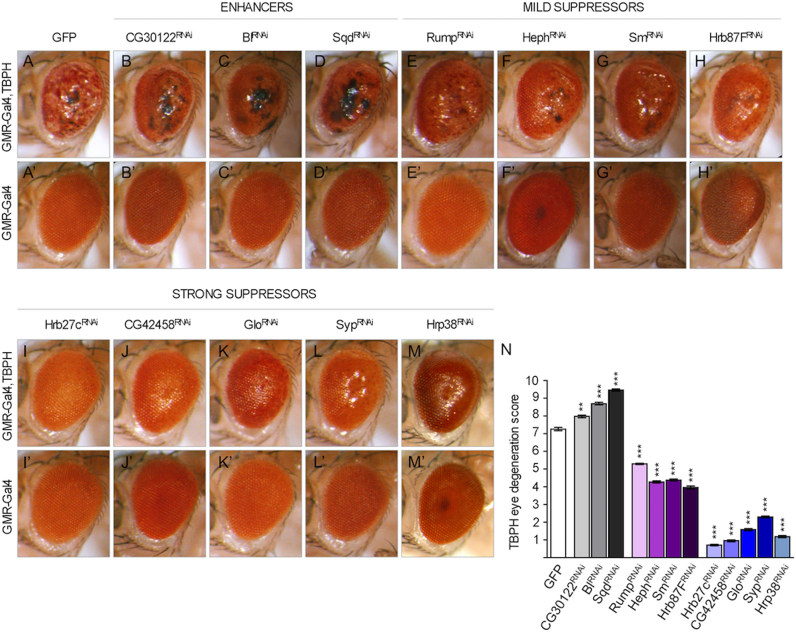
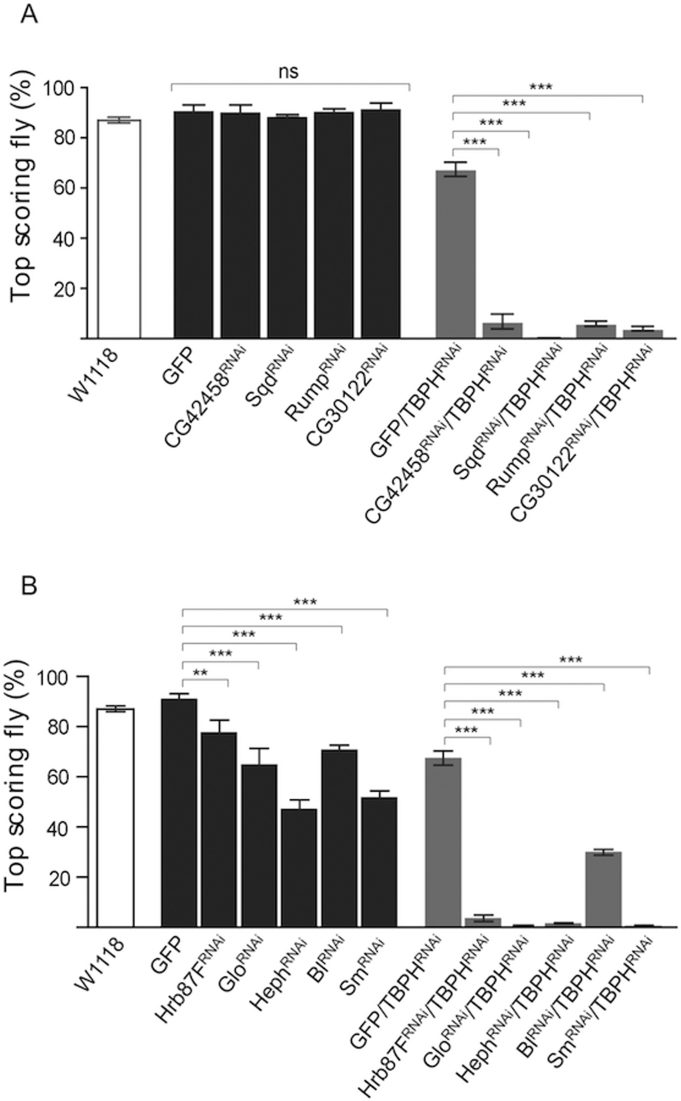
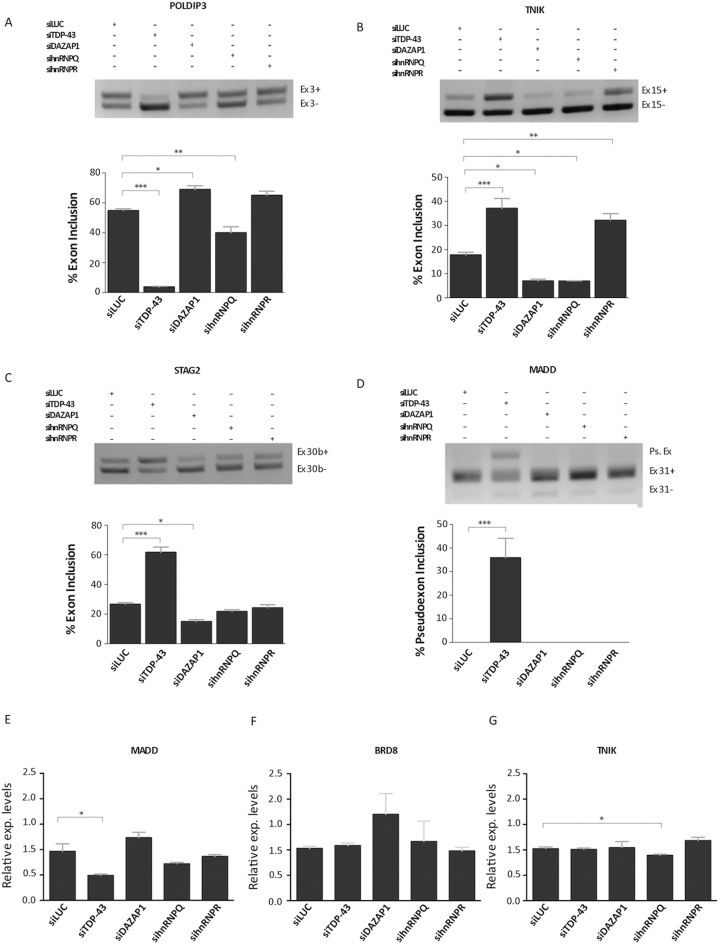
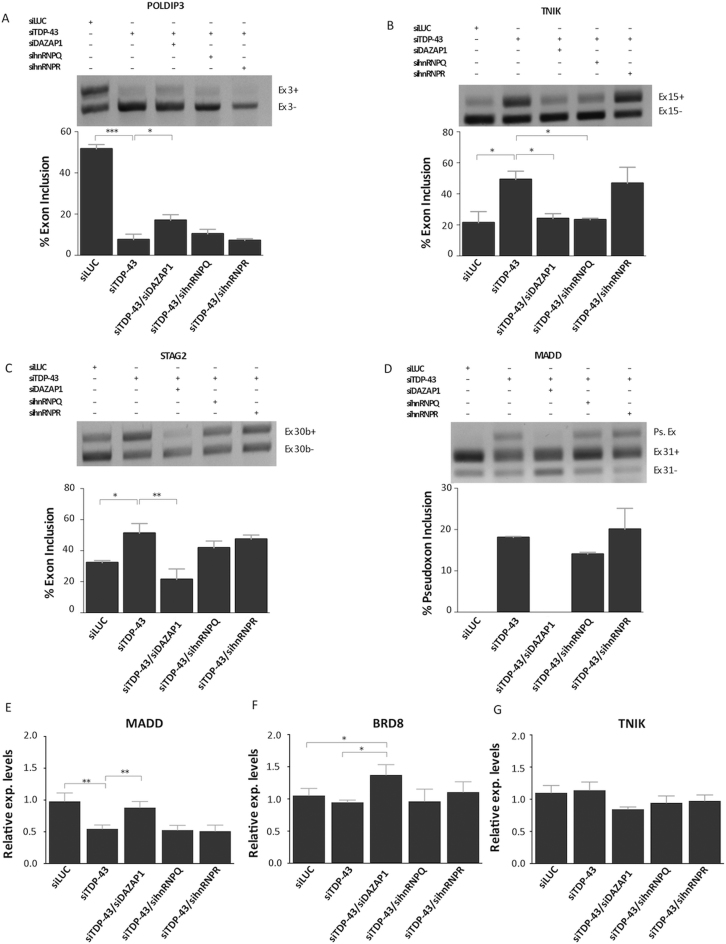
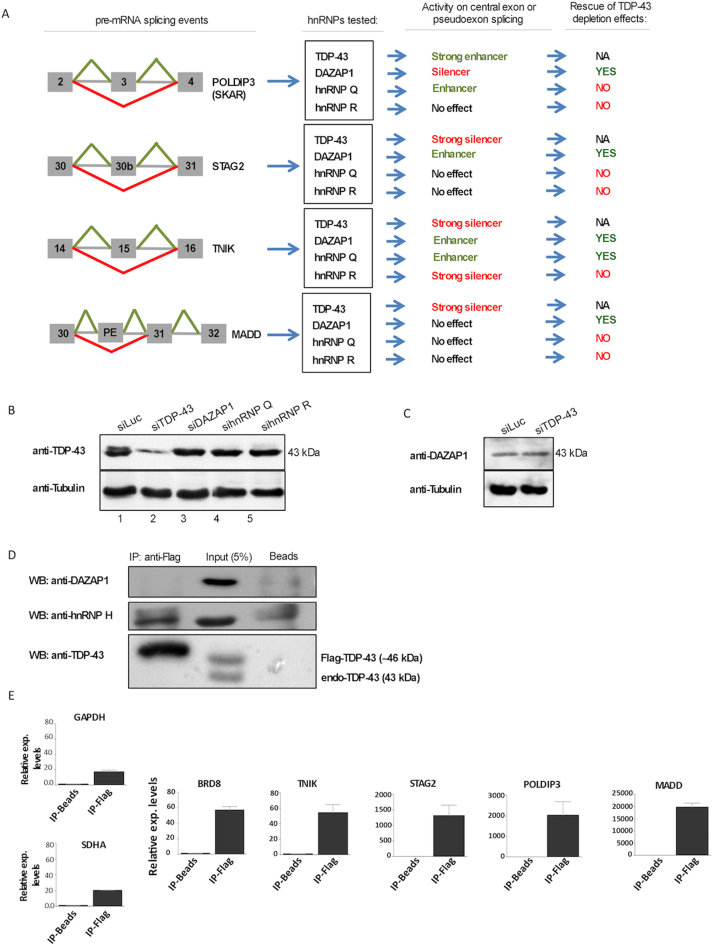
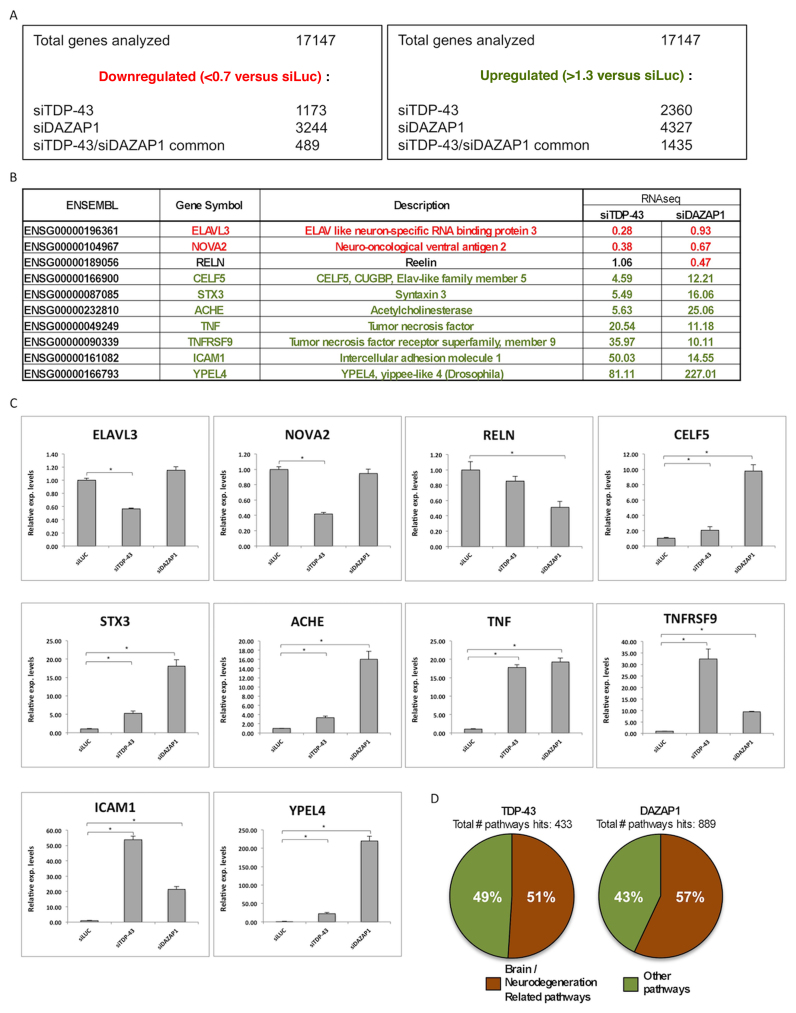
Nuclear factor TDP-43 is known to play an important role in several neurodegenerative pathologies. In general, TDP-43 is an abundant protein within the eukaryotic nucleus that binds to many coding and non-coding RNAs and influence their processing. Using Drosophila, we have performed a functional screening to establish the ability of major hnRNP proteins to affect TDP-43 overexpression/depletion phenotypes. Interestingly, we observed that lowering hnRNP and TDP-43 expression has a generally harmful effect on flies locomotor abilities. In parallel, our study has also identified a distinct set of hnRNPs that is capable of powerfully rescuing TDP-43 toxicity in the fly eye (Hrb27c, CG42458, Glo and Syp). Most importantly, removing the human orthologs of Hrb27c (DAZAP1) in human neuronal cell lines can correct several pre-mRNA splicing events altered by TDP-43 depletion. Moreover, using RNA sequencing analysis we show that DAZAP1 and TDP-43 can co-regulate an extensive number of biological processes and molecular functions potentially important for the neuron/motor neuron pathophysiology. Our results suggest that changes in hnRNP expression levels can significantly modulate TDP-43 functions and affect pathological outcomes.
© The Author(s) 2017. Published by Oxford University Press on behalf of Nucleic Acids Research.
Figures
References
-
- Campos-Melo D., Droppelmann C.A., Volkening K., Strong M.J.. RNA-binding proteins as molecular links between cancer and neurodegeneration. Biogerontology. 2014; 15:587–610. - PubMed
MeSH terms
Substances
LinkOut - more resources
Full Text Sources
Other Literature Sources
Molecular Biology Databases
