


The Code for Facial Identity in the Primate Brain
- PMID: 28575666
- PMCID: PMC8088389
- DOI: 10.1016/j.cell.2017.05.011
The Code for Facial Identity in the Primate Brain
Abstract
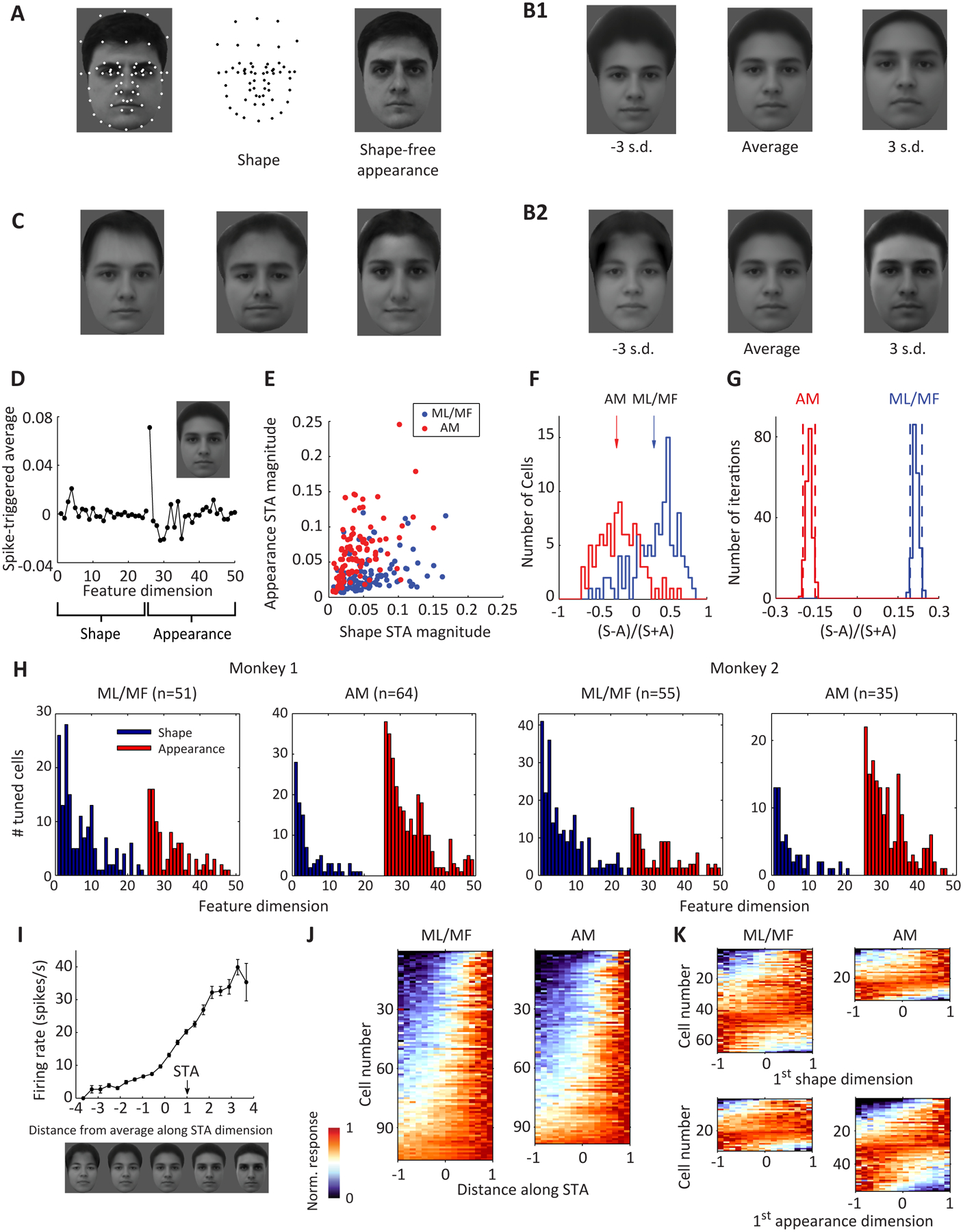
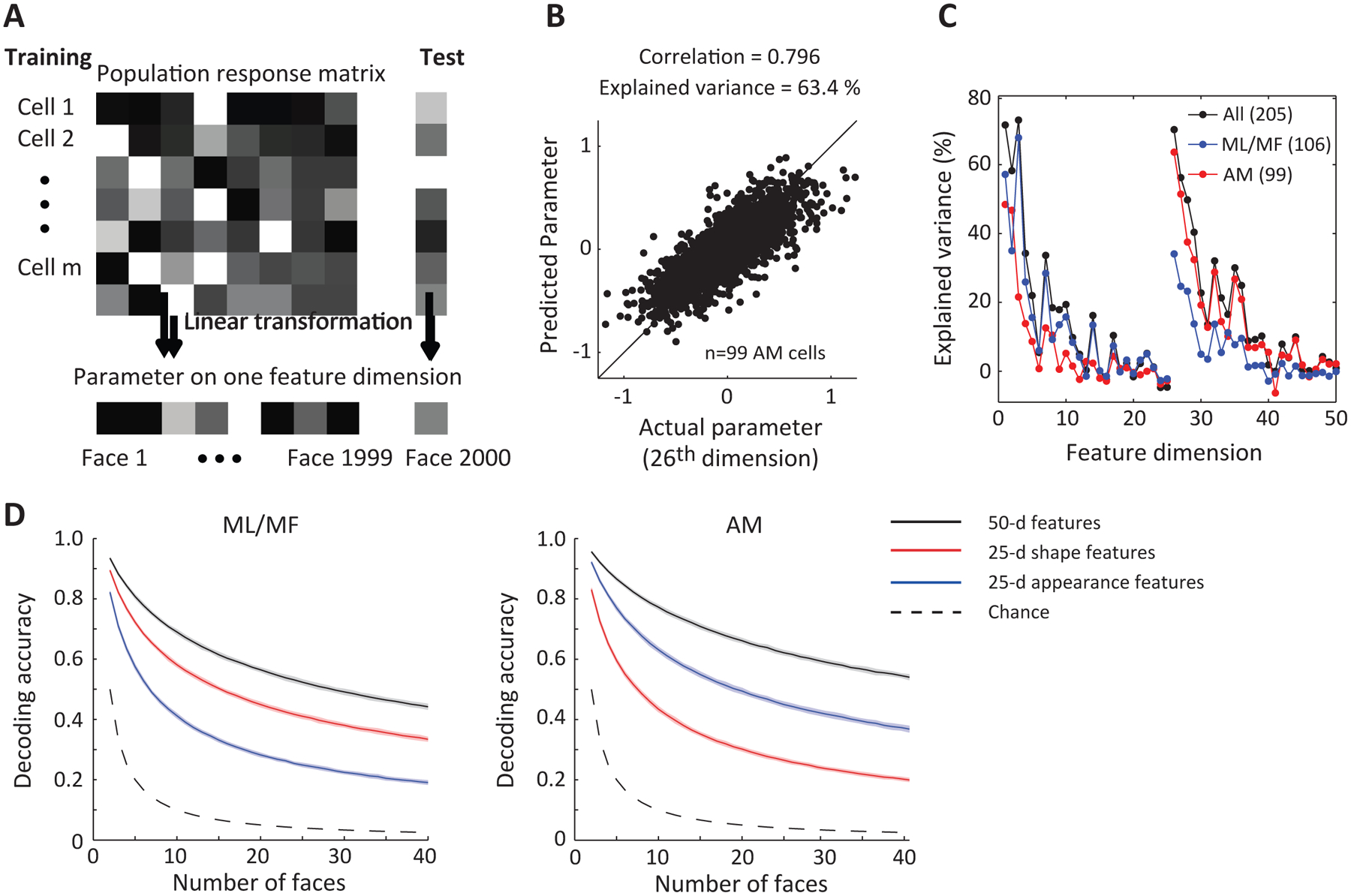
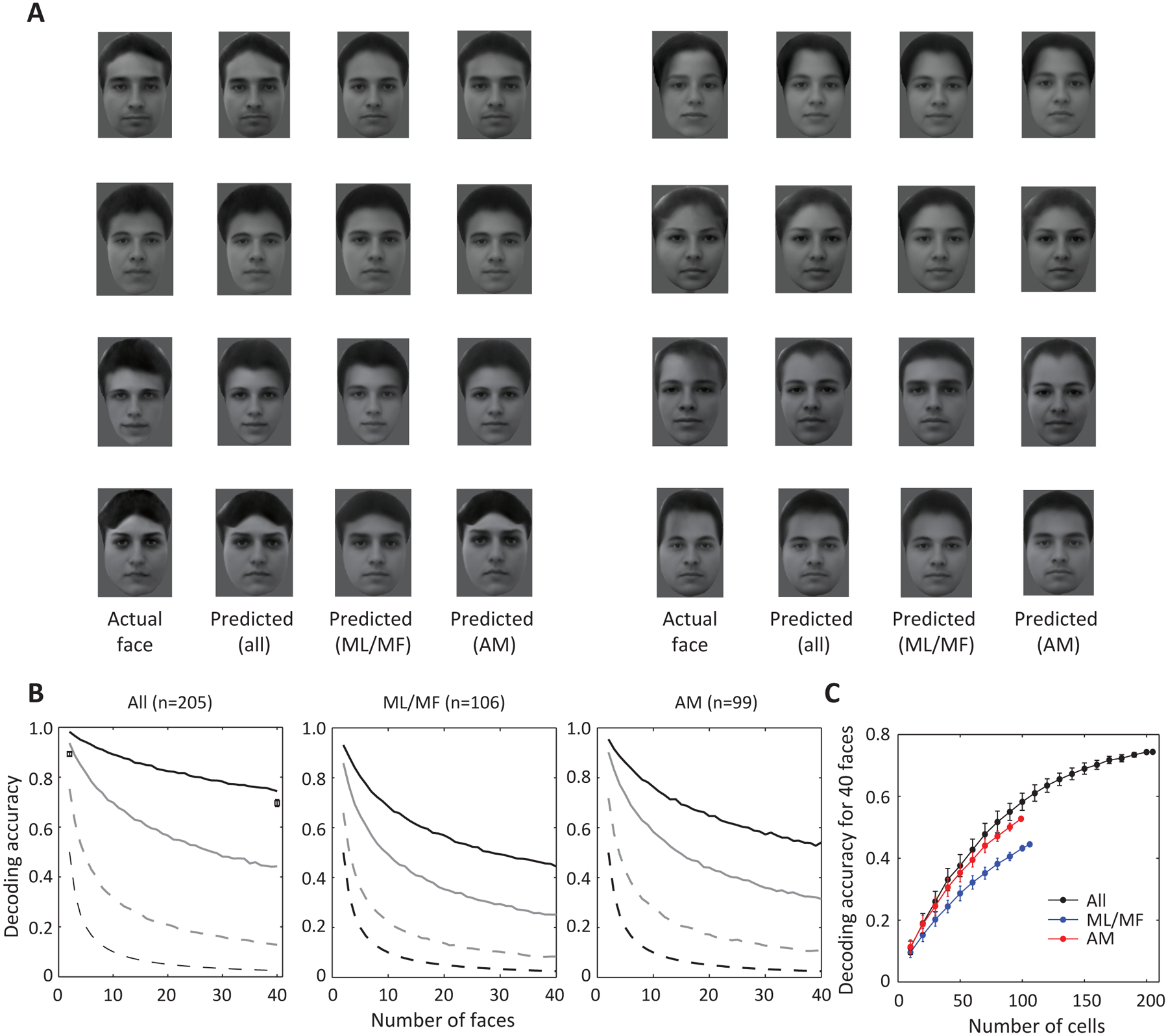
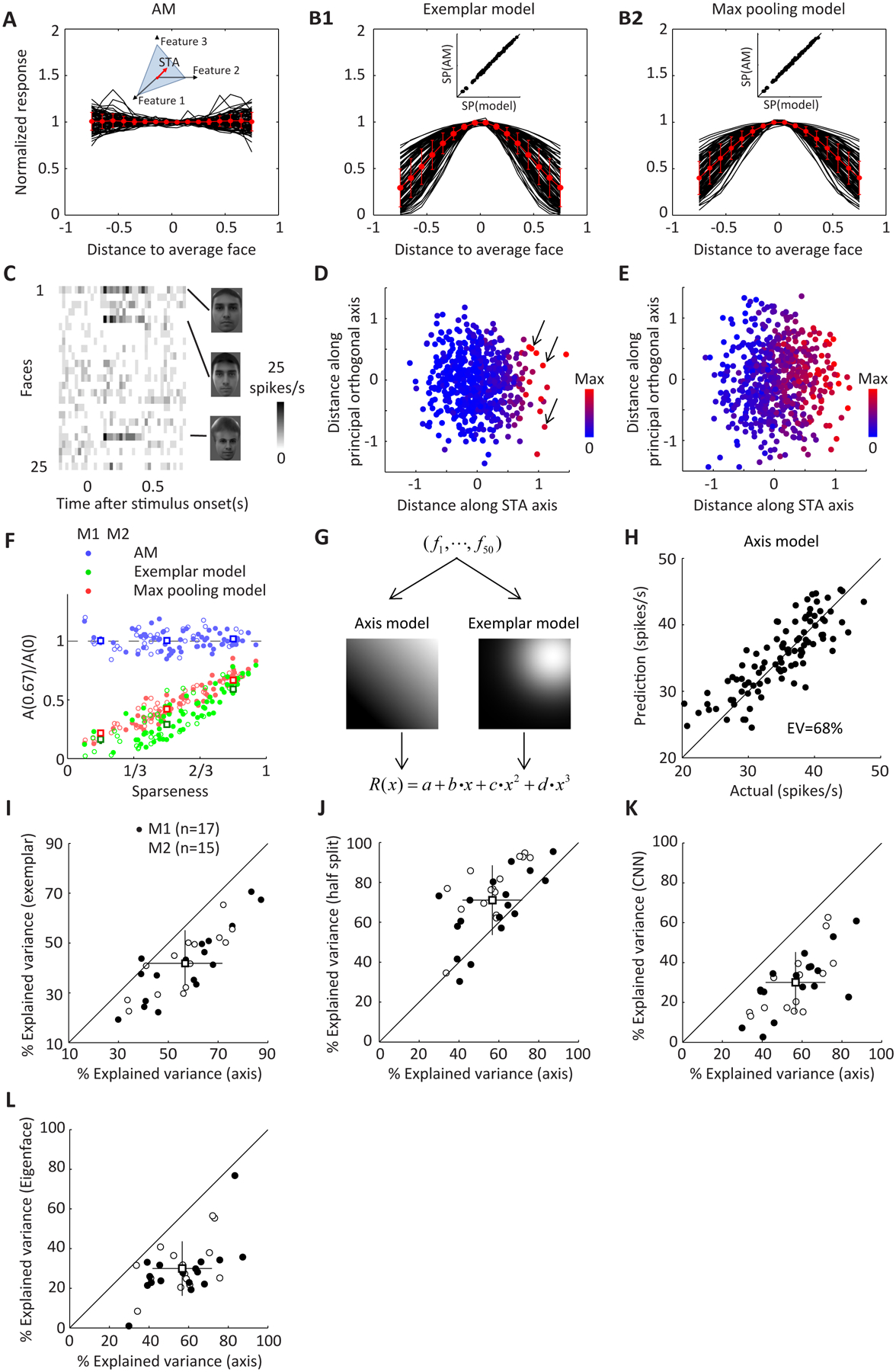
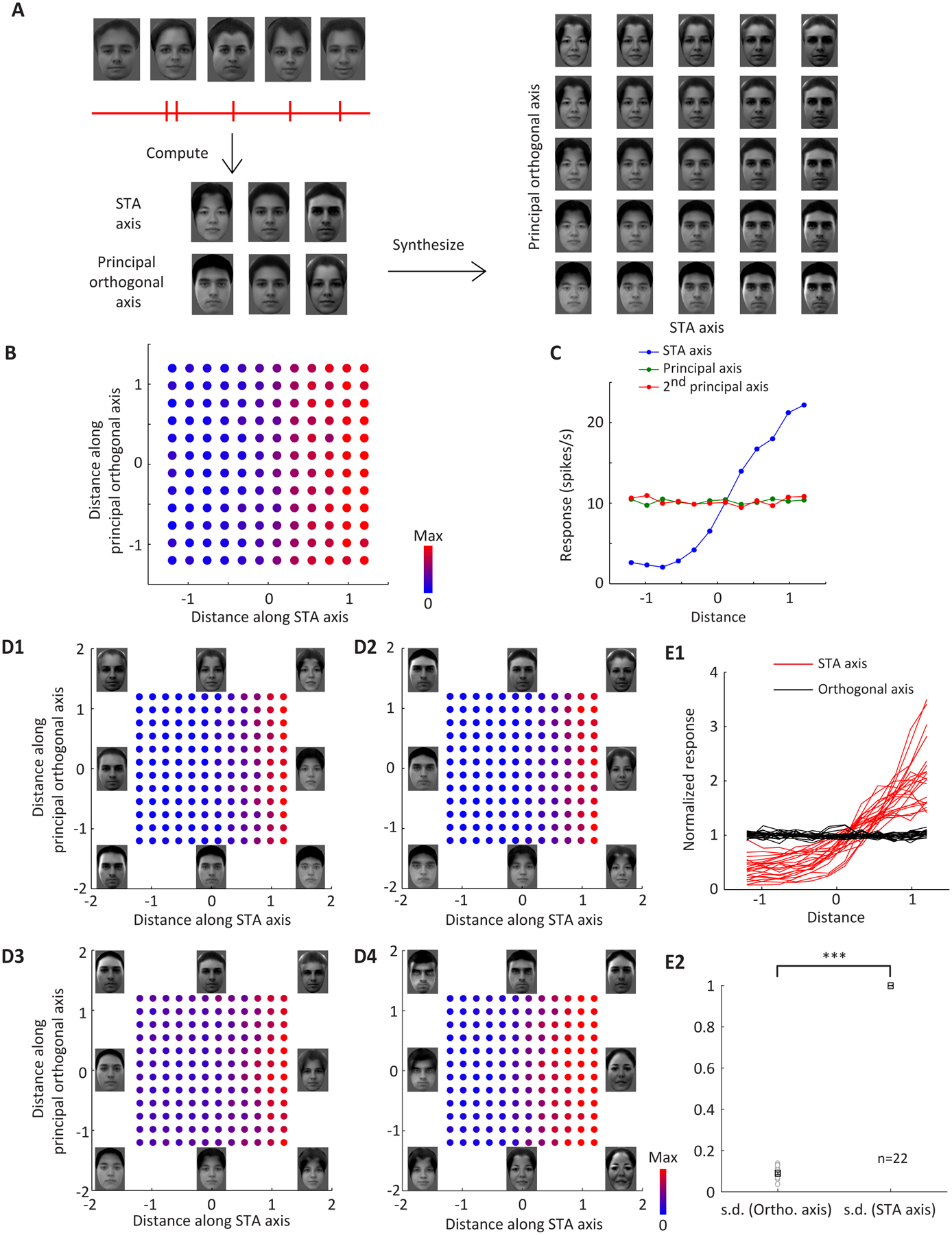
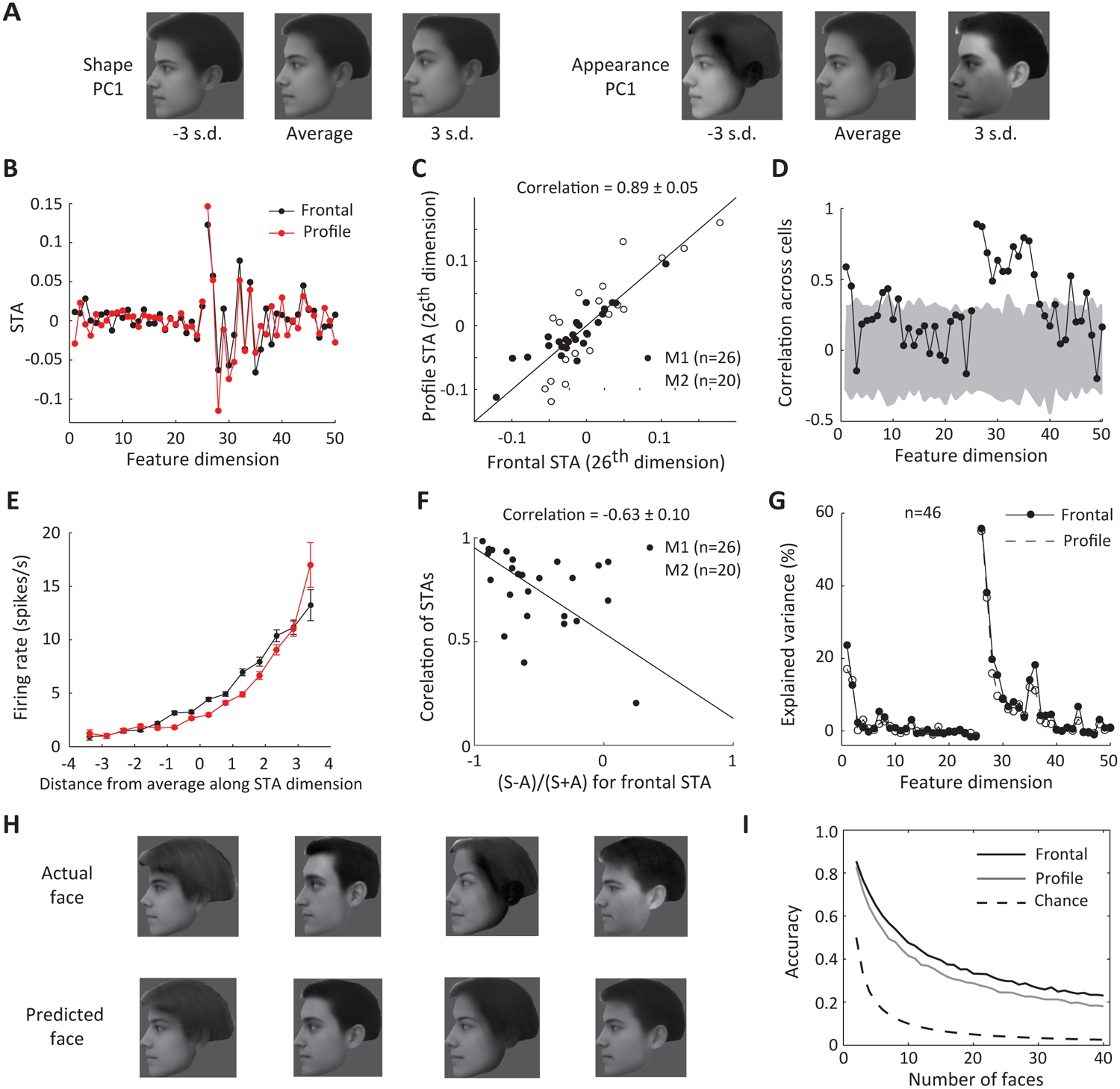
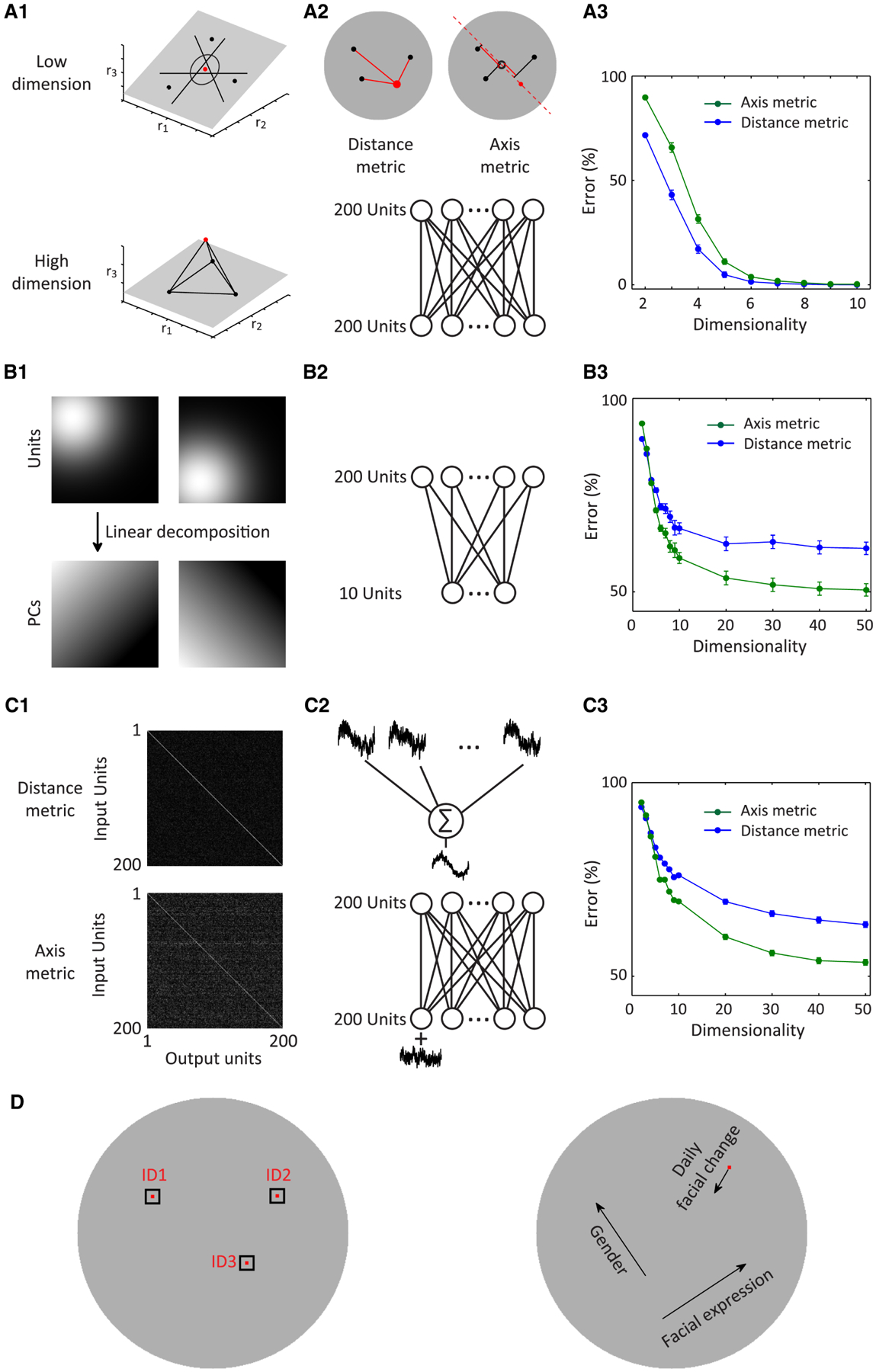
Primates recognize complex objects such as faces with remarkable speed and reliability. Here, we reveal the brain's code for facial identity. Experiments in macaques demonstrate an extraordinarily simple transformation between faces and responses of cells in face patches. By formatting faces as points in a high-dimensional linear space, we discovered that each face cell's firing rate is proportional to the projection of an incoming face stimulus onto a single axis in this space, allowing a face cell ensemble to encode the location of any face in the space. Using this code, we could precisely decode faces from neural population responses and predict neural firing rates to faces. Furthermore, this code disavows the long-standing assumption that face cells encode specific facial identities, confirmed by engineering faces with drastically different appearance that elicited identical responses in single face cells. Our work suggests that other objects could be encoded by analogous metric coordinate systems. PAPERCLIP.
Keywords: decoding; electrophysiology; face processing; inferior temporal cortex; primate vision.
Copyright © 2017 Elsevier Inc. All rights reserved.
Figures
Comment in
-
How Do We Recognize a Face?Cell. 2017 Jun 1;169(6):975-977. doi: 10.1016/j.cell.2017.05.012. Cell. 2017. PMID: 28575674
-
Neural coding: Face values.Nat Rev Neurosci. 2017 Aug;18(8):456. doi: 10.1038/nrn.2017.81. Epub 2017 Jun 22. Nat Rev Neurosci. 2017. PMID: 28638121 No abstract available.
-
Reading Faces: From Features to Recognition.Trends Cogn Sci. 2017 Dec;21(12):915-916. doi: 10.1016/j.tics.2017.09.007. Epub 2017 Sep 19. Trends Cogn Sci. 2017. PMID: 28939331
-
Commentary: The Code for Facial Identity in the Primate Brain.Front Hum Neurosci. 2017 Nov 14;11:550. doi: 10.3389/fnhum.2017.00550. eCollection 2017. Front Hum Neurosci. 2017. PMID: 29184489 Free PMC article. No abstract available.
References
-
- Beymer D, and Poggio T (1996). Image representations for visual learning. Science 272, 1905–1909. - PubMed
-
- Blanz V, and Vetter T (1999). A morphable model for the synthesis of 3D faces. Comp Graph, 187–194.
-
- Bookstein FL (1989). Principal Warps - Thin-Plate Splines and the Decomposition of Deformations. Ieee T Pattern Anal 11, 567–585.
-
- Brincat SL, and Connor CE (2004). Underlying principles of visual shape selectivity in posterior inferotemporal cortex. Nat Neurosci 7, 880–886. - PubMed
-
- Cootes TF, Edwards GJ, and Taylor CJ (2001). Active appearance models. Ieee T Pattern Anal 23, 681–685.
MeSH terms
Grants and funding
LinkOut - more resources
Full Text Sources
Other Literature Sources
