


A Multi-Functional Microelectrode Array Featuring 59760 Electrodes, 2048 Electrophysiology Channels, Stimulation, Impedance Measurement and Neurotransmitter Detection Channels
- PMID: 28579632
- PMCID: PMC5447818
- DOI: 10.1109/JSSC.2017.2686580
A Multi-Functional Microelectrode Array Featuring 59760 Electrodes, 2048 Electrophysiology Channels, Stimulation, Impedance Measurement and Neurotransmitter Detection Channels
Abstract
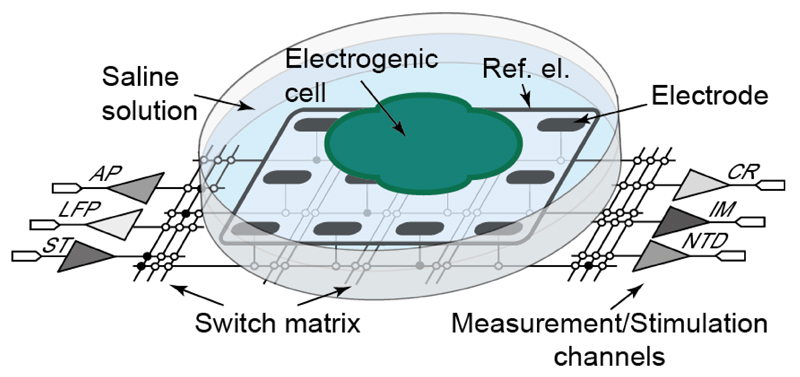
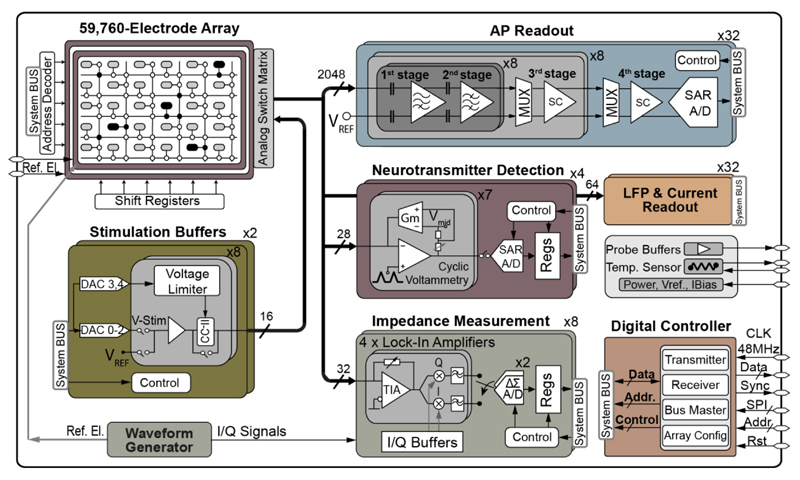
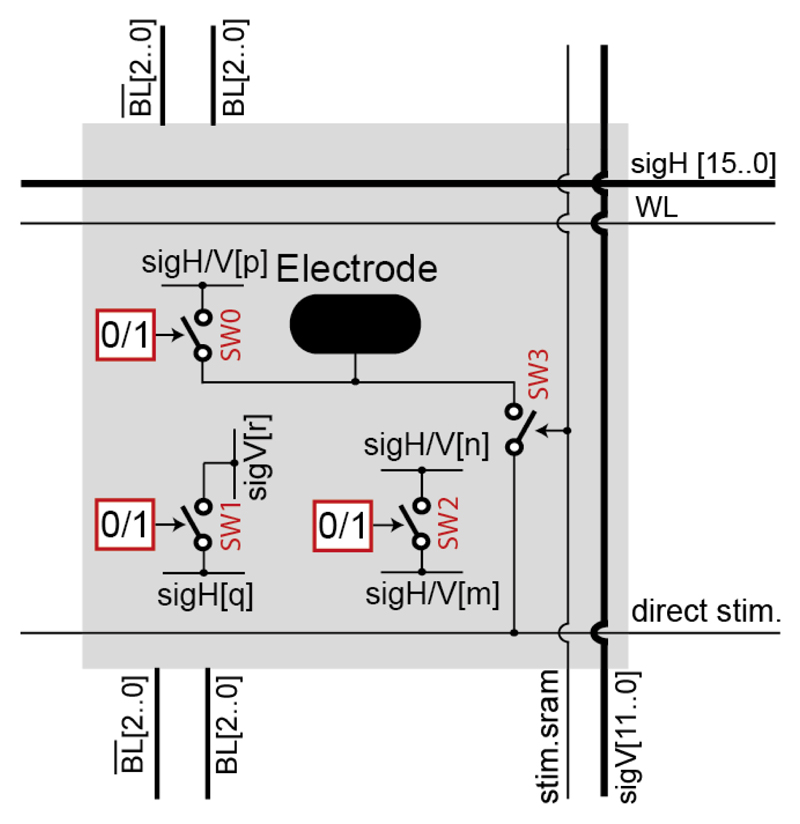
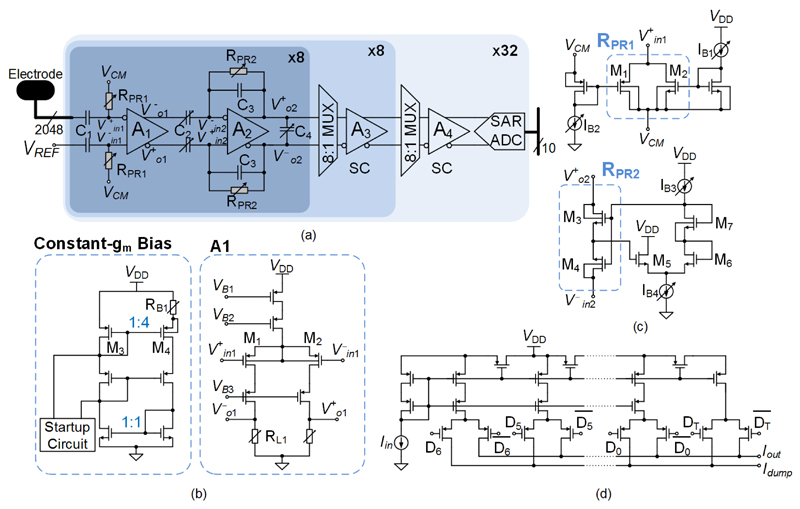
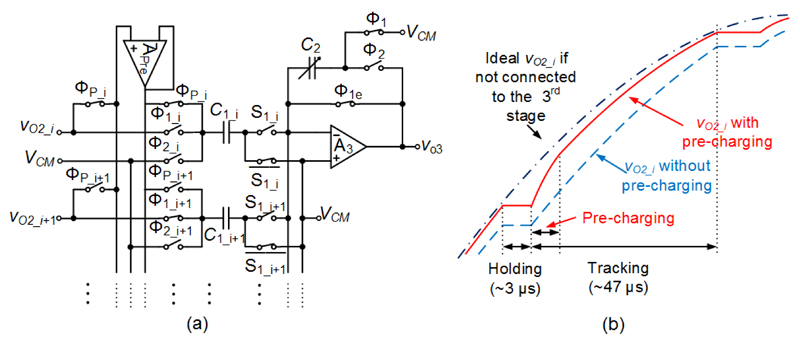
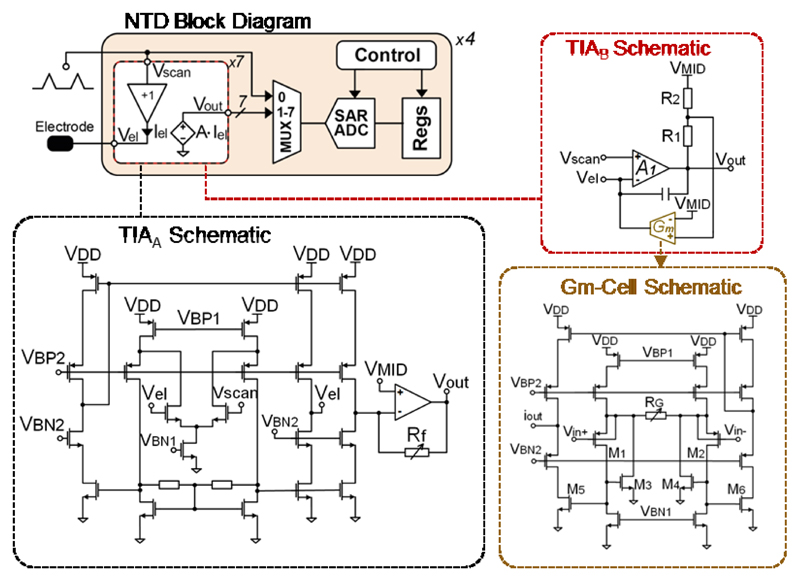
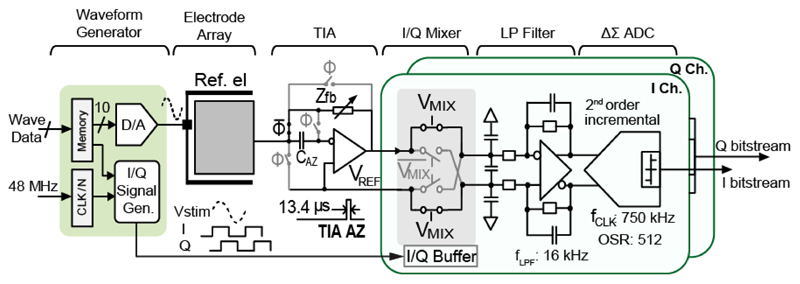
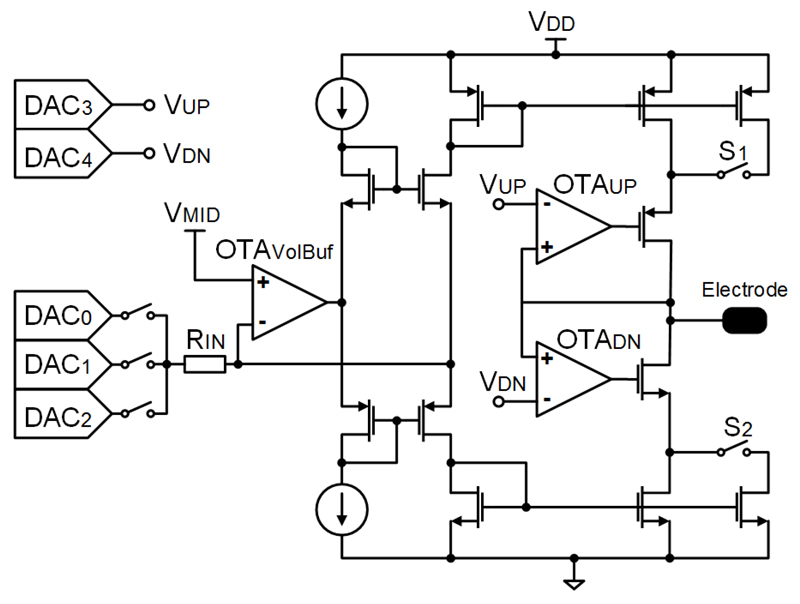
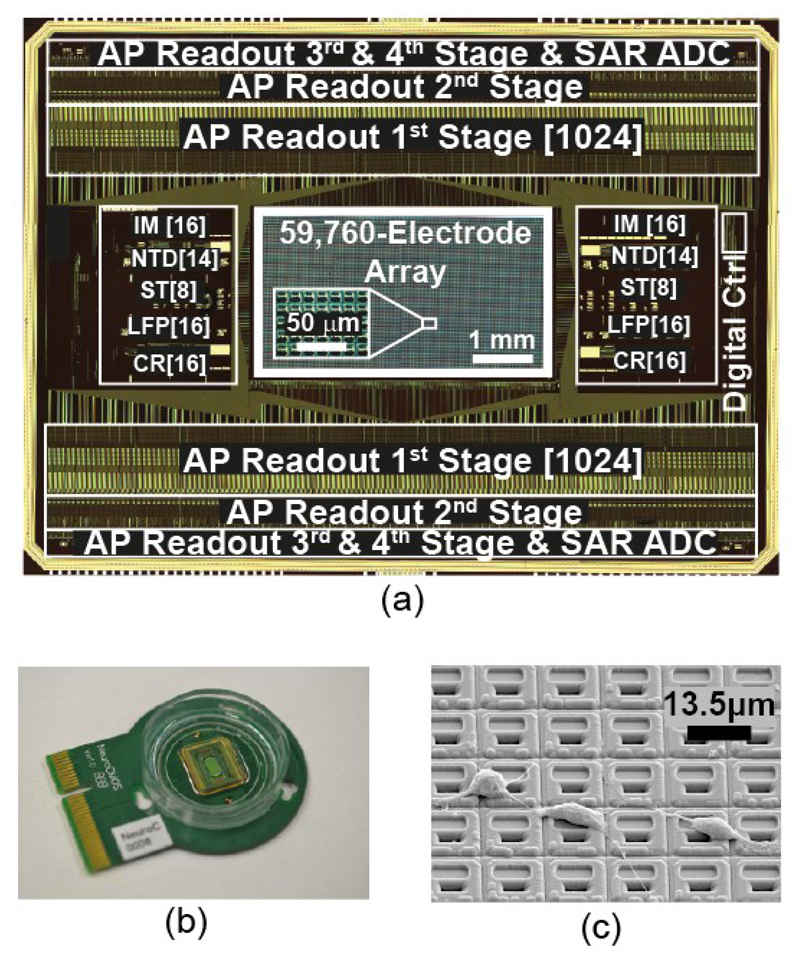
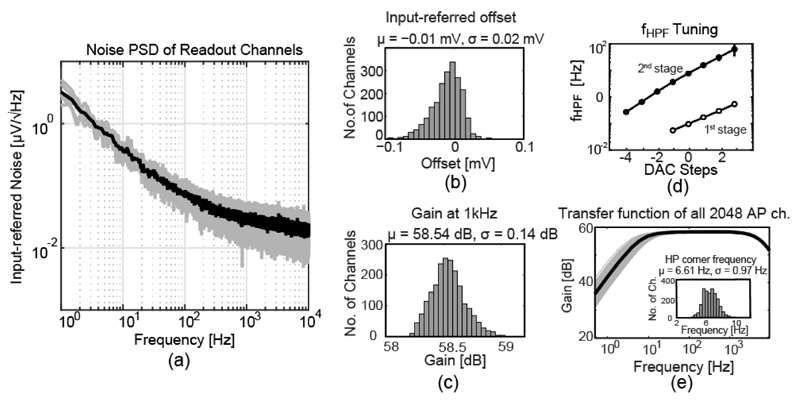
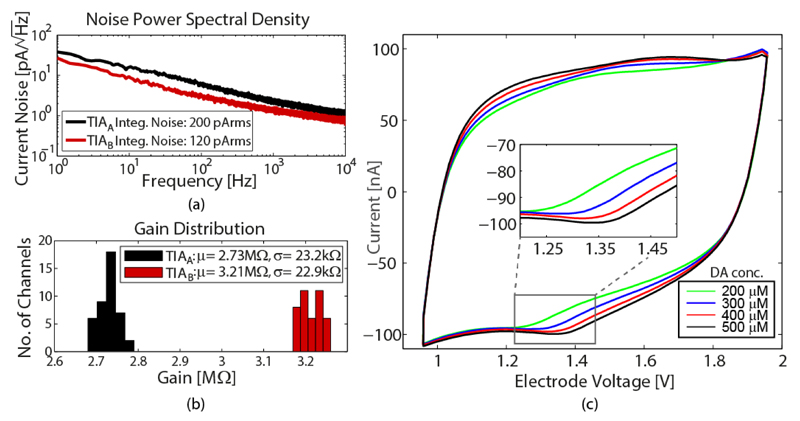
Biological cells are characterized by highly complex phenomena and processes that are, to a great extent, interdependent. To gain detailed insights, devices designed to study cellular phenomena need to enable tracking and manipulation of multiple cell parameters in parallel; they have to provide high signal quality and high spatiotemporal resolution. To this end, we have developed a CMOS-based microelectrode array system that integrates six measurement and stimulation functions, the largest number to date. Moreover, the system features the largest active electrode array area to date (4.48×2.43 mm2) to accommodate 59,760 electrodes, while its power consumption, noise characteristics, and spatial resolution (13.5 μm electrode pitch) are comparable to the best state-of-the-art devices. The system includes: 2,048 action-potential (AP, bandwidth: 300 Hz to 10 kHz) recording units, 32 local-field-potential (LFP, bandwidth: 1 Hz to 300 Hz) recording units, 32 current recording units, 32 impedance measurement units, and 28 neurotransmitter detection units, in addition to the 16 dual-mode voltage-only or current/voltage-controlled stimulation units. The electrode array architecture is based on a switch matrix, which allows for connecting any measurement/stimulation unit to any electrode in the array and for performing different measurement/stimulation functions in parallel.
Keywords: extracellular recording and stimulation; high channel count; high-density microelectrode array (HD-MEA); impedance spectroscopy; low noise; low power; multi-functionality; neural interface; neurotransmitter detection; pre-charging; pseudo-resistor; switch matrix.
Figures
References
-
- Uhlhaas PJ, Singer W. Review Neural Synchrony in Brain Disorders: Relevance for Cognitive Dysfunctions and Pathophysiology. Neuron J. 2006;52:155–168. - PubMed
-
- Roham M, Covey DP, Daberkow DP, et al. A wireless IC for time-share chemical and electrical neural recording. IEEE J Solid-State Circuits. 2009;44(12):3645–3658.
-
- Nazari MH, Mazhab-Jafari H, Leng L, Guenther A, Genov R. CMOS neurotransmitter microarray: 96-channel integrated potentiostat with on-die microsensors. IEEE Trans Biomed Circuits Syst. 2013;7(3):338–348. - PubMed
-
- Guo J, Ng W, Yuan J, Li S, Chan M. A 200-Channel Area-Power-Efficient Chemical and Electrical Dual-Mode Acquisition IC for the Study of Neurodegenerative Diseases. IEEE Trans Biomed Circuits Syst. 2016;10(3):567–578. - PubMed
-
- Ross JD, O'Connor SM, Blum Ra, Brown Ea, DeWeerth SP. Multielectrode impedance tuning: reducing noise and improving stimulation efficacy. Conf Proc IEEE Eng Med Biol Soc. 2004;6:4115–4117. - PubMed
Grants and funding
LinkOut - more resources
Full Text Sources
Other Literature Sources