


Enterolactone Reduces Telomerase Activity and The Level of Its Catalytic Subunit in Breast Cancer Cells
- PMID: 28580306
- PMCID: PMC5448327
- DOI: 10.22074/cellj.2017.4705
Enterolactone Reduces Telomerase Activity and The Level of Its Catalytic Subunit in Breast Cancer Cells
Abstract
Objective: There is a positive correlation between higher serum phytoestrogen concentrations and lower risk of breast cancer. The activation of telomerase is crucial for the growth of cancer cells; therefore, the aim of this study was to examine the effects of enterolactone (ENL) and enterodiol (END) on this enzyme.
Materials and methods: In this experimental study, we performed the viability assay to determine the effects of different concentrations of ENL and END on cell viability, and the effective concentrations of these two compounds on cell growth. We used western blot analysis to evaluate human telomerase reverse transcriptase catalytic subunit (hTERT) expression and polymerase chain reaction (PCR)-ELISA based on the telomeric repeat amplification protocol (TRAP) assay for telomerase activity.
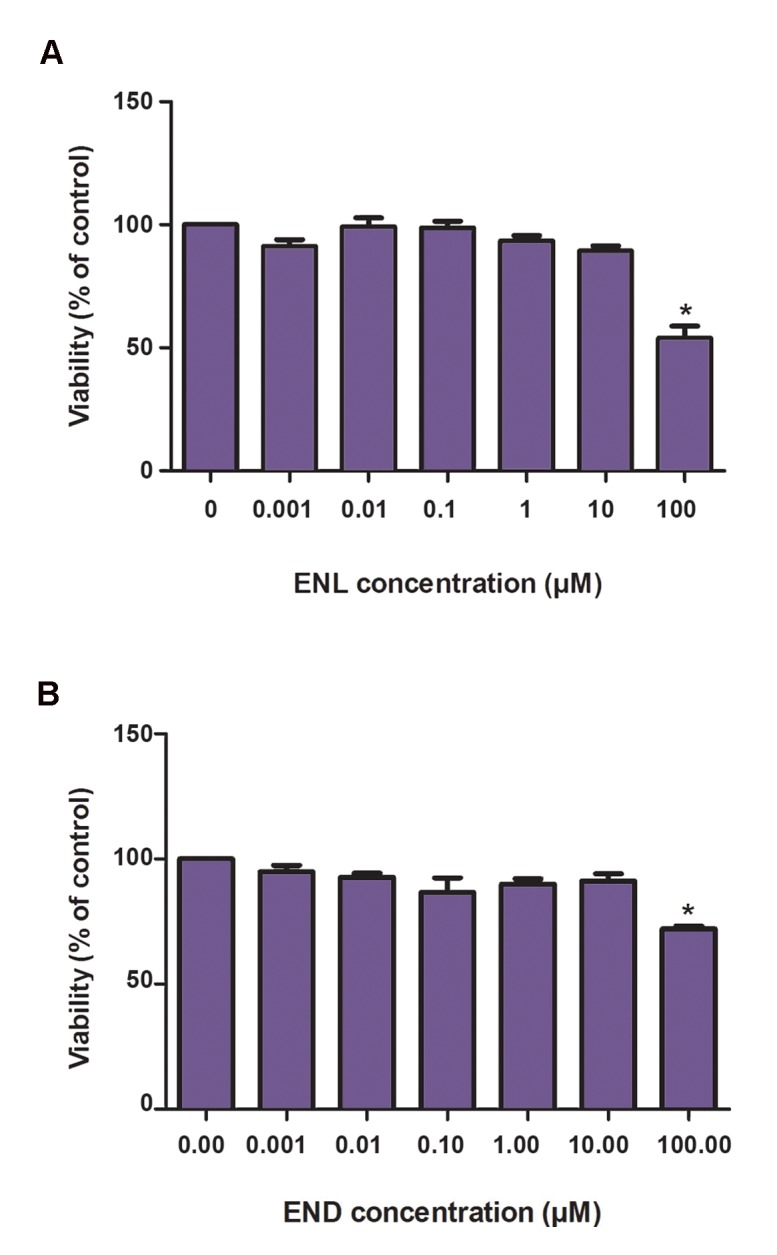
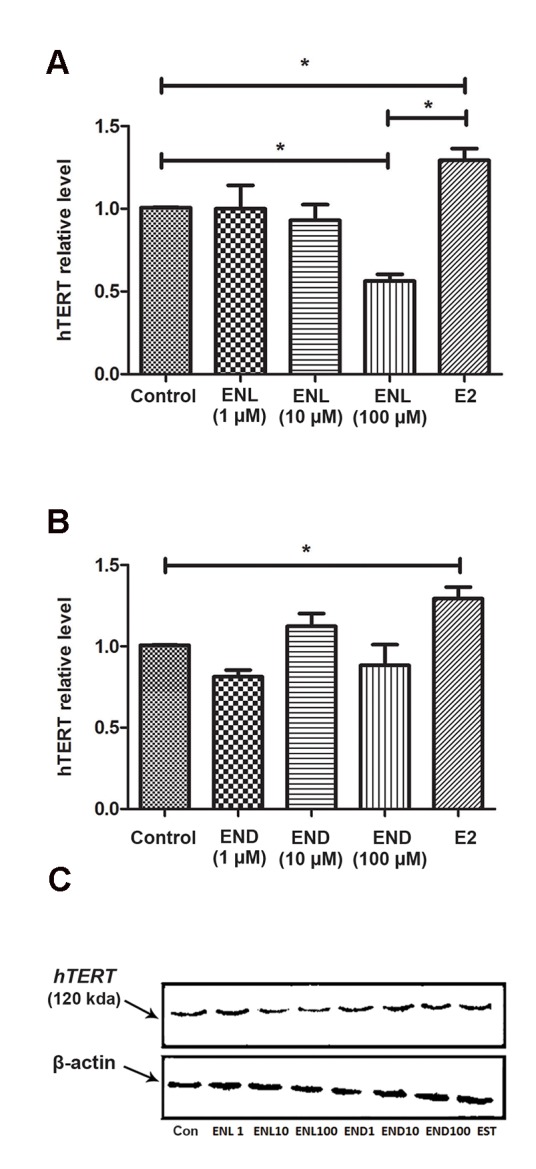
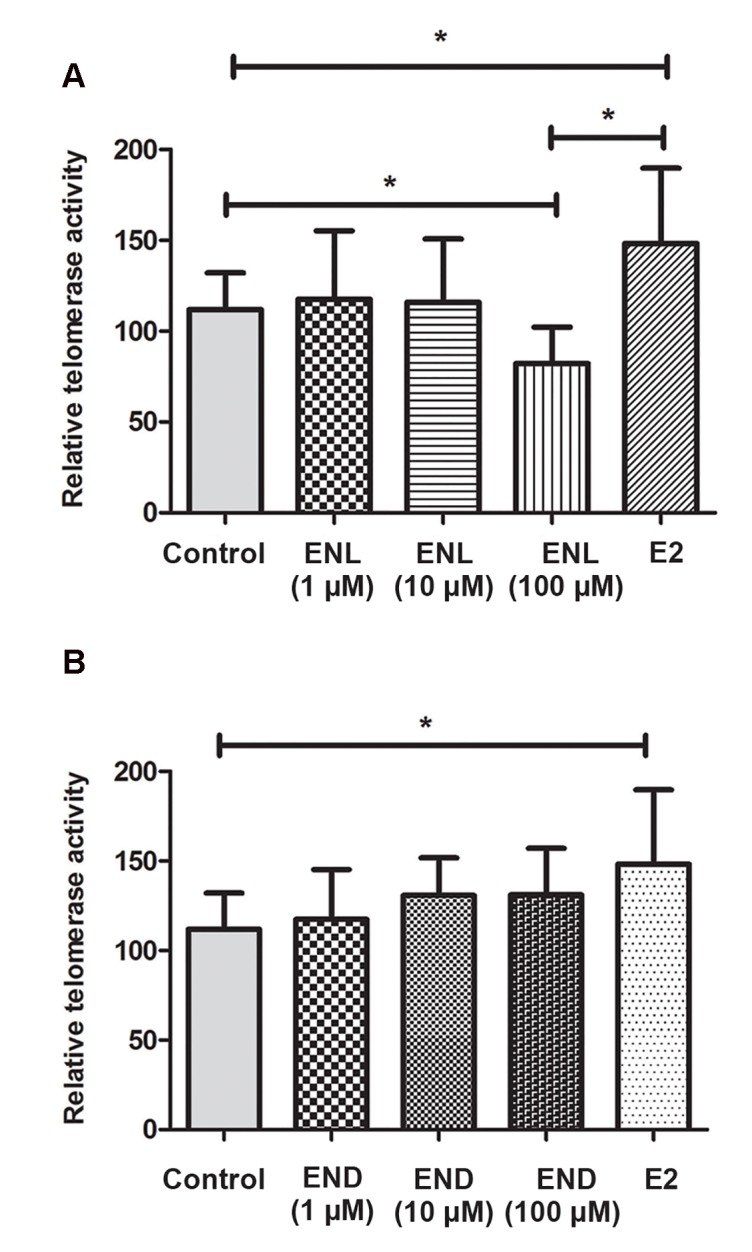
Results: Both ENL and END, at 100 μM concentrations, significantly (P<0.05) reduced cell viability. However, only the 100 μM concentration of ENL significantly (P<0.05) decreased hTERT protein levels and telomerase activity. Lower concentrations of ENL did not have any significant effects on telomerase activity and hTERT protein levels.
Conclusion: High concentration of ENL decreased the viability of MCF-7 breast cancer cells and inhibited the expression and activity of telomerase in these cells. Although END could reduce breast cancer cell viability, it did not have any effect on telomerase expression and activity.
Keywords: Breast Cancer; Enterodiol; Enterolactone; Lignan; Telomerase.
Figures
References
-
- Tao Z, Shi A, Lu C, Song T, Zhang Z, Zhao J. Breast cancer: epidemiology and etiology. Cell Biochem Biophys. 2015;72(2):333–338. - PubMed
-
- Nurrochmad A, Lukitaningsih E, Monikawati A, Septhea DB, Meiyanto E. Combination of low-concentration of novel phytoestrogen (8, 9)-furanyl-pterocarpan-3-ol from pachyrhizus erosus attenuated tamoxifen-associated growth inhibition on breast cancer T47D cells. Asian Pac J Trop Biomed. 2013;3(11):847–852.
-
- Moree SS, Rajesha J. Secoisolariciresinol diglucoside: a potent multifarious bioactive phytoestrogen of flaxseed. Bio Med Res Int. 2011;2(3):1–24.
LinkOut - more resources
Full Text Sources