National Surgical Trends for Distal Radius Fractures in Korea
- PMID: 28581277
- PMCID: PMC5461324
- DOI: 10.3346/jkms.2017.32.7.1181
National Surgical Trends for Distal Radius Fractures in Korea
Abstract
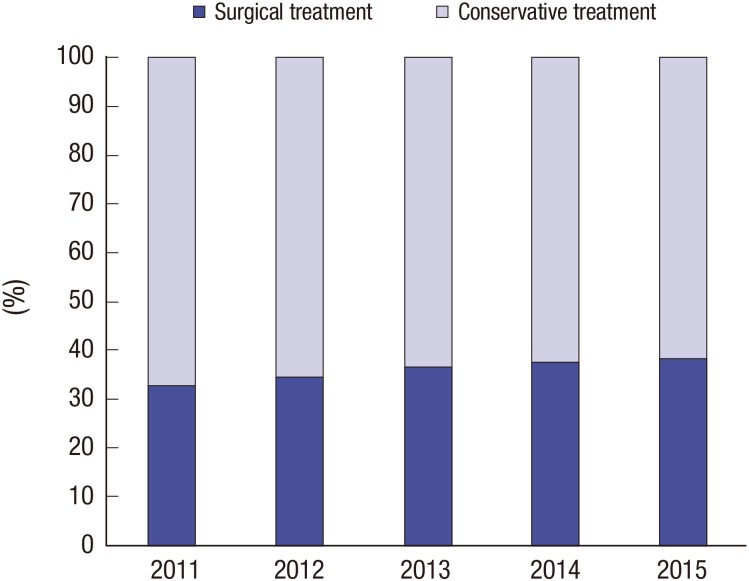
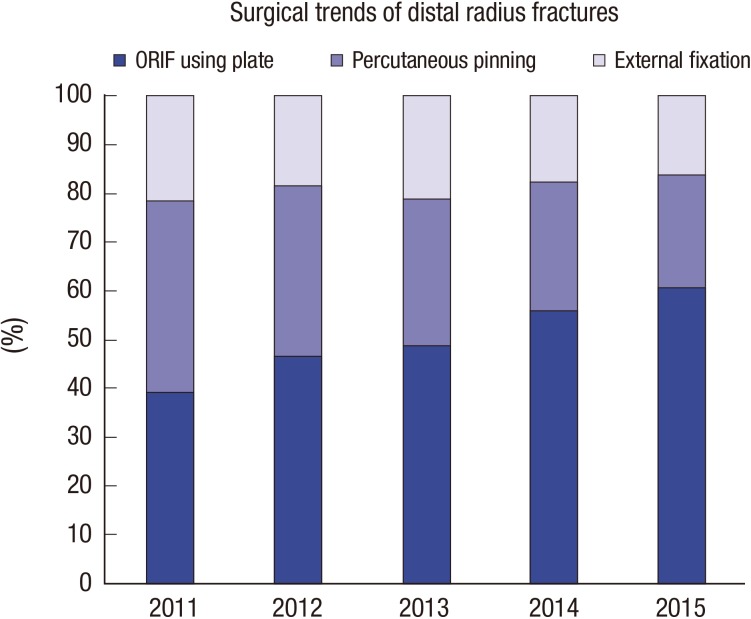
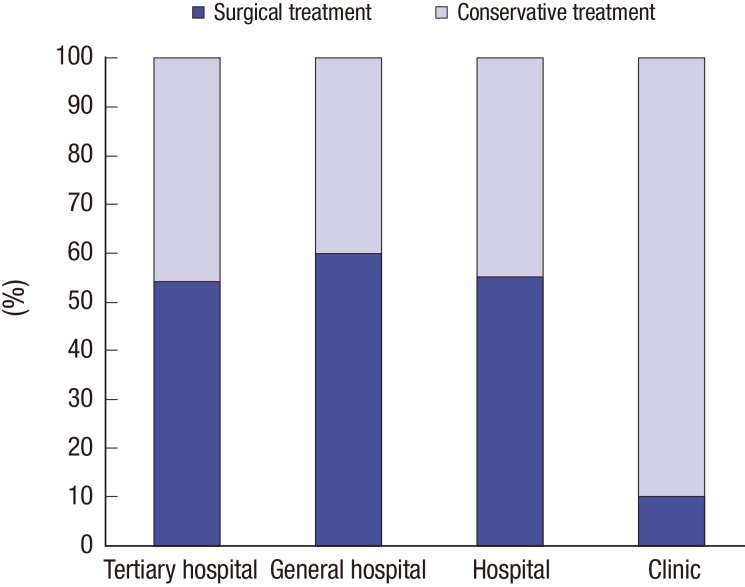
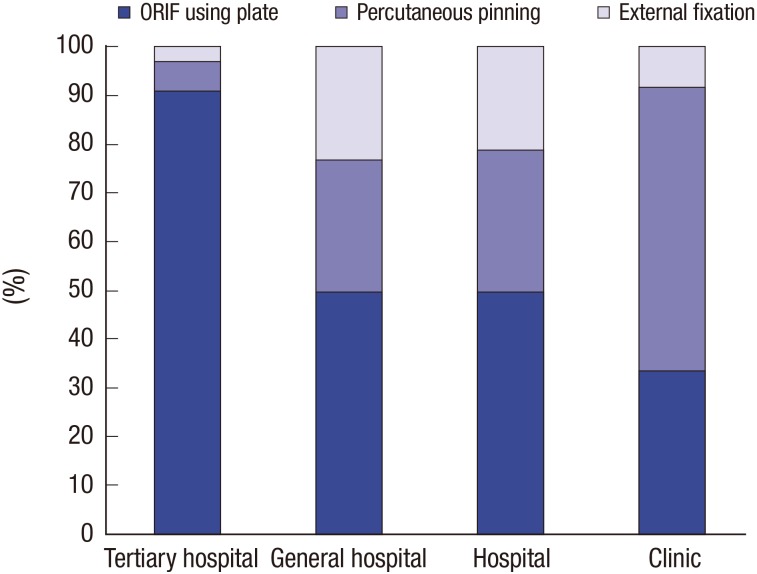
The objective of this study was to investigate national surgical trends for distal radius fractures (DRFs) in Korea and analyze healthcare institution type-specific surgical trends. We analyzed a nationwide database acquired from the Korean Health Insurance Review and Assessment Service (HIRA) from 2011 to 2015. International Classification of Diseases, 10th revision (ICD-10) codes and procedure codes were used to identify patients aged ≥ 20 years with newly diagnosed DRFs. A total of 459,388 DRFs occurred from 2011 to 2015. The proportion of DRF cases treated by surgery tended to increase over time, from 32.6% in 2011 to 38.3% in 2015 (P < 0.001). Open reduction with internal fixation (ORIF) using a plate steadily gained in popularity each year, increasing from 39.2% of overall surgeries in 2011 to 60.9% in 2015. The type of surgery for DRFs differed depending on the type of healthcare institution. ORIF (91%) was the most popular procedure in tertiary hospitals, whereas percutaneous pinning (58%) was most popular in clinics. In addition, general hospitals and hospitals with 30-100 beds used external fixation more frequently than tertiary hospitals and clinics did. Overall, our findings indicate that surgical treatment of DRF, particularly ORIF, continues to increase, and that the component ratio of operation codes differed according to the healthcare institution type.
Keywords: Distal Radius Fracture; Epidemiology; Surgery; Trend.
© 2017 The Korean Academy of Medical Sciences.
Conflict of interest statement
The authors have no potential conflicts of interest to disclose.
Figures
References
-
- Mattila VM, Huttunen TT, Sillanpää P, Niemi S, Pihlajamäki H, Kannus P. Significant change in the surgical treatment of distal radius fractures: a nationwide study between 1998 and 2008 in Finland. J Trauma. 2011;71:939–942. - PubMed
-
- Oinuma T, Sakuma M, Endo N. Secular change of the incidence of four fracture types associated with senile osteoporosis in Sado, Japan: the results of a 3-year survey. J Bone Miner Metab. 2010;28:55–59. - PubMed
-
- Court-Brown CM, Caesar B. Epidemiology of adult fractures: a review. Injury. 2006;37:691–697. - PubMed
-
- Chung KC, Spilson SV. The frequency and epidemiology of hand and forearm fractures in the United States. J Hand Surg Am. 2001;26:908–915. - PubMed
MeSH terms
LinkOut - more resources
Full Text Sources
Other Literature Sources
Medical