. 2017 Jul;49(7):1035-1044.
doi: 10.1038/ng.3878. Epub 2017 Jun 5.

Hyperactivation of HUSH complex function by Charcot-Marie-Tooth disease mutation in MORC2

Affiliations

Hyperactivation of HUSH complex function by Charcot-Marie-Tooth disease mutation in MORC2

Iva A Tchasovnikarova et al. Nat Genet. 2017 Jul.

Abstract

Dominant mutations in the MORC2 gene have recently been shown to cause axonal Charcot-Marie-Tooth (CMT) disease, but the cellular function of MORC2 is poorly understood. Here, through a genome-wide CRISPR-Cas9-mediated forward genetic screen, we identified MORC2 as an essential gene required for epigenetic silencing by the HUSH complex. HUSH recruits MORC2 to target sites in heterochromatin. We exploited a new method, differential viral accessibility (DIVA), to show that loss of MORC2 results in chromatin decompaction at these target loci, which is concomitant with a loss of H3K9me3 deposition and transcriptional derepression. The ATPase activity of MORC2 is critical for HUSH-mediated silencing, and the most common alteration affecting the ATPase domain in CMT patients (p.Arg252Trp) hyperactivates HUSH-mediated repression in neuronal cells. These data define a critical role for MORC2 in epigenetic silencing by the HUSH complex and provide a mechanistic basis underpinning the role of MORC2 mutations in CMT disease.


Conflict of interest statement

Competing Financial Interests

The authors declare that no competing financial interests exist.

Figures
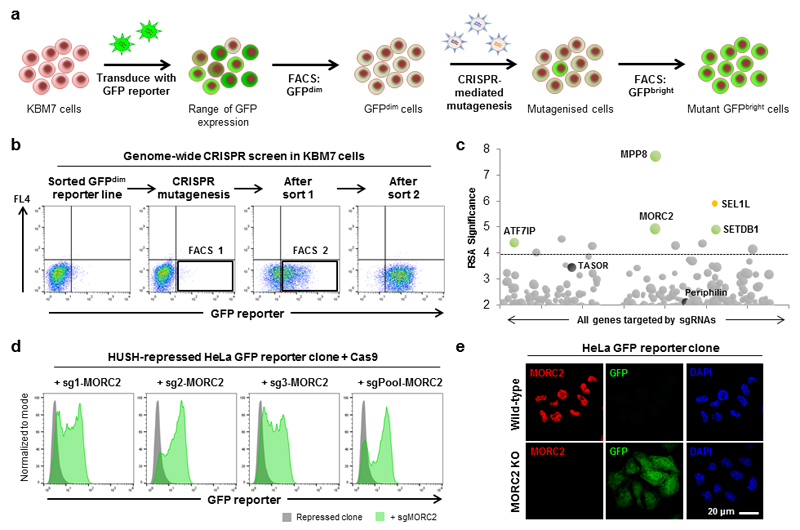
Figure 1
Figure 1. A genome-wide CRISPR/Cas9-mediated forward genetic screen identifies an essential role for MORC2 in transgene silencing by the HUSH complex.
(a,b) A genome-wide CRISPR screen to identify genes required for transgene silencing. Cas9 was expressed in a population of GFPdim KBM7 cells harboring epigenetically repressed transgenes, and genome-wide mutagenesis carried out using the GeCKO v2 sgRNA library (a). Mutant GFPbright cells containing gene disruption events that prevented reporter repression were isolated through two sequential rounds of FACS (b). Black boxes indicate approximate sorting gates. (c) Bubble plot illustrating the hits from the screen. All genes targeted by sgRNAs are arranged alphabetically by gene name on the x-axis, with their statistical significance as determined by the RSA algorithm plotted on the y-axis. Bubble size is proportional to the number of active sgRNAs for each gene. Colored bubbles represent validated hits; the HUSH complex subunits TASOR and Periphilin (black) did not reach statistical significance, while SEL1L (orange) is involved in the degradation of the GFP fusion protein. A fully annotated plot is provided in Fig. S1. (d,e) MORC2 is required for transgene silencing by the HUSH complex in HeLa cells. CRISPR/Cas9-mediated disruption of MORC2 results in derepression of a HUSH-repressed reporter as measured by flow cytometry (d) or immunofluorescence microscopy (e).
Figure 2
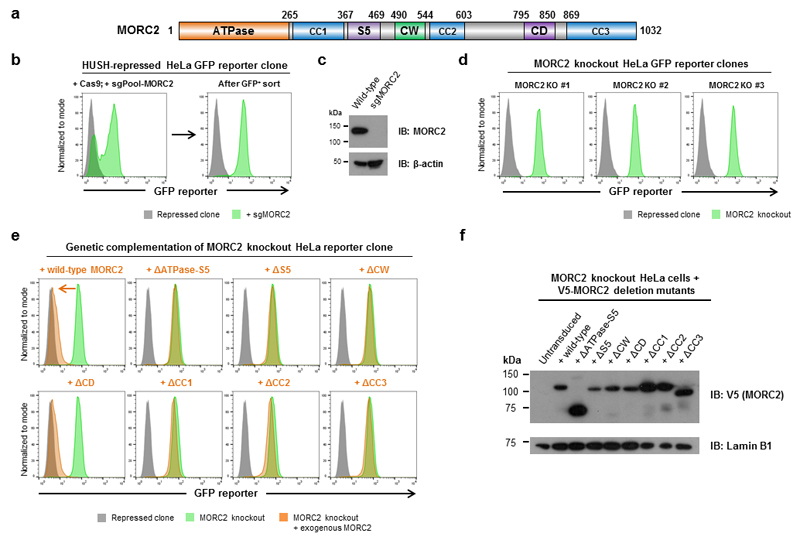
Figure 2. The ATPase, CW and coiled-coil domains of MORC2 are required for HUSH complex function.
(a) Schematic representation of the domain structure of MORC2. (CC, predicted coiled-coil; S5, ribosomal S5-like domain; CW, CW-type zinc finger; CD, chromo-like domain) (b-d) Generation and validation of MORC2 knockout HeLa cells. A HeLa reporter clone harboring a HUSH-repressed GFP reporter was transfected with a pool of plasmids to express Cas9 and three sgRNAs targeting MORC2. Cells in which the MORC2 gene was disrupted became GFP+ owing to derepression the GFP reporter and were isolated using FACS (b). The sorted GFP+ population no longer expressed MORC2 protein as assessed by immunoblot (c). MORC2 knockout single cell clones were then isolated from the GFP+ sorted population (d). (e,f) Assessing the domains required for MORC2 function through the genetic complementation of MORC2 knockout cells. Expression of wild-type MORC2 or a MORC2 mutant lacking the chromodomain (ΔCD) in MORC2 knockout cells resulted in re-repression of the GFP reporter transgene. In contrast, MORC2 variants lacking the ATPase, S5, CW or coiled-coil domains were non-functional and did not rescue HUSH-mediated repression (e). Immunoblot validation of expression of the MORC2 deletion mutants (f). All MORC2 variants were expressed with an N-terminal V5 epitope tag followed by an exogenous SV40 nuclear localization signal; detailed sequence information on the composition of the mutants is provided in Supplementary Table 1.
Figure 3
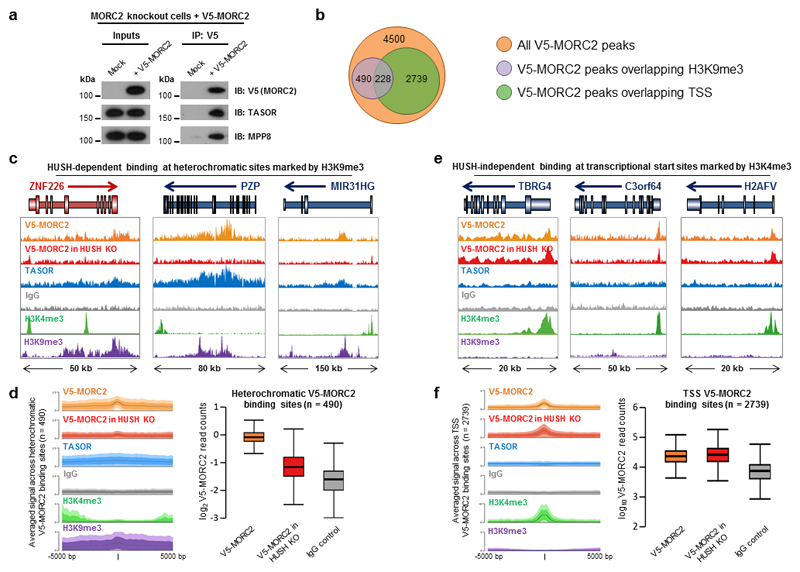
Figure 3. The HUSH complex recruits MORC2 to heterochromatic target sites.
(a) MORC2 interacts with the HUSH complex. TASOR and MPP8 coimmunoprecipitate with V5-tagged MORC2 expressed in HeLa cells. (b) Summary of MORC2 genome occupancy as measured by ChIP-seq. In total 4500 peaks of V5-MORC2 occupancy were detected, the majority of which fell into two categories: binding sites in heterochromatin marked by H3K9me3 (purple; left) and binding sites at transcriptional start sites (green; right). (c,d) The HUSH complex recruits MORC2 to heterochromatic sites marked by H3K9me3. TASOR and MORC2 occupancy was observed at a range of sites marked by H3K9me3; MORC2 recruitment at these sites was HUSH-dependent, as V5-MORC2 occupancy was lost in cells lacking all three HUSH subunits (HUSH KO). Three example loci are shown in (c), with summary data across all loci shown in (d). Full ChIP-seq traces including input DNA controls are shown in Supplementary Fig. 3a. (e,f) MORC2 recruitment to transcriptional start sites is independent of the HUSH complex. MORC2 occupancy was observed at a large number of transcriptional start sites (TSSs) marked by the H3K4me3 histone modification. This was independent of the HUSH complex, as TASOR occupancy was not observed at these sites and MORC2 occupancy was maintained in cells lacking HUSH subunits. Three example loci are shown in (e), with summary data across all loci shown in (f). Full ChIP-seq traces including input DNA controls are shown in Supplementary Fig. 3b.
Figure 4
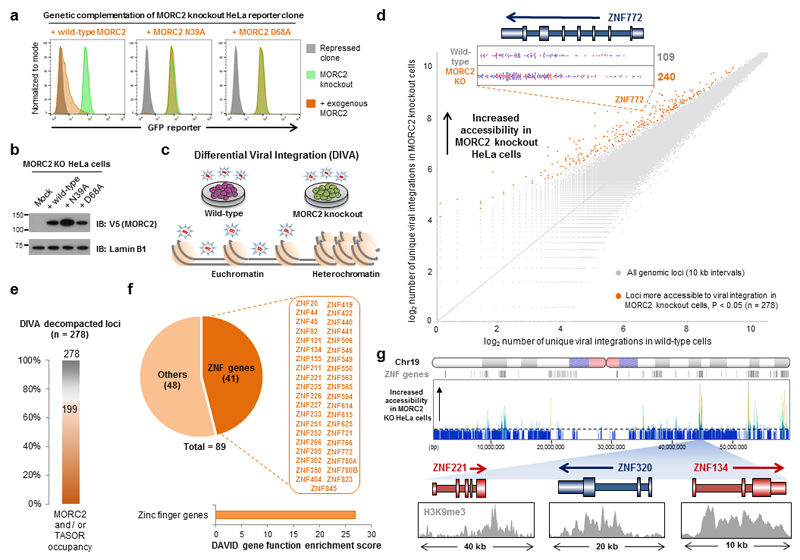
Figure 4. Loss of MORC2 results in chromatin decompaction at HUSH target sites.
(a,b) ATP hydrolysis by MORC2 is critical for HUSH-mediated transgene repression. Exogenous expression of MORC2 mutants unable to bind (N39A) or hydrolyze (D68A) ATP failed to rescue reporter repression in MORC2 knockout cells (a). Immunoblot validation of expression of the MORC2 point mutants (b). (c) Overview of the DIVA methodology, which utilizes large-scale mapping of lentiviral integration sites to probe accessible chromatin. See Supplementary Figure 5c,d for more details. (d) Loss of MORC2 results in chromatin decompaction. Scatter plot highlighting the 289 genomic loci (orange) which exhibit increased accessibility in MORC2 knockout cells. Unique lentiviral integration sites mapped to the ZNF772 locus in wild-type and MORC2 knockout cells are shown as an example. DIVA scores for all genomic loci are detailed in Supplementary Table 2. (e) The majority of loci exhibiting decompaction upon MORC2 knockout are direct targets of MORC2 and the HUSH complex. Of the 278 decompacted loci, MORC2 and/or TASOR occupancy can be detected at 199 loci (71%). (f,g) Loci exhibiting decompaction upon MORC2 knockout are highly enriched for ZNF genes (f), and the decompacted regions across chromosome 19 correspond to sites of ZNF gene clusters (g).
Figure 5
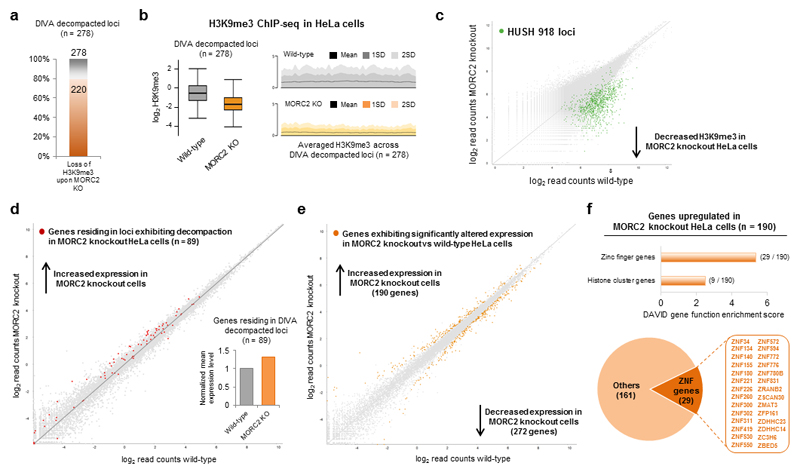
Figure 5. Chromatin decompaction in MORC2 knockout cells is accompanied by a loss of H3K9me3 and transcriptional depression.
(a,b) H3K9me3 is lost across the majority of loci exhibiting decompaction upon MORC2 knockout. Of the 278 decompacted loci, a loss of H3K9me3 upon MORC2 knockout in HeLa cells was observed at 220 loci (79%), as measured by ChIP-seq (a). Summary data across all 278 decompacted loci is shown in (b). (c) Knockout of MORC2 results in loss of H3K9me3 at the same sites which lose H3K9me3 upon knockout of HUSH subunits. Previously we identified 918 genomic loci in HeLa cells that lose H3K9me3 upon knockout of either TASOR, MPP8 or Periphilin (green dots); these same loci also exhibited decreased H3K9me3 levels upon knockout of MORC2. (d,e) The effect of knockout of MORC2 on the transcriptome. RNA-seq analysis was performed to compare the transcriptome of wild-type and MORC2 knockout HeLa cells. In (d), genes residing in loci exhibiting decompaction in MORC2 knockout cells (n = 89) are highlighted in red; loci exhibiting decompaction also exhibit increased expression as measured by RNA-seq (inset). In (e), all genes exhibiting significantly altered expression between wild-type and MORC2 knockout cells (n = 462; DEseq P < 0.05) are highlighted in orange. (f) Functional classification of the genes upregulated in MORC2 knockout cells using the DAVID functional annotation tool. Genes upregulated upon MORC2 knockout are highly enriched for ZNF genes.
Figure 6
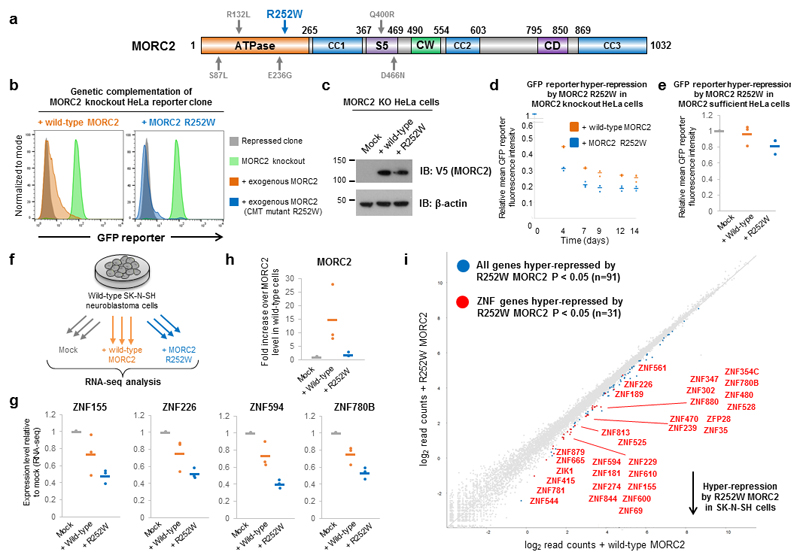
Figure 6. The R252W mutation in MORC2 associated with Charcot-Marie-Tooth disease hyper-activates HUSH-mediated epigenetic repression.
(a) Schematic representation of the mutations associated with CMT affecting the ATPase domain of MORC2. (b,c) Assessing the effect of the R252W CMT mutation on MORC2 function through genetic complementation of MORC2 knockout cells. The R252W CMT mutant MORC2 is functional, restoring HUSH-mediated transgene silencing when expressed in MORC2 knockout cells (b). Immunoblot validation of expression of wild-type or R252W mutant MORC2 (c). (d,e) The R252W CMT mutation in MORC2 hyper-activates HUSH-mediated transgene silencing in HeLa cells. Time-course of transgene re-repression in MORC2 knockout HeLa cells (d): the R252W MORC2 mutant increases both the rate and overall extent of transgene re-repression. Hyper-repression of a GFPdim HUSH reporter in MORC2-sufficient cells by over-expression of R252W MORC2 (e). (f) Schematic representation of the RNA-seq experiment in wild-type SK-N-SH neuroblastoma cells. (g – i) Expression of either wild-type MORC2 or the R252W mutant results in hyper-repression of HUSH target genes. RNA-seq in SK-N-SH cells overexpressing either wild-type or R252W MORC2 reveals hyper-repression of example HUSH target genes (g); despite R252W MORC2 being expressed at a much lower level than the wild-type protein (h), this effect was more pronounced with the R252W mutant. In total, 91 genes were hyper-repressed by the R252W mutant (edgeR P < 0.05), of which 31 were ZNF genes (i).

References

    1. Wang J, Lawry ST, Cohen AL, Jia S. Chromosome boundary elements and regulation of heterochromatin spreading. Cell Mol Life Sci. 2014;71:4841–4852. - PMC - PubMed
    1. Margueron R, Reinberg D. The Polycomb complex PRC2 and its mark in life. Nature. 2011;469:343–9. - PMC - PubMed
    1. Becker JS, Nicetto D, Zaret KS. H3K9me3-Dependent Heterochromatin: Barrier to Cell Fate Changes. Trends Genet. 2015;32:29–41. - PMC - PubMed
    1. Talbert PB, Henikoff S. Spreading of silent chromatin: inaction at a distance. Nat Rev Genet. 2006;7:793–803. - PubMed
    1. Schotta G, Ebert A, Dorn R, Reuter G. Position-effect variegation and the genetic dissection of chromatin regulation in Drosophila. Semin Cell Dev Biol. 2003;14:67–75. - PubMed

MeSH terms