


Validated Smartphone-Based Apps for Ear and Hearing Assessments: A Review
- PMID: 28582261
- PMCID: PMC5454564
- DOI: 10.2196/rehab.6074
Validated Smartphone-Based Apps for Ear and Hearing Assessments: A Review
Abstract
Background: An estimated 360 million people have a disabling hearing impairment globally, the vast majority of whom live in low- and middle-income countries (LMICs). Early identification through screening is important to negate the negative effects of untreated hearing impairment. Substantial barriers exist in screening for hearing impairment in LMICs, such as the requirement for skilled hearing health care professionals and prohibitively expensive specialist equipment to measure hearing. These challenges may be overcome through utilization of increasingly available smartphone app technologies for ear and hearing assessments that are easy to use by unskilled professionals.
Objective: Our objective was to identify and compare available apps for ear and hearing assessments and consider the incorporation of such apps into hearing screening programs.
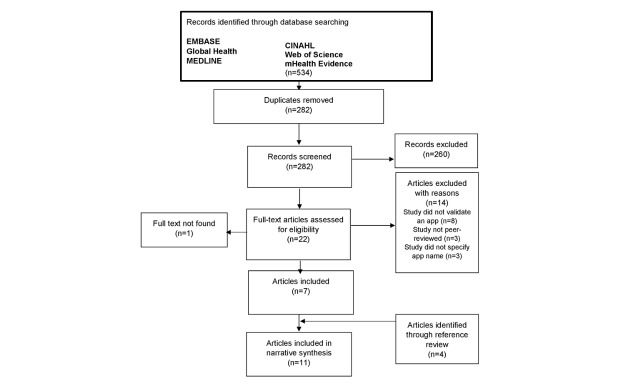
Methods: In July 2015, the commercial app stores Google Play and Apple App Store were searched to identify apps for ear and hearing assessments. Thereafter, six databases (EMBASE, MEDLINE, Global Health, Web of Science, CINAHL, and mHealth Evidence) were searched to assess which of the apps identified in the commercial review had been validated against gold standard measures. A comparison was made between validated apps.
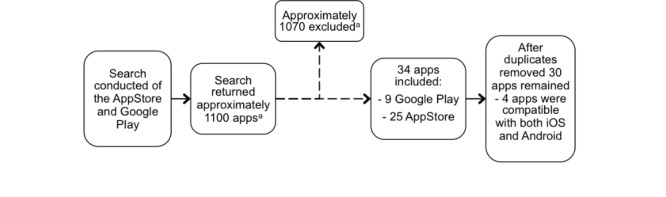
Results: App store search queries returned 30 apps that could be used for ear and hearing assessments, the majority of which are for performing audiometry. The literature search identified 11 eligible validity studies that examined 6 different apps. uHear, an app for self-administered audiometry, was validated in the highest number of peer reviewed studies against gold standard pure tone audiometry (n=5). However, the accuracy of uHear varied across these studies.
Conclusions: Very few of the available apps have been validated in peer-reviewed studies. Of the apps that have been validated, further independent research is required to fully understand their accuracy at detecting ear and hearing conditions.
Keywords: app; applications; audiometry; hearing; hearing impairment; hearing loss; mobile; prevalence; smartphone; surveys; testing.
©Tess Bright, Danuk Pallawela. Originally published in JMIR Rehabilitation and Assistive Technology (http://rehab.jmir.org), 23.12.2016.
Conflict of interest statement
Conflicts of Interest: None declared.
Figures
References
-
- World Health Organization WHO global estimates on prevalence of hearing loss 2012. 2012. [2016-08-25]. http://www.who.int/pbd/deafness/WHO_GE_HL.pdf .
-
- Stevens G, Flaxman S, Brunskill E, Mascarenhas M, Mathers CD, Finucane M, Global Burden of Disease Hearing Loss Expert Group Global and regional hearing impairment prevalence: an analysis of 42 studies in 29 countries. Eur J Public Health. 2013 Feb;23(1):146–52. doi: 10.1093/eurpub/ckr176. http://eurpub.oxfordjournals.org/cgi/pmidlookup?view=long&pmid=22197756 - DOI - PubMed
-
- Olusanya BO, Neumann KJ, Saunders JE. The global burden of disabling hearing impairment: a call to action. Bull World Health Organ. 2014 May 1;92(5):367–73. doi: 10.2471/BLT.13.128728. http://www.scielosp.org/scielo.php?script=sci_arttext&pid=BLT.13.128728&... - DOI - PMC - PubMed
-
- Mohr PE, Feldman JJ, Dunbar JL. The societal costs of severe to profound hearing loss in the United States. Policy Anal Brief H Ser. 2000 Apr;2(1):1–4. - PubMed
Publication types
LinkOut - more resources
Full Text Sources
Other Literature Sources
