


Utilization of ultrasonography to detect developmental dysplasia of the hip: when reality turns selective screening into universal use
- PMID: 28583152
- PMCID: PMC5460553
- DOI: 10.1186/s12887-017-0882-0
Utilization of ultrasonography to detect developmental dysplasia of the hip: when reality turns selective screening into universal use
Abstract
Background: Developmental dysplasia of the hip (DDH) occurs in 3-5 of 1000 live births and is associated with known risk factors. In most countries, formal practice for early detection of DDH entails the combination of risk factor identification and physical examination of the hip, while the golden standard diagnostic instrument is hip ultrasonography (US). This practice is commonly referred to as selective screening. Infants with positive US findings are treated with a Pavlik harness, a dynamic abduction splint. The objective of our study was to evaluate hip US utilization patterns in Maccabi Healthcare Services (MHS), a large health plan.
Methods: Study population: All MHS members, born between June 2011 and October 2014, who underwent at least one US before the age of 15 months.
Study variables: Practice specialty and number of enrolled infants. Positive US result was defined as referral to an abduction splint. Cost was based on Ministry of Health price list. Chi square and correlation coefficients were employed in the statistical analysis.
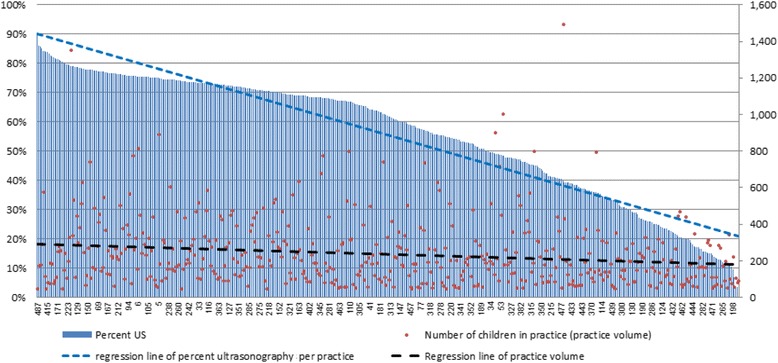
Results: Of the 115,918 infants born during the study period, 67,491 underwent at least one hip US. Of these, 60.6% were female, mean age at performance: 2.2 months. Of those who underwent US, 625 (0.93%) were treated with a Pavlik harness: 0.24% of the male infants and 1.60% of the female infants (p < 0.001). Analysis of physician practice characteristics revealed that referral to US was significantly higher among pediatricians as compared with general practitioners (60% and 35%, respectively). Practice volume had no influence on referral rate. Direct medical costs of the 107 hip US examinations performed that led to detection of one positive case (treated by Pavlik): US$10,000.
Conclusions: Current pattern of hip US utilization for early detection of DDH resembles universal screening more closely than selective screening. This can inform policy decisions as to whether a stricter selective screening or a formal move to universal screening is appropriate in Israel.
Keywords: Cost; Hip developmental dysplasia; Quality of care; Ultrasonography.
Figures
References
MeSH terms
LinkOut - more resources
Full Text Sources
Other Literature Sources
Medical
Research Materials
