


CRISPR-Cas9 Targeted Mutagenesis Leads to Simultaneous Modification of Different Homoeologous Gene Copies in Polyploid Oilseed Rape (Brassica napus)
- PMID: 28584067
- PMCID: PMC5462057
- DOI: 10.1104/pp.17.00426
CRISPR-Cas9 Targeted Mutagenesis Leads to Simultaneous Modification of Different Homoeologous Gene Copies in Polyploid Oilseed Rape (Brassica napus)
Abstract
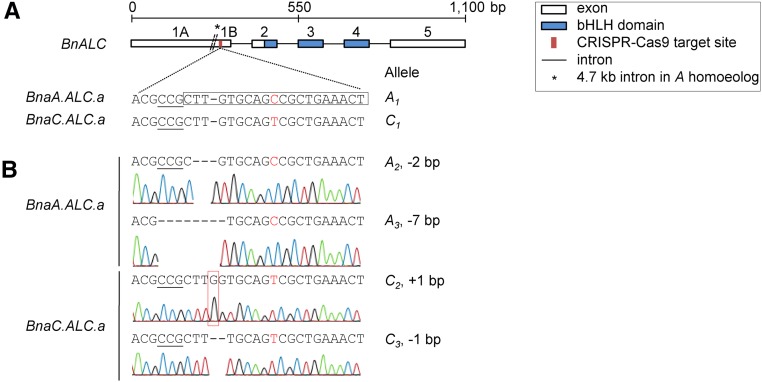
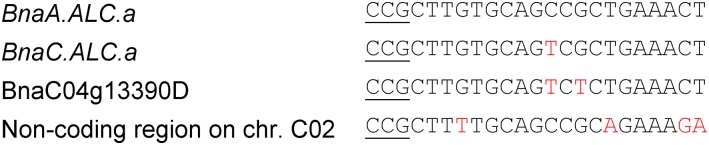
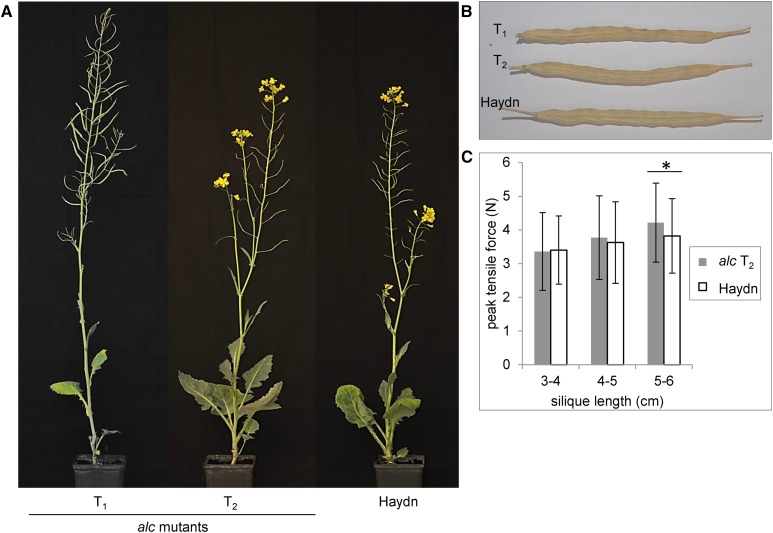
In polyploid species, altering a trait by random mutagenesis is highly inefficient due to gene redundancy. We have stably transformed tetraploid oilseed rape (Brassica napus) with a CRISPR-Cas9 construct targeting two ALCATRAZ (ALC) homoeologs. ALC is involved in valve margin development and, thus, contributes to seed shattering from mature fruits. Knocking out ALC would increase shatter resistance to avoid seed loss during mechanical harvest. We obtained a transgenic T1 plant with four alc mutant alleles by the use of a single target sequence. All mutations were stably inherited to the T2 progeny. The T2 generation was devoid of any wild-type alleles, proving that the underlying T1 was a nonchimeric double heterozygote. T-DNA and ALC loci were not linked, as indicated by random segregation in the T2 generation. Hence, we could select double mutants lacking the T-DNA already in the first offspring generation. However, whole-genome sequencing data revealed at least five independent insertions of vector backbone sequences. We did not detect any off-target effects in two genome regions homologous to the target sequence. The simultaneous alteration of multiple homoeologs by CRISPR-Cas9 mutagenesis without any background mutations will offer new opportunities for using mutant genotypes in rapeseed breeding.
© 2017 American Society of Plant Biologists. All Rights Reserved.
Figures
References
-
- Ballester P, Ferrándiz C (2017) Shattering fruits: variations on a dehiscent theme. Curr Opin Plant Biol 35: 68–75 - PubMed
-
- Boszoradova E, Libantova J, Matusikova I, Poloniova Z, Jopcik M, Berenyi M, Moravcikova J (2011) Agrobacterium-mediated genetic transformation of economically important oilseed rape cultivars. Plant Cell Tiss Org 107: 317–323
-
- Bruce DM, Farrent JW, Morgan CL, Child RD (2002) Determining the oilseed rape pod strength needed to reduce seed loss due to pod shatter. Biosyst Eng 81: 179–184
MeSH terms
Substances
LinkOut - more resources
Full Text Sources
Other Literature Sources
