


Antioxidant mechanism of black garlic extract involving nuclear factor erythroid 2-like factor 2 pathway
- PMID: 28584577
- PMCID: PMC5449377
- DOI: 10.4162/nrp.2017.11.3.206
Antioxidant mechanism of black garlic extract involving nuclear factor erythroid 2-like factor 2 pathway
Erratum in
-
Erratum: Antioxidant mechanism of black garlic extract involving nuclear factor erythroid 2-like factor 2 pathway.Nutr Res Pract. 2017 Aug;11(4):347. doi: 10.4162/nrp.2017.11.4.347. Epub 2017 Jul 28. Nutr Res Pract. 2017. PMID: 28765782 Free PMC article.
Abstract
Backgroun/objectives: Although studies have revealed that black garlic is a potent antioxidant, its antioxidant mechanism remains unclear. The objective of this study was to determine black garlic's antioxidant activities and possible antioxidant mechanisms related to nuclear factor erythroid 2-like factor 2 (Nrf2)-Keap1 complex.
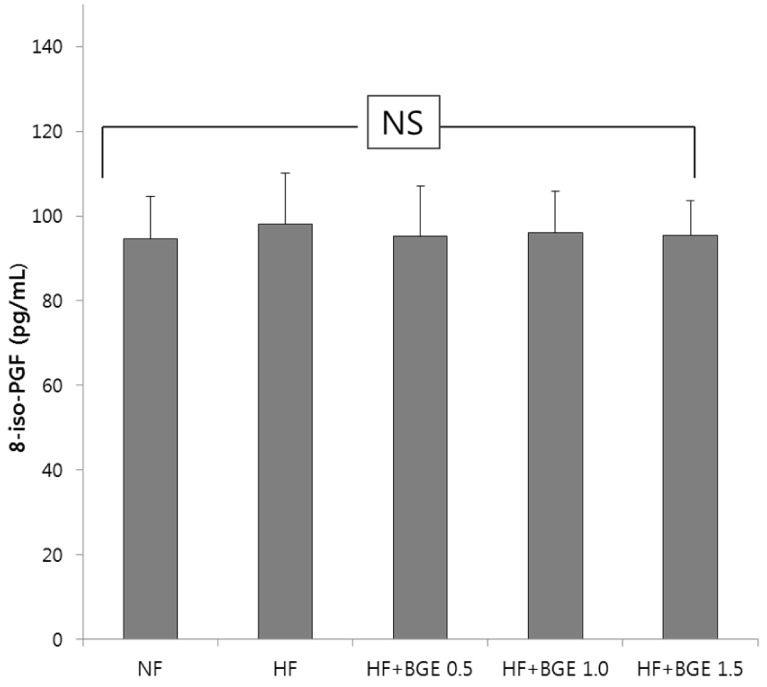
Methods/materials: After four weeks of feeding rats with a normal fat diet (NF), a high-fat diet (HF), a high-fat diet with 0.5% black garlic extract (HF+BGE 0.5), a high-fat diet with 1.0% black garlic extract (HF+BGE 1.0), or a high-fat diet with 1.5% black garlic extract (HF+BGE 1.5), plasma concentrations of glucose, insulin,homeostatic model assessment of insulin resistance (HOMA-IR) were determined. As oxidative stress indices, plasma concentrations of thiobarbituric acid reactive substances (TBARS) and 8-isoprostaglandin F2α (8-iso-PGF) were determined. To measure antioxidant capacities, plasma total antioxidant capacity (TAC) and activities of antioxidant enzymes in plasma and liver were determined. The mRNA expression levels of antioxidant related proteins such as Nrf2, NAD(P)H: quinone-oxidoreductase-1 (NQO1), heme oxygenase-1 (HO-1), glutathione reductase (GR), and glutathione S-transferase alpha 2 (GSTA2) were examined.
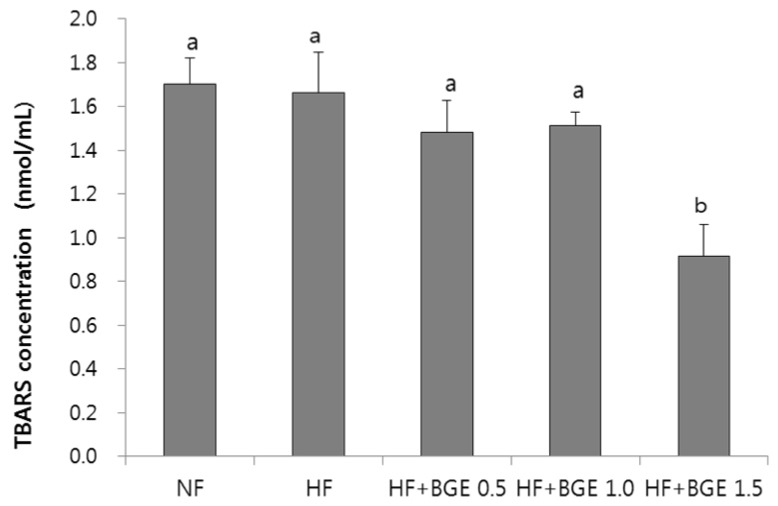
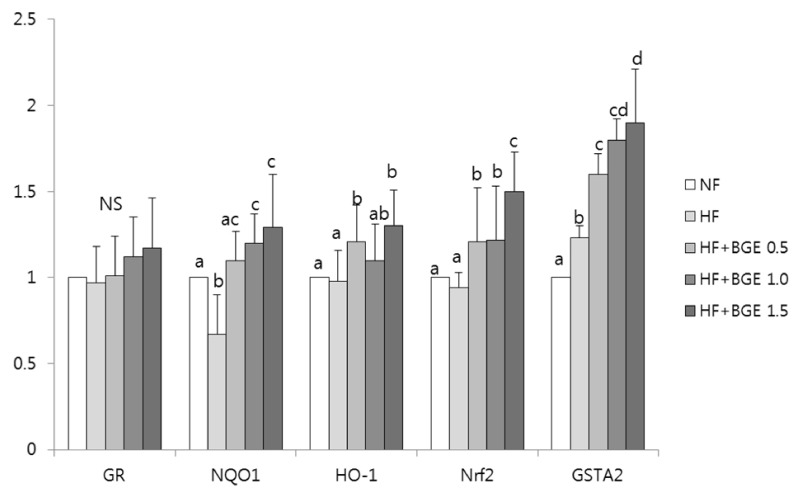
Results: Plasma glucose level, plasma insulin level, and HOMA-IR in black garlic supplemented groups were significantly (P < 0.05) lower than those in the HF group without dose-dependent effect. Plasma TBARS concentration and TAC in the HF+BGE 1.5 group were significantly decreased compared to those of the HF group. The activities of catalase and glutathione peroxidase were significantly (P < 0.05) increased in the HF+BGE 1.0 and HF+BGE 1.5 groups compared to those of the HF group. The mRNA expression levels of hepatic Nrf2, NQO1, HO-1, and GSTA2 were significantly (P < 0.05) increased in the HF with BGE groups compared to those in the HF group.
Conclusions: The improvements of blood glucose homeostasis and antioxidant systems in rats fed with black garlic extract were related to mRNA expression levels of Nrf2 related genes.
Keywords: Garlic; antioxidant; glucose; insulin; oxidative stress.
Conflict of interest statement
CONFLICT OF INTEREST: The authors declare no potential conflicts of interests.
Figures

References
-
- Lee OH, Kwon YI, Hong HD, Park CS, Lee BY, Kim YC. Production of reactive oxygen species and changes in antioxidant enzyme activities during differentiation of 3T3-L1 adipocyte. J Korean Soc Appl Biol Chem. 2009;52:70–75.
-
- Banerjee SK, Mukherjee PK, Maulik SK. Garlic as an antioxidant: the good, the bad and the ugly. Phytother Res. 2003;17:97–106. - PubMed
-
- Kim MH, Kim MJ, Lee JH, Han JI, Kim JH, Sok DE, Kim MR. Hepatoprotective effect of aged black garlic on chronic alcohol-induced liver injury in rats. J Med Food. 2011;14:732–738. - PubMed
LinkOut - more resources
Full Text Sources
Other Literature Sources
Research Materials
Miscellaneous
