


Dietary Intervention by Phytochemicals and Their Role in Modulating Coding and Non-Coding Genes in Cancer
- PMID: 28587155
- PMCID: PMC5486001
- DOI: 10.3390/ijms18061178
Dietary Intervention by Phytochemicals and Their Role in Modulating Coding and Non-Coding Genes in Cancer
Abstract
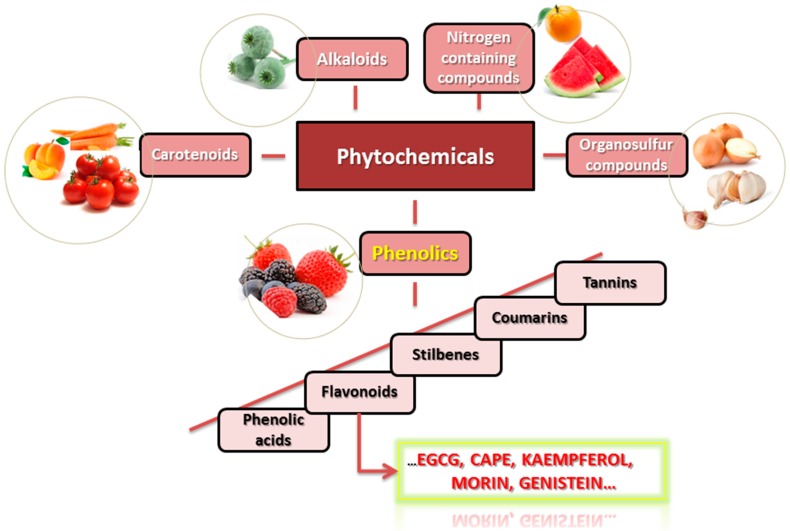
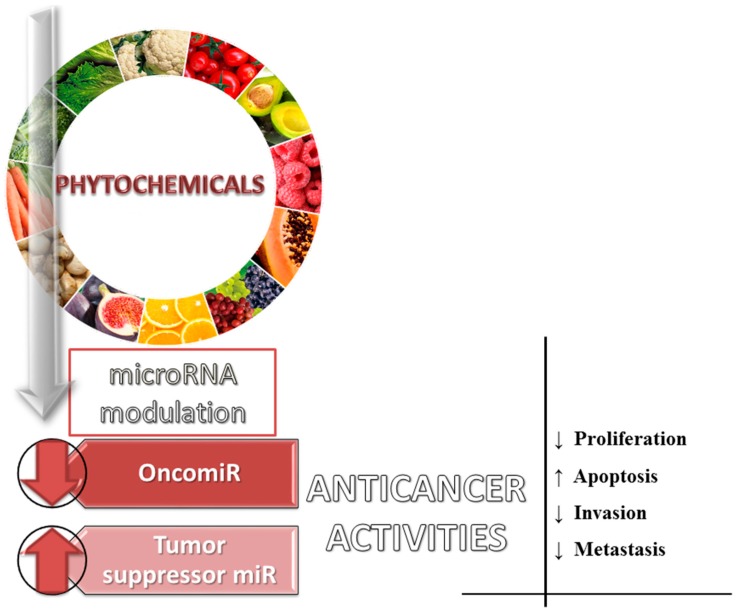
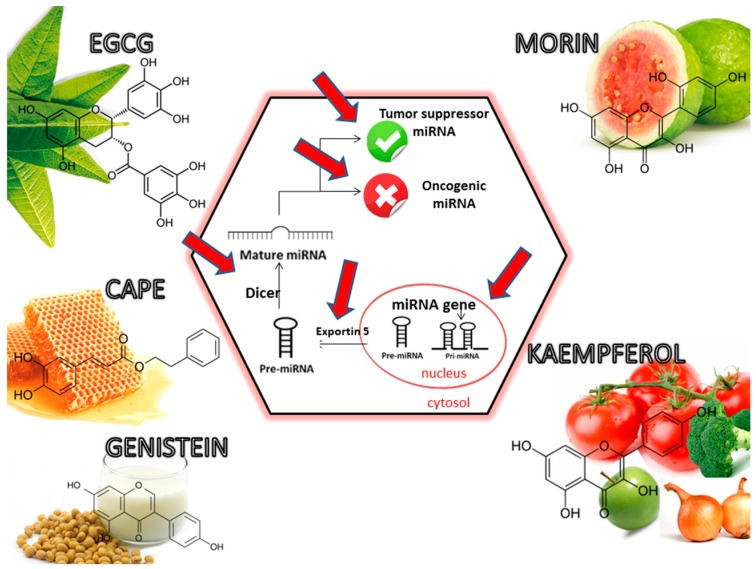
Phytochemicals are natural compounds synthesized as secondary metabolites in plants, representing an important source of molecules with a wide range of therapeutic applications. These natural agents are important regulators of key pathological processes/conditions, including cancer, as they are able to modulate the expression of coding and non-coding transcripts with an oncogenic or tumour suppressor role. These natural agents are currently exploited for the development of therapeutic strategies alone or in tandem with conventional treatments for cancer. The aim of this paper is to review the recent studies regarding the role of these natural phytochemicals in different processes related to cancer inhibition, including apoptosis activation, angiogenesis and metastasis suppression. From the large palette of phytochemicals we selected epigallocatechin gallate (EGCG), caffeic acid phenethyl ester (CAPE), genistein, morin and kaempferol, due to their increased activity in modulating multiple coding and non-coding genes, targeting the main hallmarks of cancer.
Keywords: apoptosis; cancer; coding and non-coding RNA; miRNAs; phytochemicals.
Conflict of interest statement
The authors declare no conflict of interests.
Figures
References
-
- Han X., Shen T., Lou H. Dietary polyphenols and their biological significance. Int. J. Mol. Sci. 2007;8:950–988. doi: 10.3390/i8090950. - DOI
-
- De la Rosa L.A., Gonzalez-Aguilar G.A., Alvarez-Parrilla E. Fruit and Vegetable Phytochemicals: Chemistry, Nutritional Value and Stability. Wiley-Blackwell; Hoboken, NJ, USA: 2009.
-
- Manach C., Scalbert A., Morand C., Remesy C., Jimenez L. Polyphenols: Food sources and bioavailability. Am. J. Clin. Nutr. 2004;79:727–747. - PubMed
Publication types
MeSH terms
Substances
LinkOut - more resources
Full Text Sources
Other Literature Sources
Medical
