


Frontal alpha asymmetry predicts inhibitory processing in youth with attention deficit/hyperactivity disorder
- PMID: 28587767
- PMCID: PMC5536950
- DOI: 10.1016/j.neuropsychologia.2017.06.003
Frontal alpha asymmetry predicts inhibitory processing in youth with attention deficit/hyperactivity disorder
Abstract
Introduction: Atypical asymmetry in brain activity has been implicated in the behavioral and attentional dysregulation observed in ADHD. Specifically, asymmetry in neural activity in the right versus left frontal regions has been linked to ADHD, as well as to symptoms often associated with ADHD such as heightened approach behaviors, impulsivity and difficulties with inhibition. Clarifying the role of frontal asymmetry in ADHD-like traits, such as disinhibition, may provide information on the neurophysiological processes underlying these behaviors.
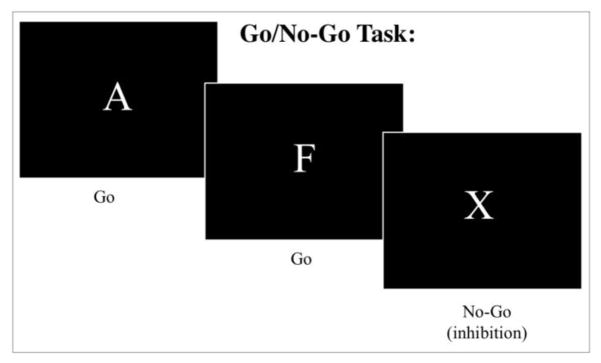
Method: ADHD youth (ADHD: n = 25) and healthy, typically developing controls (TD: n = 25) underwent an electroencephalography (EEG) recording while completing a go/no-go task-a commonly used test measuring behavioral inhibition. In addition, advanced signal processing for source localization estimated the location of signal generators underlying frontal alpha asymmetry (FA) during correct and incorrect trials.
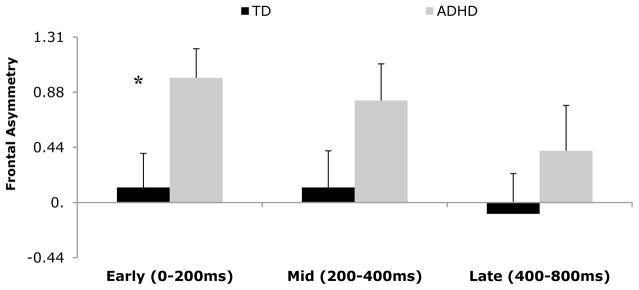
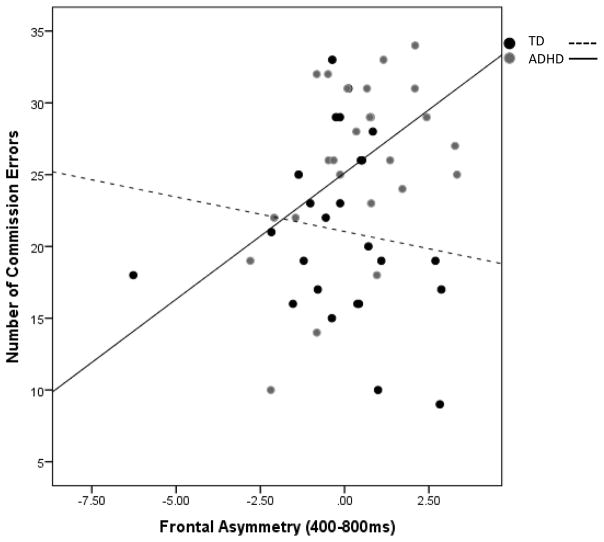
Results: This is the first study in ADHD to demonstrate that the dorsal-lateral prefrontal cortex (DLPFC) may be responsible for generating frontal alpha. During failed inhibition trials, ADHD youth displayed greater FA than TD youth. In addition, within the ADHD group, frontal asymmetry during later processing stages (i.e., 400-800ms after stimulus) predicted a higher number of commission errors throughout the task.
Conclusions: These results suggest that frontal alpha asymmetry may be a specific biomarker of cognitive disinhibition among youth with ADHD.
Keywords: ADHD; Disinhibition; EEG; Frontal Asymmetry; Source Localization.
Copyright © 2017 Elsevier Ltd. All rights reserved.
Figures
References
-
- Achenbach TM. Manual for the Child Behavior Checklist/4-18 and 1991 Profile. Burlington, VT: University of Vermont Department of Psychiatry; 1991.
MeSH terms
Grants and funding
LinkOut - more resources
Full Text Sources
Other Literature Sources
Medical
