


Rapid identification of imported influenza viruses at Xiamen International Airport via an active surveillance program
- PMID: 28587905
- PMCID: PMC7128276
- DOI: 10.1016/j.cmi.2017.05.027
Rapid identification of imported influenza viruses at Xiamen International Airport via an active surveillance program
Abstract
Objectives: The cross-border transmission of infectious diseases is a worldwide public health issue. Current border screening measures are insufficiently sensitive. The study objectives were to describe the epidemiologic pattern of influenza infection among incoming travellers at Xiamen International Airport during nonpandemic periods and to assess the performance of a rapid influenza diagnostic test in border screening.
Methods: Between May 2015 and May 2016, travellers with influenza-like illnesses entering China at Xiamen International Airport were screened with a rapid test, Flu Dot-ELISA, and the collected specimens were further subjected to virus isolation and phylogenetic analysis.
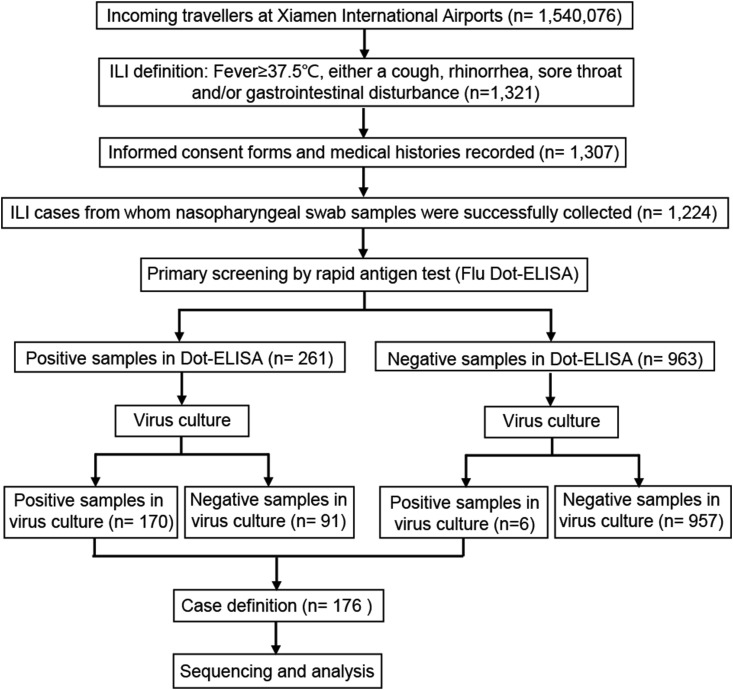
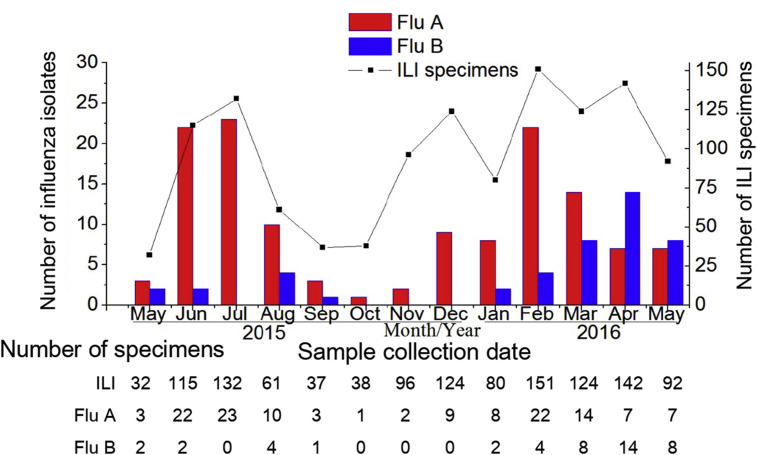
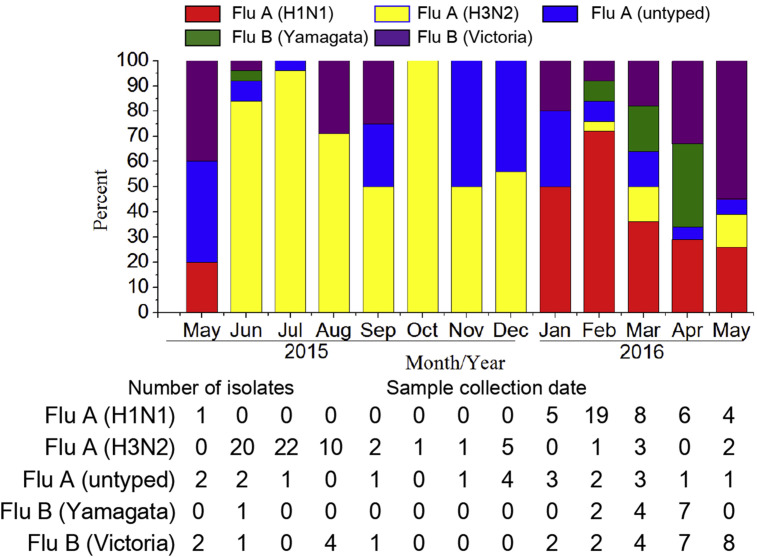
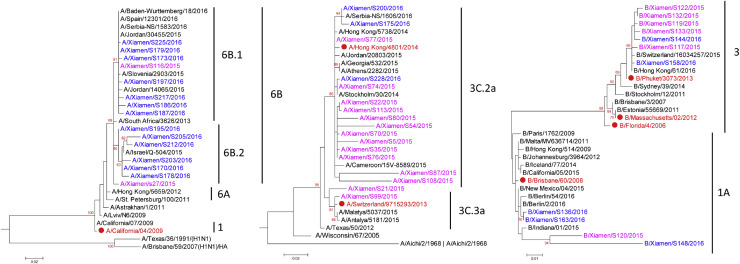
Results: Of the 1 540 076 incoming travellers, 1224 cases of influenza-like illness were identified; 261 tested positive in the rapid test, and 176 were confirmed to be influenza through virus culture. The sensitivity and specificity of the rapid test were demonstrated to be 96.6% (170/176) and 91.3% (957/1048), respectively, and the positive predictive and negative predictive values were 65.1% (170/261) and 99.4% (957/963), respectively. The epidemiologic study indicated that H3N2 and (H1N1)pdm09 were dominant in 2015 and 2016, respectively. In 2016, an increased number of influenza B isolates and cocirculation of both Victoria and Yamagata lineage influenza B viruses were observed, and mismatches between circulating influenza A(H1N1)pdm09 and influenza B Victoria lineage strains and vaccine strains also occurred.
Conclusions: We demonstrated the suitability and value of a high-sensitivity rapid influenza test in border screening and highlighted the importance of incoming travellers as a source of imported infectious diseases.
Keywords: Border screening; Phylogenetic analysis; Rapid test; Vaccine mismatch; influenza.
Copyright © 2017 European Society of Clinical Microbiology and Infectious Diseases. Published by Elsevier Ltd. All rights reserved.
Figures
References
-
- Cheng X.D., Yuan Q., Yue Q.H., Zheng Q.B., Ma Y.Y., Yang B.C. Evaluation of a new rapid influenza A diagnostic test for detection of pandemic (H1N1) 2009 and seasonal influenza A virus. J Clin Virol. 2011;50:153–155. - PubMed
-
- Tobita K., Sugiura A., Enomote C., Furuyama M. Plaque assay and primary isolation of influenza A viruses in an established line of canine kidney cells (MDCK) in the presence of trypsin. Med Microbiol Immunol. 1975;162:9–14. - PubMed
Publication types
MeSH terms
LinkOut - more resources
Full Text Sources
Other Literature Sources
Medical
