


Age-dependent electrocardiographic and echocardiographic changes in German Shepherd dogs
- PMID: 28588632
- PMCID: PMC5454578
Age-dependent electrocardiographic and echocardiographic changes in German Shepherd dogs
Abstract
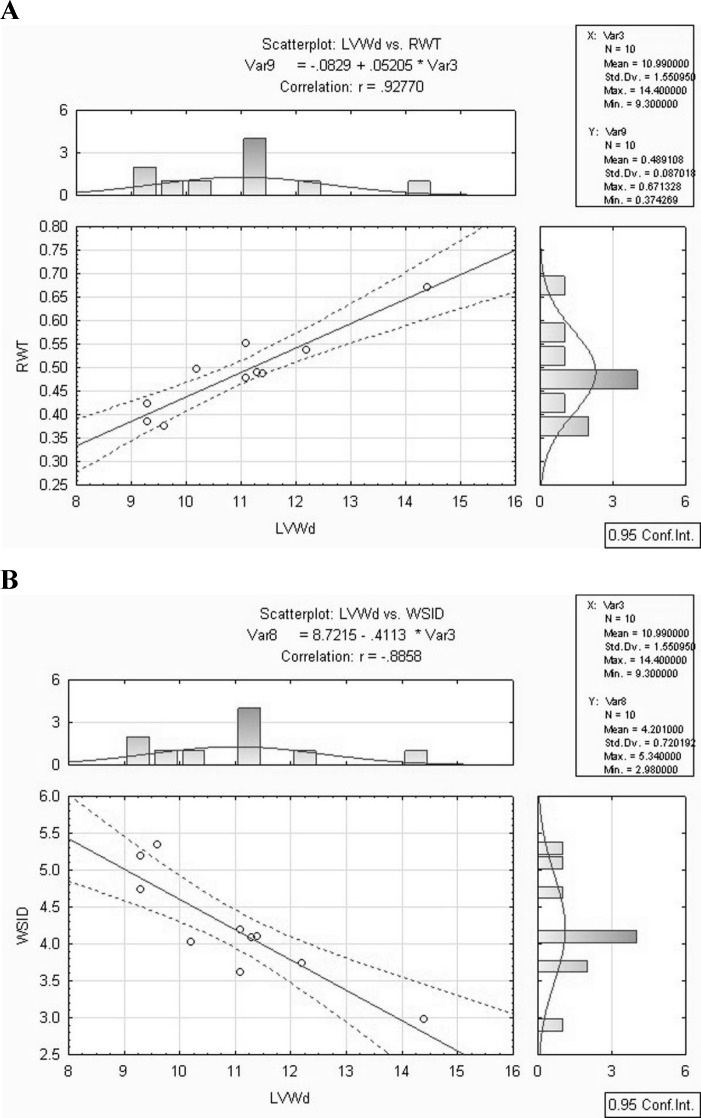
By causing numerous changes in the cardiovascular system, ageing leads to a decreased threshold for clinical manifestation of heart disease. The aim of this study was to define the existence of cardiac structural and functional changes in healthy dogs of different age. Radiographic, electrocardiographic (ECG) and echocardiographic examinations of 20 clinically healthy German Shepherd dogs were performed in order to define the values of relevant parameters. Afterwards, the values of cardio examinations were compared between young and old dogs and statistically analyzed. The ECG recordings did not show the appearance of clinically significant arrhythmias, nor was their appearance significantly different between dogs of different age. Statistically significant differences in QRS duration (P<0.05) and R wave amplitude (P<0.05) existed between groups, but all values were within the range of ECG reference values for healthy dogs. Concerning structural changes, the left ventricle wall thickness at end-diastole (LVWd) and end-systole (LVWs), and the relative wall thickness (RWT) between young and old dogs differed significantly (P<0.001, P<0.05, P<0.05, respectively). These differences in heart structure were not accompanied by systolic dysfunction, estimated by a left ventricle shortening fraction. The diastolic wall stress index (WSID) was significantly decreased in old dogs (P<0.05). Young and old dogs showed similar electrical and systolic function. Old dogs had different cardiac structure compared to the young dogs, which could result in diastolic function change.
Keywords: Ageing; Cardiology; German Shepherd dog.
Figures
References
-
- Aurigemma GP, Gaasch WH. Quantitative evaluation of left ventricular structure, wall stress and systolic function. InOtto, CM (Ed.), The practice of clinical echocardiography. 3rd Edn. Philadelphia: Saunders; 2007. pp. 187–212.
-
- Bonagura, JD. Cardiopulmonary disorders in the geriatric dog. Vet. Clin. North. Am. (Small Anim. Pract.) 1981;11:705–726. - PubMed
-
- Buchanan, JW, Bücheler, J. Vertebral scale system to measure canine heart size in radiographs. JAVMA. 1995;206:194–199. - PubMed
-
- Edwards NJ. Interpreting the electrocardiogram. In: Pedersen, D (Ed.), Bolton’s handbook of canine and feline electrocardiography. 2nd Edn. Philadelphia: W. B. Saunders; 1987. pp. 32–60.
LinkOut - more resources
Full Text Sources