


Determining the optimum way to maintain quality of life for very elderly patients with advanced bladder cancer and poor performance status: A case report
- PMID: 28588799
- PMCID: PMC5451885
- DOI: 10.3892/mco.2017.1236
Determining the optimum way to maintain quality of life for very elderly patients with advanced bladder cancer and poor performance status: A case report
Abstract
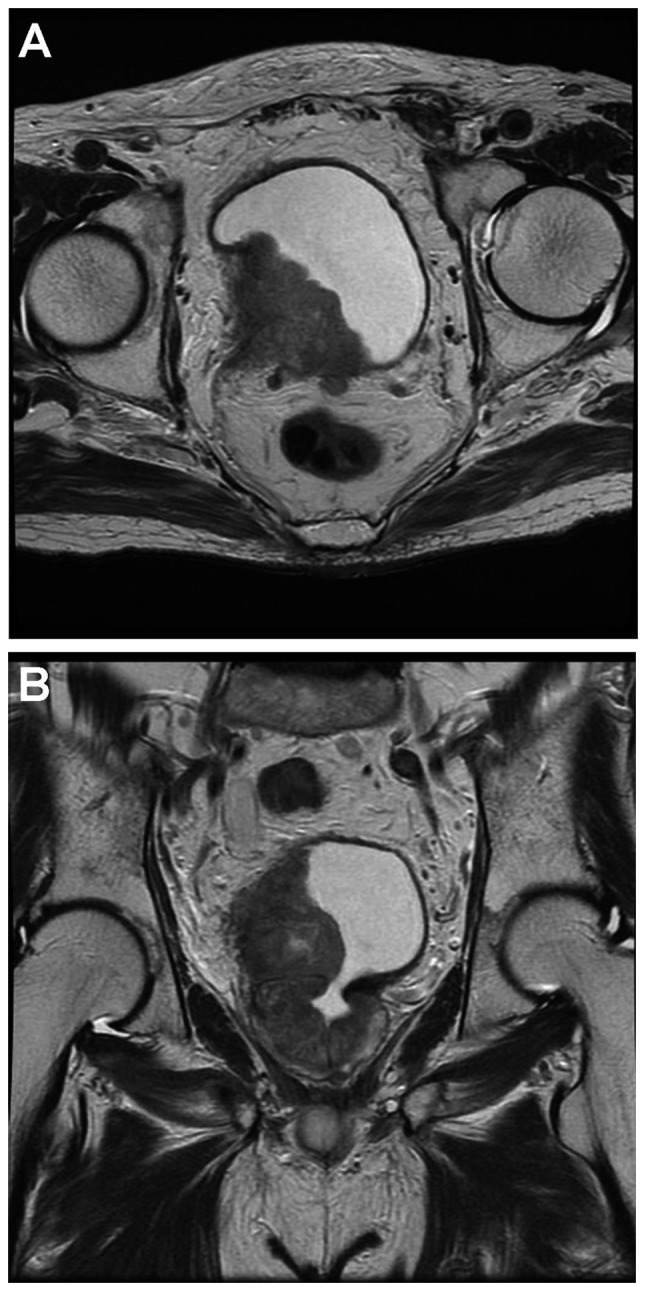
Locally advanced bladder cancer causes unpleasant symptoms such as irritative voiding symptoms, lower abdominal pain, gross hematuria and urinary retention, and lowers the quality of life. Treatment decisions in elderly patients may be difficult, as elderly patients are physically and psychologically different from younger patients. An 89-year-old male was referred to hospital for the treatment of an invasive bladder tumor with right hydronephrosis from tumor obstruction. The patient was elderly and did not have a good performance status; therefore curative radical cystectomy or chemotherapy was not indicated. Left retroperitoneoscopic ureterocutaneostomy was performed to alleviate gross hematuria and voiding difficulty. Intensity-modulated radiotherapy was administered 9 days after the surgery to control bleeding in the bladder tumor. After completing 8 days of radiotherapy, the patient was discharged from hospital. The patient exhibited no signs of either postrenal failure or gross hematuria for 7 months prior to mortality. Retroperitoneoscopic ureterocutaneostomy for very elderly patients with advanced bladder cancer with a poor performance status may be an important procedure for alleviating symptoms and improving quality of life.
Keywords: elderly patient; gross hematuria; invasive bladder cancer; palliative treatment; retroperitoneoscopic ureterocutaneostomy.
Figures


References
LinkOut - more resources
Full Text Sources
Other Literature Sources