Systematic review and meta-analysis of the adolescent HIV continuum of care in South Africa: the Cresting Wave
- PMID: 28588949
- PMCID: PMC5321340
- DOI: 10.1136/bmjgh-2015-000004
Systematic review and meta-analysis of the adolescent HIV continuum of care in South Africa: the Cresting Wave
Abstract
Context: South Africa has the most HIV infections of any country in the world, yet little is known about the adolescent continuum of care from HIV diagnosis through viral suppression.
Objective: To determine the adolescent HIV continuum of care in South Africa.
Data sources: We searched PubMed, Google Scholar and online conference proceedings from International AIDS Society (IAS), International AIDS Conference (AIDS) and Conference on Retrovirology and Opportunistic Infections (CROI) from 1 January 2005 to 31 July 2015.
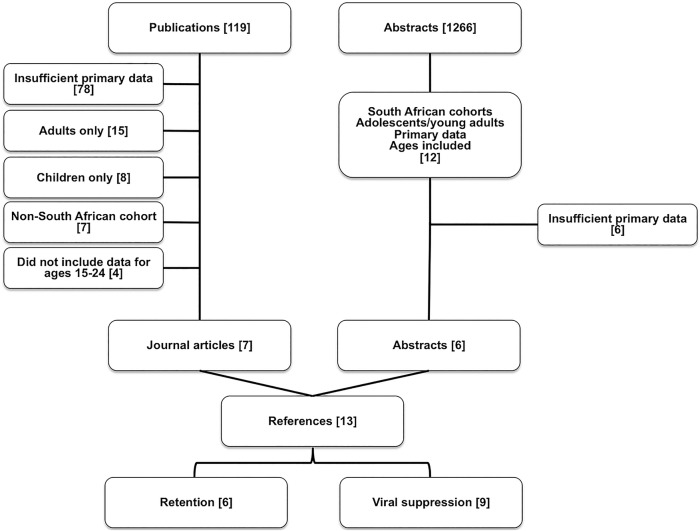
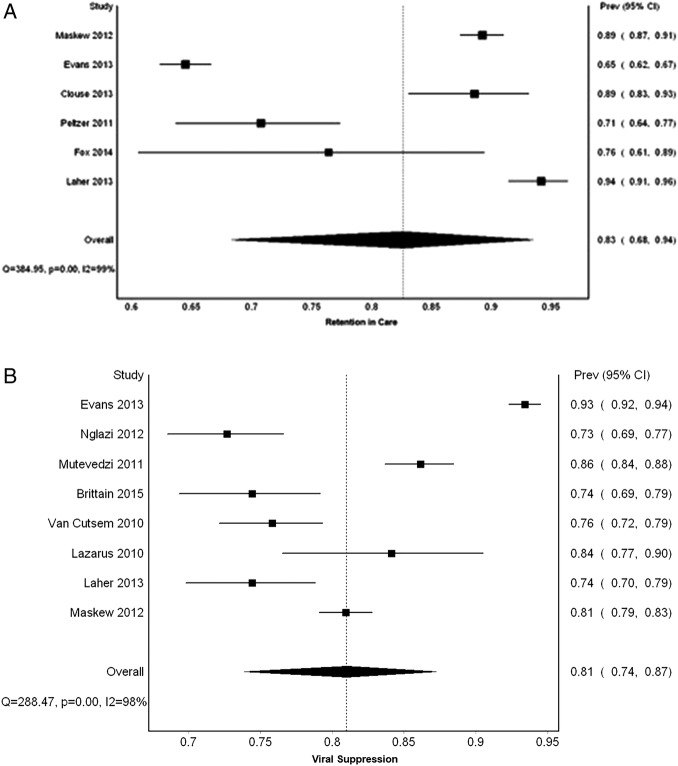
Data extraction: We selected published literature containing South African cohorts and epidemiological data reporting primary data for youth (15-24 years of age) at any stage of the HIV continuum of care (ie, diagnosis, treatment, retention, viral suppression). For the meta-analysis we used six sources for retention in care and nine for viral suppression.
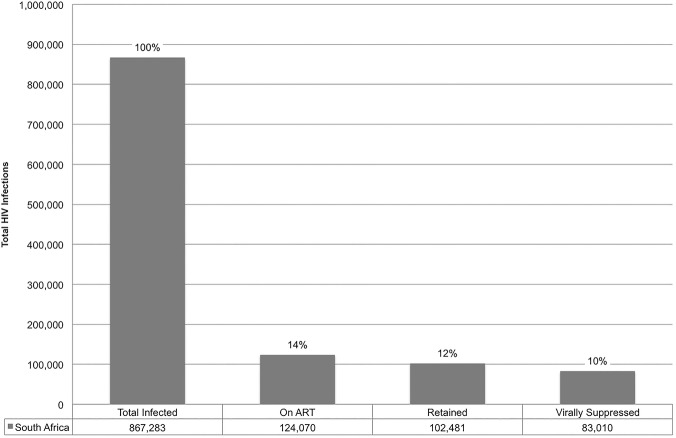
Results: Among the estimated 867 283 HIV-infected youth from 15 to 24 years old in South Africa in 2013, 14% accessed antiretroviral therapy (ART). Of those on therapy, ∼83% were retained in care and 81% were virally suppressed. Overall, we estimate that 10% of HIV-infected youth in South Africa in 2013 were virally suppressed.
Limitations: This analysis relies on published data from large mostly urban South Africa cohorts limiting the generalisability to all adolescents.
Conclusions: Despite a large increase in ART programmes in South Africa that have relatively high retention rates and viral suppression rates among HIV-infected youth, only a small percentage are virally suppressed, largely due to low numbers of adolescents and young adults accessing ART.
Conflict of interest statement
Competing interests: None declared.
Figures
References
-
- Joint United Nations Programme on HIV/AIDS. UNAIDS Country Report: South Africa 2015. http://www.unaids.org/en/regionscountries/countries/southafrica - PubMed
-
- Joint United Nations Programme on HIV/AIDS. Global Report: UNAIDS Report on the Global AIDS Epidemic 2013 Joint United Nations Programme on HIV/AIDS, 2013. http://www.unaids.org - PubMed
Grants and funding
LinkOut - more resources
Full Text Sources
Other Literature Sources